Crypto Market Watches As Clarity Act Enters Senate Debate Next Week: US Senator

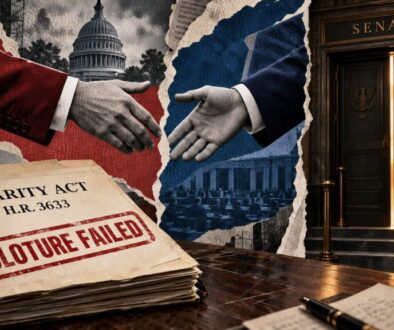
The cryptocurrency industry faces a critical regulatory inflection point as the CLARITY Act prepares for Senate committee markup, with Banking Committee Chairman Tim Scott signaling a formal vote could arrive as soon as next week. The legislation represents the most substantial effort to date at establishing clear federal oversight boundaries, though fundamental policy disagreements threaten to derail bipartisan consensus before the measure reaches the broader Senate floor.
Timeline Accelerates After Extended Delays
Scott’s announcement represents a dramatic compression of the legislative calendar. After lawmakers deferred action late in the previous year, pushing major revisions into January, the sudden push toward committee voting signals intensified momentum from leadership.
The accelerated schedule applies real pressure on negotiators who have spent months attempting to reconcile competing priorities. With a formal vote potentially imminent, staffers and legislative aides are working against compressed timelines to resolve outstanding language disputes.
The accelerated timeline applies pressure on negotiators who have been working to reconcile competing interests throughout the extended review period.
— Senate Banking Committee proceedings
This acceleration follows a pattern familiar in Capitol Hill cryptocurrency legislation: extended negotiations punctuated by sudden windows of opportunity when committee leadership commits to formal votes.
Jurisdictional Clarity as Core Objective
The CLARITY Act’s fundamental purpose addresses a persistent pain point for the industry: regulatory confusion stemming from overlapping federal agency authority. Currently, market participants struggle to determine which regulator—the Securities and Exchange Commission, the Commodity Futures Trading Commission, or others—maintains primary jurisdiction over specific digital asset activities.
The proposed framework would delineate regulatory responsibilities between the SEC and CFTC, establishing which agency oversees different cryptocurrency market segments. Bitcoin and other digital assets would fall into defined regulatory categories, theoretically reducing the legal ambiguity that has constrained exchange operations and token project development.
The legislation seeks to establish which federal agencies oversee different segments of the cryptocurrency market, incorporating consumer protection mechanisms alongside jurisdictional divisions.
Proponents argue that codified jurisdictional boundaries would enable clearer compliance pathways for legitimate market participants while maintaining regulatory oversight. The current regulatory environment, by contrast, often leaves companies uncertain about which agency’s rules apply to their operations.
Unresolved Disputes Threaten Consensus
Despite the momentum toward a committee vote, several substantive disagreements remain unresolved and could ultimately fracture the bipartisan coalition supporting the measure. These are not technical drafting questions but rather fundamental policy disputes with significant market implications.
Decentralized finance protocols present one major sticking point. Lawmakers have struggled to craft regulatory language that addresses DeFi platforms without inadvertently regulating code itself or imposing impractical compliance burdens on decentralized networks. The distinction between regulating participants versus regulating protocols remains contested.
Stablecoin yield mechanisms represent another contentious area. The treatment of returns generated through stablecoin lending and liquidity-provision activities hinges on complex questions about whether such returns constitute securities or commodities. Different regulatory classification would trigger entirely different compliance requirements.
Key disagreements include: regulatory frameworks for decentralized finance, treatment of stablecoin yield mechanisms, and the threshold of regulatory agreement required before enforcement actions proceed.
Perhaps most significantly, negotiators continue to dispute the procedural threshold for enforcement actions. Specifically, they debate whether both the SEC and CFTC must agree before initiating enforcement activities in overlapping jurisdictional zones, or whether individual agencies can proceed independently. This distinction fundamentally affects regulatory agility and market oversight effectiveness.
Market Implications and Observer Concerns
Market participants have monitored the legislative process closely, recognizing that the outcome will shape their operational and compliance environment for years. Cryptocurrency price movements occasionally reflect regulatory sentiment, though the precise impact of specific legislative provisions remains difficult to isolate amid broader market dynamics.
Some industry observers have cautioned that advancing toward a committee vote while fundamental disagreements persist could prove counterproductive. A bill containing unresolved policy conflicts might attract skeptical votes that undermine support during subsequent legislative phases, when amendments become more difficult to navigate.
Advancing toward a vote while fundamental questions remain open could ultimately undermine broader Congressional support during subsequent legislative phases.
— Legislative observers and industry analysts
Alternatively, proponents argue that passing the bill through committee with broad support—even if containing some unresolved language—could generate momentum and provide a foundation for refinement during Senate floor debate. The legislative calculation depends partly on whether unresolved issues represent genuine impasses or simply areas requiring additional negotiation.
Exchange operators and token projects built on major platforms have engaged extensively with Congressional offices, providing technical feedback on proposed regulatory frameworks. This industry input has informed the legislative drafting process, though disagreements between different segments of the crypto industry have complicated consensus-building.
Industry Context and Regulatory Environment
The cryptocurrency market has matured substantially since early regulatory frameworks were conceived, with institutional participation, significant asset values, and increasingly diverse use cases creating genuine need for updated federal oversight structures. Current market capitalization exceeds two trillion dollars globally, with billions in daily trading volume across spot markets, derivatives platforms, and decentralized exchanges.
The existing regulatory patchwork emerged from an earlier era when digital assets were largely confined to specialized communities. Regulatory agencies have adapted through guidance documents and enforcement actions, but this approach lacks the coherence and predictability that institutional participants and policymakers increasingly recognize as necessary. Banks seeking cryptocurrency exposure, payment processors integrating digital assets, and traditional financial institutions entering crypto markets all encounter the same jurisdictional ambiguities that have constrained pure-play cryptocurrency companies.
The CLARITY Act arrives amid broader Congressional recognition that digital asset regulation requires proactive legislative authorization rather than reactive agency improvisation. This shift reflects evolving understanding of cryptocurrency’s systemic importance and its integration into mainstream financial infrastructure.
Broader Market Structure Implications
The legislation’s outcome extends beyond jurisdictional clarification to encompass fundamental questions about which regulatory model—securities regulation, commodities oversight, banking supervision, or specialized digital asset frameworks—will ultimately govern different cryptocurrency activities.
If the measure succeeds in establishing clear boundaries without excessive restrictiveness, market observers anticipate accelerated institutional adoption, expanded product offerings from traditional financial intermediaries, and potentially significant capital reallocation toward previously uncertain digital asset categories. Conversely, if regulatory language proves overly restrictive or fails to achieve genuine clarity, market participants may continue operating in legal gray zones while legitimate businesses relocate to more favorable jurisdictions.
International regulatory developments add urgency to Congressional action. The European Union’s Markets in Crypto-Assets Regulation provides a comparative model that demonstrates regulatory approaches are achievable at scale. Asian markets have similarly implemented more comprehensive frameworks, creating competitive pressure on U.S. policymakers to establish comparable certainty while maintaining appropriate consumer protections.
Path Forward and Conclusion
The week ahead will determine whether the committee markup proceeds as signaled and, if so, whether unresolved disputes delay voting or whether leadership moves forward despite outstanding questions. Either outcome carries implications for the cryptocurrency industry’s regulatory future and the timeline for establishing clearer federal oversight frameworks.
The acceleration announced by Chairman Scott suggests political will exists to advance the legislation despite complexity, though the substantive disagreements outlined above remain genuine obstacles to consensus. Whether negotiators can bridge these gaps before committee voting, or whether the measure advances with language deferred to subsequent legislative phases, will significantly influence both market confidence and the practical effectiveness of resulting regulatory frameworks.
Success on the CLARITY Act would represent substantial progress toward regulatory maturity, providing baseline clarity that enables market participants to operate with greater certainty. Failure would likely extend the current period of jurisdictional ambiguity, potentially driving continued capital and innovation toward less-regulated international markets. For the cryptocurrency industry, traditional financial institutions entering the sector, and policymakers seeking to balance innovation with consumer protection, the committee vote represents a pivotal moment in U.S. digital asset regulation.
Investors, platform operators, and policymakers will be watching closely as the Senate Banking Committee convenes to address digital asset market structure through formal legislative process.
Original reporting: newsbtc.com
Get weekly blockchain insights via the CCS Insider newsletter.