Lummis backs Fed payment account plan as answer to crypto debanking
The Fed opened a 45-day comment window on a stripped-down account for payment firms. The Wyoming senator says it closes the door on Chokepoint 2.0.
The Federal Reserve Board issued a formal payment account proposal on May 20, 2026, with comments closing July 27. Kraken Financial received a full Fed master account in March 2026. See our report on the first crypto bank with Fed access. A May 19 executive order gave the Fed 120 days, roughly September 16, to report on extending payment access to non-banks.
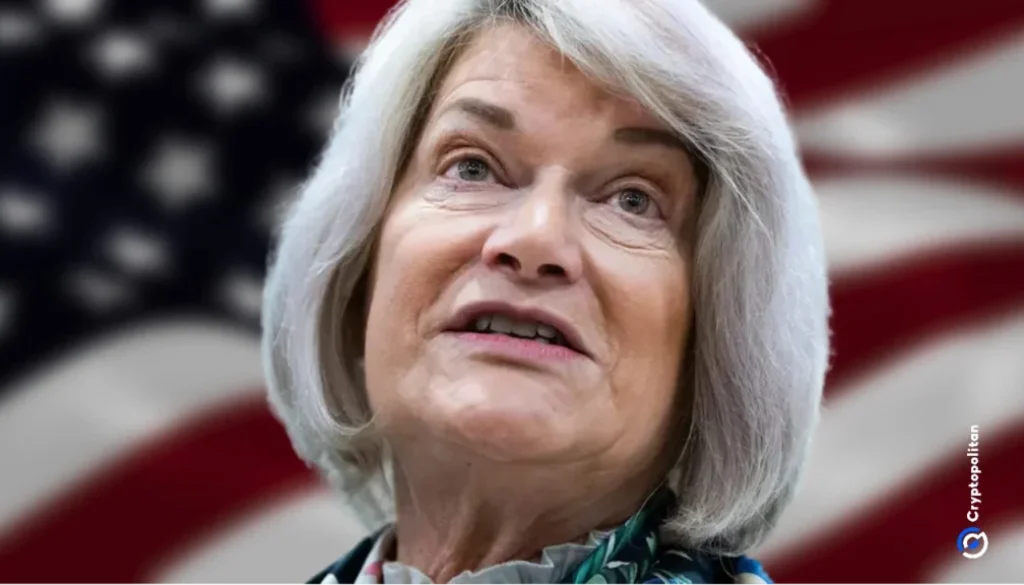
Senator Cynthia Lummis endorsed the Federal Reserve’s proposed “payment account” in a post on X on Saturday (December 27). The endorsement came nine days after the Board asked the public for comment on the idea. The account would let a legally eligible institution clear and settle payments on Fed rails without holding a full master account. Comments are due February 6, 2026, 45 days after the request appeared in the Federal Register on December 23.
- Fed Board opened comment on a limited “payment account” on December 19, 2025
- The account pays no interest, allows no overdrafts and carries balance caps
- Lummis says the plan “ends Operation Chokepoint 2.0”
- 45 days comment window on the Fed’s payment account request, closing February 6, 2026
- Oct 21, 2025 Waller first proposed the account at the Fed’s Payments Innovation Conference
- 30+ tech founders Marc Andreessen says lost bank access under Chokepoint 2.0
The Fed is offering plumbing, not banking
Governor Christopher Waller first floated the idea on October 21 at the Board’s Payments Innovation Conference in Washington. His speech described an account for “institutions that right now conduct payment services primarily through a third-party bank.” The design is deliberately thin. Reserve Banks would pay no interest on balances, and balance caps may apply.
The hardest limit is on credit. “These accounts would not have daylight overdraft privileges. If the balance hits zero, payments will be rejected,” Waller said. Holders would also be shut out of discount window borrowing and would not get every Fed payment service. Waller’s pitch is that many payment firms “do not want or need all the bells and whistles of a master account,” and that a narrower account can be reviewed on “a streamlined timeline.”
The December 19 request keeps those terms and adds one more. The account does not widen who is legally eligible for Fed access. A firm still needs a charter that qualifies under existing law, which in practice means a bank, a credit union or a state-chartered institution such as Wyoming’s special purpose depository banks.
Lummis ties the proposal to Chokepoint 2.0
Lummis, a Wyoming Republican who has sponsored the Senate’s main digital asset bills, framed the account as the end of a two-year fight over bank access. “Governor Waller’s skinny master account idea ends Operation Chokepoint 2.0 and paves the way for real payment innovations,” she wrote. Cryptopolitan first reported the post on December 28.
Governor Waller’s skinny master account idea ends Operation Chokepoint 2.0 and paves the way for real payment innovations. This means faster payments, lower costs, and better security. This is how we can responsibly create the future.
Cynthia Lummis, U.S. Senator for Wyoming, on X
“Operation Chokepoint 2.0” is the industry’s name for the wave of account closures that hit crypto firms and founders from 2022 onward. Venture investor Marc Andreessen has said more than 30 technology founders lost bank access during that period. The closures did not stop with the change of administration. Strike CEO Jack Mallers said JPMorgan Chase closed his company’s accounts on November 23, 2025. That was three and a half months after President Trump signed an August 7 executive order barring debanking without a documented legal reason.
The account helps payment firms more than exchanges
A no-interest, no-overdraft account is a settlement tool, not a bank relationship. That distinction decides who gains. Stablecoin issuers, payment processors and Bitcoin payment companies such as Strike move dollars in and out all day and pay partner banks for the privilege. Direct settlement removes that middleman and the risk that the middleman walks away.
An exchange or a founder who cannot open a checking account gets nothing from it. The proposal does not touch the correspondent banking decisions that Lummis and Mallers are describing. Waller described it as a payments product for eligible institutions, and nothing in the December request addresses individual account closures. The senator’s broader claim rests on one idea: firms with their own Fed access no longer need a bank’s permission to operate. That holds only for the firms that qualify.
What has to happen before anyone opens one
The December 19 document is a request for information, not a rule. The Board asked for views on the account’s scope, caps and risk controls, and said it would use the responses to decide whether to propose a formal framework. Lummis has previously pushed the Fed on access through legislation, including her July bill on crypto as mortgage collateral.
The CCS read. We think the payment account matters most for stablecoin issuers and Bitcoin payment firms, and least for the exchanges and founders whose debanking stories drive the politics. The account solves settlement, not banking. The real test is not the design, which is sound, but whether Reserve Banks approve eligible applicants in months rather than years. Speed of approval, not the comment letters, is where Chokepoint 2.0 actually ends.
What to watch. Comments close February 6, 2026. If the Board moves to a formal proposal in the first half of 2026, the first applicants will come from Wyoming’s special purpose depository banks. Watch the balance caps. A proposal that raises them or adds intraday credit would mean the Fed sees the account as a real alternative to a master account, not a pilot.