
Brendan Farmer / Polygon
Polygon's AggLayer and Type 1 Prover upgrade Web3 infrastructure
In this episode
Ashton Addison speaks with Brendan Farmer, Co-Founder of Polygon, on the release of AggLayer, upgrading EVM compatible chains to increased cross-chain communication, unified liquidity, lowering cost and raising speed of transactions. We also speak about their type 1 Prover, which upgrades every EVM chain to ZK technology, and the upgrade of blockchains in the near future.
- AggLayer uses zero-knowledge technology to enable low-latency interoperability between blockchain chains while maintaining safety and preventing destination chains from being rugged.
- The aggregation layer aims to unify liquidity and state across multiple chains, solving the fragmentation problem that creates poor user experience and higher costs through slippage.
- Polygon's synthesis approach combines monolithic and modular blockchain philosophies by supporting a multi-chain ecosystem with mechanisms to unify state and liquidity across chains.
- Bridge and call functionality allows users to move funds between chains and execute smart contracts in a single interaction without understanding underlying zero-knowledge technology.
- Fungibility of wrapped assets across chains is a key ingredient for unifying liquidity, requiring liquidity providers to bridge synthetic versions of assets to native versions.
Chapters
Transcript
Read the full transcript
I'm Ashen Addison from the Crypto Coin Show and today on blockchain interviews with Brendan farmer co-founder of polygon Brendan welcome to the show and thank you for taking the time today yeah thanks ashon thanks for having me you're very welcome excited to dive into the latest updates with polygon and what polygon is doing for the blockchain industry overall I feel like 2024 so far
has kicked off to an amazing start with the further increased adoption with the Bitcoin ETF the having potentially more incredible updates for all the layer twos that are coming out and I know that there are some issues that need to be solved to really unify blockchain as one holistic ecosystem and I think polygon has a part to play with that so let's dive into the latest
updates that polygon and the team I've been working on I'm really excited to hear the details maybe you can talk a little bit about first I've seen this EG layer update and you know these are some big Pro this is a big project so we might spend some time on this but I would love to just kick it off to you know hear what you and your team have been working on this whole time and then
we can dive into all the details yeah sure so the aggregation layer the egg layer is a big big one for us we've really been thinking about these sort of the underlying problems for a long time and just to take a step back if you think about how we think about blockchain scaling right now the debate is sort of stuck between the monolithics side and the modular
side and so the monolithic side says look when we talk about scaling in crypto we're really talking about scaling access to liquidity access to Shared State maintaining composability if we create a bunch of chains that can't access liquidity where it's where it's sort of available and useful then we haven't really scaled in a meaningful sense and so the modular side
on the other on the other hand says actually the way to scale is like like we'll never be able to bring internet scale crypto with a single chain like We'll always run into bottlenecks there'll always be contention for shared resources and so fundamentally we need to look at a multi-chain approach to scaling but and so I think that both
sides get something right and something wrong I think the monolithic side is correct that really what we're trying to do is scale access to liquidity like if liquidity is fragmented that creates you know a bad user experience it creates complexity but it also creates cost for users because they encounter slippage their execution is worse and then on the other side on
the modular side I think that they're correct that we need horizontal scaling we need to be able to add block space so that we don't run into this situation where we have like these intractable limits to scaling but at the same time like we need some way of taking fragmented block space and unifying it so that users can access shared liquidity and shared State and so
fundamentally that's what we've been thinking about with the aggregation layer is how do we take a modular multi-train ecosystem and unify liquidity and state across those trains yeah I appreciate that explanation and I feel like the sweet spot is somewhere in between right because we're seeing chains get really big and running into issues but we're
also so many different blockchains coming out that could probably be working Better Together to unify the liquidity I feel like that's very important if we're going to be getting to the next stage of adoption where big wants to come in yeah so for us I don't know if you've ever seen the meme like thesis antithesis synthesis and so for us like one way to look at
it is the original thesis from Bitcoin and ethereum and then for blockchains like salana is like the thesis is monol thic and then the modular thesis arose in response to the limitations of the monolithic thesis and so for us like the synthesis The Way Forward is this aggregated thesis where where we have a multichain ecosystem but we have the mechanism to unify State and liquidity
across those trains so maybe you can talk about the vision how how did you guys plan all this out because this is a huge initiative to try and unify blockchain together what was the vision and how did you start building this aggregated layer and solving all of the different problems without making it too complex yeah sure so our I guess the main
design principle with the agir is Simplicity and minimalism like we want to build a protocol that can support internet scale crypto adoption and I think in order to do that we need to build something that's minimal and that's not opinionated and can accommodate like a range of chains with running on different execution environments using different tokens
using different mechanisms for sequencing and so for us like the I guess the foundation of this vision is ZK Tech and so the question was like okay we know that right now for Two Chains to interoperate they need to like like two l2s you need to go from your initial L2 to ethereum and then to your destination train so if I want to move tokens from chain a to B I need to
Withdraw from chain a I need to wait until the proof of my withdrawal hits ethereum and that block on ethereum is finalized so that's like 25 minutes and then I need to deposit into chain B so that's another you know however 12 minutes of latency and so the concept was like how do we create low latency interactions between chains in a
way that's safe and trustless and it turn turns out that we can do that by using ZK Tech so we can let chain a and chain B interoperate however they want to they can you know run full nodes for each other they can use a shared sequencer they can rely on Builders or relays like the coordination mechanism is sort of out of scope for us but what we do guarantee with the AG
layer is that if chain B receives a message from chain a at lower latency than ethereum let's say like chain B receives a message from chain a and two seconds later wants to start building blocks on that message that they received from train a then chain B can commit to this the sort of state of chain a that produced that message and we can use ZK Tech to ensure that
chainb will never be finalized and accepted by ethereum unless that block that chain B is relying on from chain a is valid and is also finalized to ethereum and so the this approach like generalizes to a bunch of different cases but fundamentally it's about like enabling chains to interoperate at really low latency while still maintaining safety
like like you know that the destination chain for chain B will will never be rugged by anything that CH a does and that opens up the design space and enables them to coordinate in ways they currently can't okay it's it's a lot to digest but I know that your team's focusing on the minimalism and simplicity which is good and I think people when
they see how it works from you know a defi perspective if you're just somebody who's going to make a swap or make a move of some crypto coins to another blockchain they won't have to understand all of this they'll just be able to have a seamless experience I would hope definitely not you will not have to know anything about ZK Tech or what chains are doing on the back end but
the sort of interface that we enable is what's what we're calling like bridge and call so you can if you have funds on one chain you can Bridge them and call some other contract in like one interaction and so we think that you know if you have like you said if you have usdc on one chain and you want to buy eth on the chain that has the deepest
liquidity then you'll be able to do that in a really really simple and userfriendly way that's very cool and now in terms of unifying the liquidity on these different chains how exactly will that work will it be say there's there's 20 evm chains that all have a million of liquidity that's not communicating each with each other and that sort of moves into a single
pool that's worth 20 million that lowers the cost and the slippage and Etc yeah so I think this is a really good question so I think that there are two ingredients for unifying liquidity the first is fundability so right now if you think about how third party Bridges work like if I want to bridge from polygon to arbitrum Via Wormhole then what I'm
doing is I'm locking my eth and then I'm minting wormhole eth on arbitrum and the problem is that Wormhole eth is not fungible with regular eth I need somewhere I need some liquidity provider to get me from my wrapped synthetic version of an asset to the native version of NASA and so providing fungibility in the polygon ecosystem is something that's really important and
the unified bridge and the AG layer allows us to ensure that L1 native assets and L2 native assets are fungible across chains so I won't have to think okay I have eth on the ZK VM chain and I want to move eth on the POS chain I'm not minting ZK evm eth I'm just getting eth on the destination chain and so this is a really really powerful thing for unifying liquidity to
your question specifically What will what will the world look like will it be a single super deep pool of liquidity or will it be a bunch of pools that sort of automatically rebalance and you know have Arbitrage opportunities between them so they effectively have the same execution I think that is an open question
you can imagine a world in which there's a single pool that has all the liquidity and the problem is that you know it e like getting best execution on that pool and getting priority becomes really expensive and so normal users might be priced out of using that pool but one one thing you can imagine is those users would sort of batch their transactions and on
lowcost chains and then that batched transaction would be executed on the pool with deepest liquidity and so it you know the transaction cost would be mortiz across all the users that are batching I think that there are like similarities between that model and the model that you describ where you just have a bunch of different pools
that are all automatically rebalancing and where orders are sort of being routed between them I think that both are uniquely enabled by the agay and by sort of the vision that we're building and I think it'll just be interesting to see what dominates yeah it's very interesting and I like that example that you gave with bridging through the worm ho I feel like that is
a setback right now where I don't think you can't you can't really tell from the front-facing perspective but you may not necessarily have the exact same ether on polygon that you would on a different blockchain and same goes for stable coins as well you know a stable coin usdt or C that's on a certain blockchain it's not the exact same coin on a different blockchain and
that's why the liquidity can't be combined because it's it's not the same asset yeah yeah and I'm curious also on the ZK perspective you know a lot of people just know zero knowledge proofs as something that adds speed privacy U being able to confirm things with zero knowledge are there extra benefits to introducing this ZK Tech into the EG
layer or maybe you can touch on that a little bit more yeah sure so ZK Tech is sort of the it's like the fundament Al ingredient of the AG because we need a guarantee that like like we need to be able to prove to ethereum that we have this giant multi-chain ecosystem with thousands or tens tens of thousands of chains and we need to be able to prove
to ethereum that actually all of these chains are sort of like operating on consistent views of the same state so you don't have like chain a telling chain B one thing and sort of double spending on chain c and so being able to do what we call called proof aggregation is a really really important thing and it has like a sort of a few different purposes in the agare it
provides you know a guarantee that everything that happens across all chains is valid it provides a guarantee that chains are relying on consistent views of other chain States and it also provides the safety guarantee where we know that if a single chain is compromised that attackers cannot drain the entire ecosystem of funds because
we're able to enforce that no chain can sort of withdraw more than the tokens that are deposited in that in that chain even if that chains prover is unsound and so it's it's a really important ingredient in this overall Vision definitely and with some of the evm chains right now you know there's so many that are coming
out but from what I understand some of them have some kind of ZK technology that they're looking to integrate some of them not as much when these new evm chains move into the EG layer does that make them all sort of have a unified equal level of ZK technology implemented into the chain or how does that work yeah sure so that's a good question and it's a timely question
because we just announced our type one prover which sort of you know achieves what you're describing and so the way that I would put it is in order to participate in this ZK powered ecosystem that runs on the AG chains must include ZK proofs like we need a guarantee from each chain that everything that happens on that chain is valid and
so the if we think about like what the current state of the world is we have all of these evm chains like optimistic rollups like polygon POS like Ulta ones that use the evm and there's a ton of liquidity and state and huge user bases that are locked in these evm chains and they can't interoperate in the way that we're describing with the Ager because they
don't support ZK Tech and so what we released last week was the type one zkm improver and this is a really really cool piece of technology because it allows us to take any existing evm chain whether it's an optimistic rollup whether it's a side chain like the polygon POS or whether it's an al1 and we can instantly start generating proofs for that chain and so that will allow
those chains to onboard into the agare and so this is like a really really important component of the overall Vision which is to take all of this fragmented liquidity in state and these user bases that are currently dispersed among a bunch of BBM chains and unify them together so that we can deliver better experience for users H okay that's great to hear
and with those chains implementing the ZK technology how easy is it for all of this to be done do they just have to flip a switch do they have to rebuild the spaceship no no so there are no client changes that are required like nothing changes for the users or validators or full nodes we just turn on approver and we just start generating proofs for that chain
obviously if they want to if they're like in L2 and they want to migrate their L1 native assets to be able to have fungibility with L1 native aets on the agay they would have to do a bridge migration but if they don't want to do that they can just immediately start generating BRS amazing and so does this sort of came about from the
polygon's growth from the POS chain moving into the ZK evm chain and you guys are going to be running both of those chains but this technology does it affect primarily the ZKA the ZK evm chain so it actually affects POS because the POS chain is not using ZK technology and there's a ton of liquidity there are a ton of users I think it's one of the most actively used
chains in the ecosystem and so taking everything that exists on POS and onboarding it into the EG layer so that all of that all the assets that are on POS all the users can seamlessly move between POS and zkm that was sort of the Genesis of the type one pro and the reason why we started working on it so that's awesome and now in terms of the transaction costs ZK is
supposed to help you know lower the cost too as well some the cost varies from what I've personally experienced in different layer twos on ethereum you know going from a dollar to 10 cents to a few cents how will this affect the costs of the different chains will that be improved even further yeah sure so I think it's really important to note that the
cost for l2s is generally dominant by the cost to post data to ethereum so if you're a rollup every transaction you have to post some amount of data to ethereum and this has a cost and so generally all the transaction costs that you see for l2s are based on this L1 data availability cost and so I think that the way that I would look at it is there are other costs that
exist on l2s and so one really obvious one is that optimistic rollups have this downside where if you want to withdraw from an optimistic rollup via the native Bridge you need to lock your funds for seven days would to sort of wait for the duration of the what they call the ch challenge period so it allows anyone to submit a fraud proof if the operator of the optimistic rollup
is misbehaving and you know you can ensure safety but the problem is that this 7-Day withdrawal window imposes a real cost on users no one wants to lock up their highly volatile crypto assets for seven days and take on duration risk and so what they do is they rely on thirdparty bridges that impose fees on users and so these fees in aggregate are
like it's a lot of money so it's millions of dollars and so the nice thing about the type one prb is that we can convert all of these optimistic rollups into ZK rollups and The Proven cost so we're effectively taking this duration risk and these fees that are paid to third party Bridges and we're replacing it with approving cost so instead of forcing users to pay for
Bridges we just force them to pay or to cover the cost of generating Zer knowledge proofs for the train and so they can have instant withdrawals and it turns out that the proving cost is actually really really low so right now we're seeing proving cost on for generating proofs for main net ethereum blocks as like two to 3/10 of a scent and in the next few weeks we're
going to release an upgrade so this will go down to like between one and two10 of a scent and then in the sort of more medium term we expect a 30 to 50x reduction further and so yeah it'll go to like I guess like 4 th000 of a cent and so this like like like in terms of cost this is like you know orders of magnitude less than the capital
and efficiency costs that are imposed by optimistic Roll-Ups and so it doesn't solve the data availability cost but it does solve these other sort of rollup costs that are still born by users yeah wow that's incredible to hear I can't imagine not having to pay a dollar or two it just gets me so excited and that's crazy so
your your team you have this is a huge update obviously but then you're going to be working to towards even further upgrades that you're talking about that will make it 50 times cheaper and faster in the near future yeah yeah and I will say like from the transaction cost perspective this model allows us to and this like sort of the Ager and
the multi-train model allows us to launch what are called validium so they're l2s but they don't require you to post data to ethereum and so for these like the transaction costs can be super super low and so yeah I think in the next like year or two we'll see a pretty huge reduction in transaction piece very cool so looking towards the very near future here is
there going to be you know what are your team sort of focused on in the next month or two and ensuring that you know this all rolls smoothly and everyone's getting on board and really getting the realization of these benefits for everyone that's using Defi and on all apps in evm Chains yeah sure so the AG is going to be released in a few
different stages so happening this month will be V1 which is effectively a unified bridge and so this will provide that fundability property that I was talking about earlier where you can move assets across chains but it won't have the low latency property yet so low latency will will happen in a few months but yeah so in the near term it's about providing fungibility
about getting chains using a unified bridge and then in sort of the medium term we'll be releasing further upgrades which will enable the low low latency mode for cross chain composability and interaction that I was describing ear awesome I'm looking forward to that I would love to have the team back on you know as the phases develop and we can see H just the
benefits people reaping the benefits in these applications yeah for sure and what is the best way for people to follow along well first of all to learn more about egg and the type one and for these updates as they're rolling out to sort of understand better and capitalize on these improvements that your team's making into blockchain yeah sure so
you can follow zerox polygon on Twitter you can we have discords for polygon developers and then an overall polygon Discord and so we run amas and we're pretty responsive to questions and feedback and yeah I think that's that pretty much covers it Twitter and Discord sounds great and I can leave those Social Links in the show notes below as
well appreciate your insights into this congratulations on making such an amazing Improvement to blockchain I'm excited to reap the benefits myself and looking forward to the coming months as this develops further on thank you so much Brendan for your time today and all the best with everything polygon moving forward and let's follow up in the near future yeah thanks ashon really
appreciate it and thanks for having me
Related coverage
 Polygon CEO Triggers Crypto Community With Vacation Take and Schools CriticsSep 5, 2026
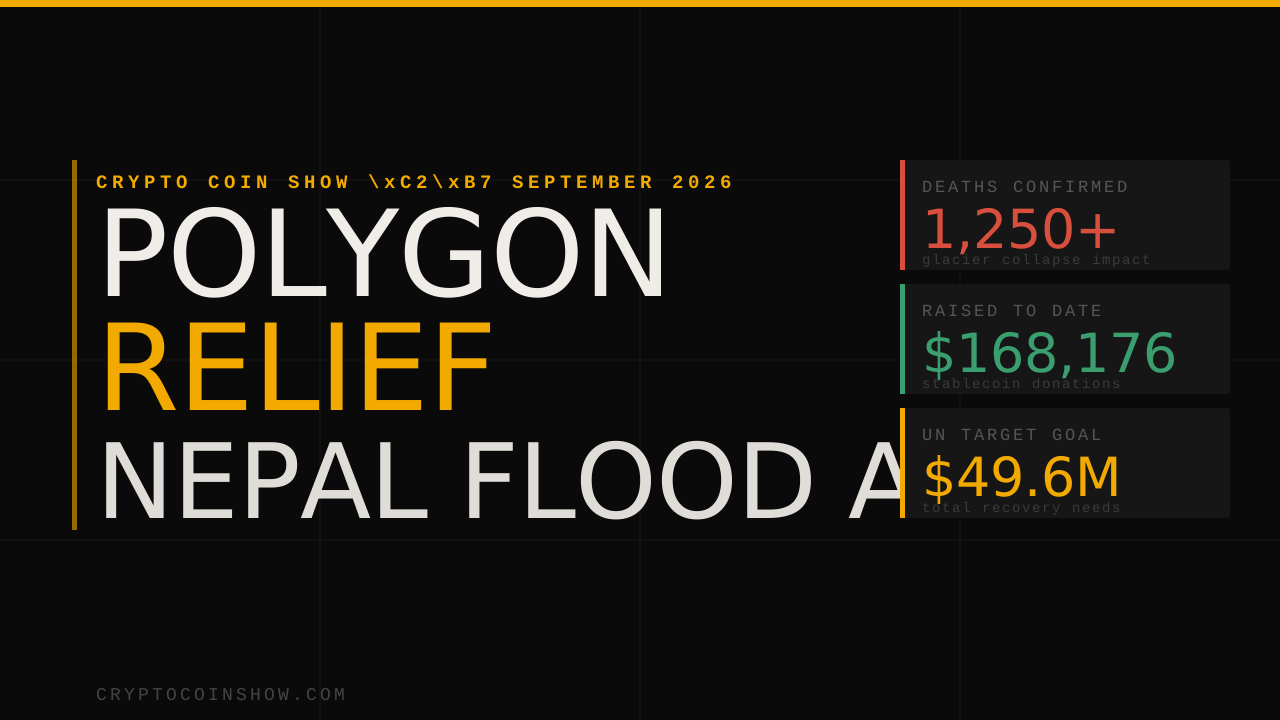 Polygon co-founder Sandeep Nailwal opens crypto channel for Nepal flood fundSep 4, 2026
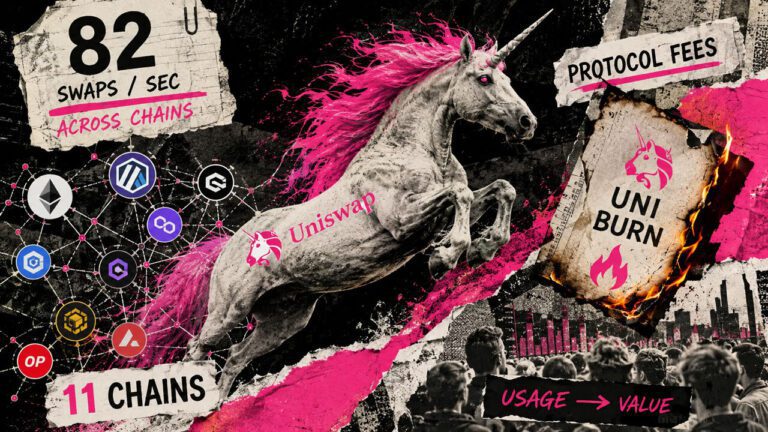 Uniswap trading volume explodes to record levels over 7 million per day – but actual fees lag far behindSep 2, 2026
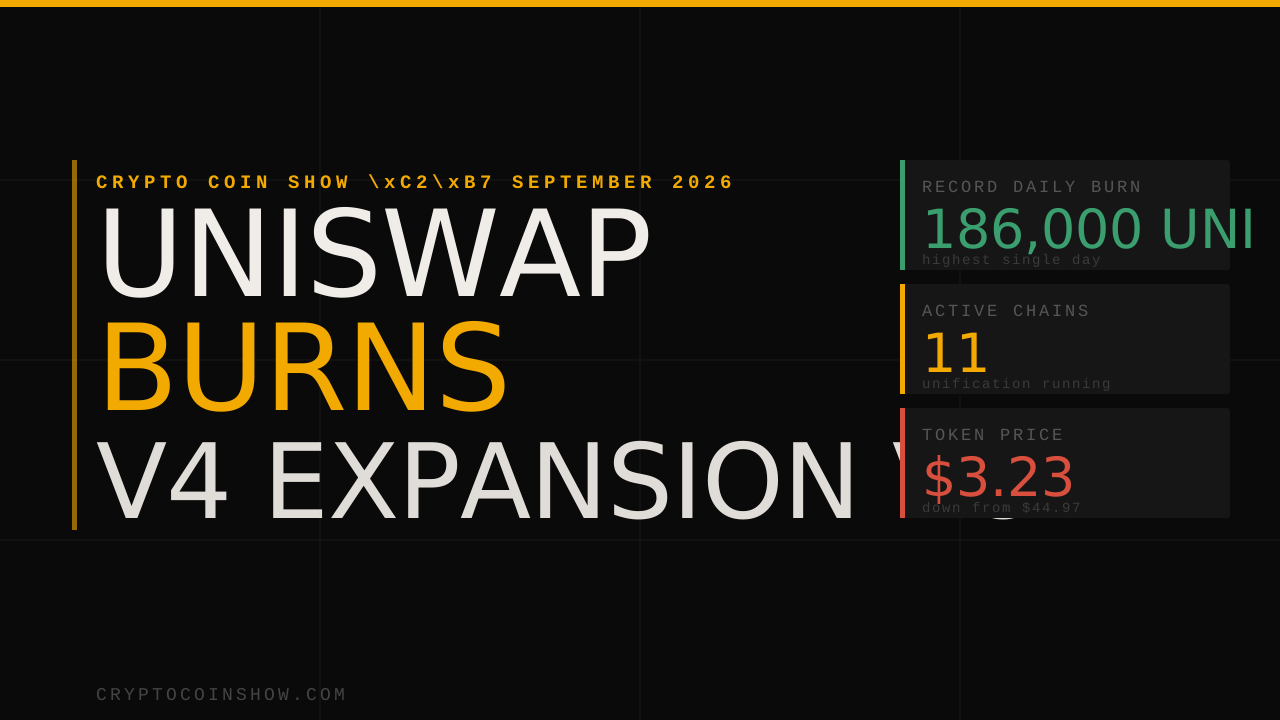 Uniswap floats extending UNIfication burns to v4 poolsJul 7, 2026
More interviews
 How Brave is expanding beyond ad blocking with Drew PotterSep 27, 2026
 Why Kevin Carter thinks China is winning the AI raceSep 25, 2026
 Brave's plan to bring self-custody payments to 120 million usersSep 18, 2026
 Arie Trouw on why AI agents now need proof of actionSep 14, 2026
 How XYO is building an audit trail for AI agentsAug 14, 2026
 Dave Rodman on choosing the right offshore home for a crypto companyAug 4, 2026