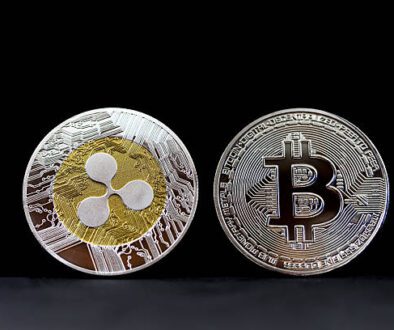
XRP Set To Dethrone Bitcoin Within 6 Years, Entrepreneur Says

A prominent voice within the XRP community has put forward a striking claim: Ripple’s token could surpass Bitcoin as the market’s leading cryptocurrency within six years. The forecast, made by an Army veteran and digital asset advocate, has reignited debate about which blockchain asset might dominate the future crypto landscape, even as both tokens experience significant price volatility in the current market cycle.
Understanding the Competitive Landscape
The cryptocurrency market has evolved dramatically since Bitcoin’s 2009 inception. Today, over 50,000 digital assets compete for market share, yet Bitcoin and Ethereum command approximately 55-60% of total cryptocurrency market capitalization combined. This concentration reflects the powerful network effects and first-mover advantages that established protocols maintain.
Ripple Labs, XRP’s parent company, operates differently from Bitcoin’s decentralized model. Founded in 2012, Ripple positioned XRP as a bridge currency for cross-border payments between financial institutions. The company maintains significant XRP holdings and actively shapes the token’s development roadmap—a structural difference that influences how market participants view these assets.
XRP’s use case centers on enabling faster, cheaper international transactions for banks and payment providers. Bitcoin, by contrast, functions as a decentralized store of value and medium of exchange without institutional backing. This fundamental distinction shapes their respective market positions and adoption pathways.
The Mathematics of Market Dominance
The numerical gap separating these two assets remains substantial. Bitcoin currently commands a market capitalization near $1.37 trillion, while XRP stands at approximately $86 billion—a roughly 16-fold difference in total market value.
For XRP to achieve parity with Bitcoin’s current market cap, the token would need to appreciate roughly 1,500% from present trading levels, reaching approximately $22.50 per coin. That calculation assumes Bitcoin’s valuation remains flat, which few analysts expect in a volatile market environment.
XRP would need to climb to roughly $22.5 per token just to match Bitcoin’s market value. That represents a nearly 1,500% increase from today’s trading levels.
— Market Analysis Data
Bitcoin’s dominance extends beyond raw numbers. The network effect—the advantage that grows as more users and institutions adopt an asset—remains firmly entrenched in Bitcoin’s favor. Institutional custody solutions, futures contracts, and regulatory clarity in major jurisdictions have all strengthened Bitcoin’s structural position over more than a decade.
Multiple factors reinforce Bitcoin’s lead. The U.S. Securities and Exchange Commission has rejected numerous spot Bitcoin ETF applications before finally approving them in 2024, signaling institutional acceptance. Major financial institutions from BlackRock to Fidelity now offer Bitcoin investment vehicles to their clients. XRP, conversely, remains classified as a potential security in some jurisdictions following Ripple’s 2020 lawsuit against the SEC—a regulatory overhang that complicates institutional adoption.
The Technical Analysis Argument
Proponents of the XRP forecast anchor their thesis partly on long-term price trendlines spanning the past ten to twelve years. They argue that Bitcoin has fallen below critical support levels established across multiple market cycles, signaling potential weakness ahead.
However, technical analysis—while useful for identifying trader behavior patterns—carries inherent limitations. Chart patterns do not predict price movements with certainty. Real-world outcomes depend on capital flows, regulatory decisions, macroeconomic conditions, and shifts in market sentiment.
Trendlines can influence when traders enter or exit positions, but they guarantee nothing about future price direction. Market outcomes are shaped by adoption metrics, institutional participation, regulatory developments, and the broader economic environment.
Past claims from XRP community figures have included assertions about high-profile individuals connected to Bitcoin’s origins and suggestions that price swings represent coordinated market suppression. While such narratives energize devoted communities, they remain speculative and lack empirical foundation.
The track record of long-term cryptocurrency forecasts offers sobering perspective. Numerous prominent investors and analysts have made multi-year predictions about Bitcoin’s trajectory that proved wildly inaccurate. Price forecasts extending six or more years into the future operate in an environment of profound uncertainty regarding technological development, regulatory frameworks, and macroeconomic conditions.
What Would Need To Change
For XRP to realistically challenge Bitcoin’s position, several conditions would likely need to align simultaneously. XRP would require mainstream adoption that exceeds its current trajectory, significant institutional capital inflows, and sustained positive sentiment across multiple market cycles.
Specifically, XRP would need to demonstrate superior utility in real-world applications. Currently, Ripple’s cross-border payment corridor usage remains modest compared to the hype surrounding potential institutional adoption. For XRP to justify a market cap exceeding Bitcoin’s, banks would need to adopt Ripple’s technology at scale—and critically, they would need to hold and utilize XRP tokens rather than merely using Ripple’s infrastructure.
Bitcoin, conversely, would need to experience either a severe multi-year decline or face fundamental erosion of its network value proposition. Most analysts consider either scenario unlikely given Bitcoin’s twelve-year track record and institutional acceptance.
Alternatively, both assets could grow substantially—but Bitcoin could grow faster, maintaining its dominance. The cryptocurrency market has historically expanded dramatically, allowing multiple assets to appreciate simultaneously without altering their relative rankings.
For market leadership to shift, XRP would need extraordinary growth, Bitcoin would need to decline meaningfully, or some combination of both would need to occur. Most institutional and retail investors consider Bitcoin’s top position secure for the foreseeable future, though XRP remains an active trading vehicle within the broader crypto ecosystem.
Industry Context and Market Implications
The broader cryptocurrency industry context shapes how realistic this XRP prediction appears. The crypto market exists within evolving regulatory frameworks that differ dramatically by jurisdiction. The European Union’s Markets in Crypto-Assets Regulation (MiCA), the United States’ patchwork of SEC and CFTC oversight, and Asia-Pacific regulations all influence which assets attract institutional capital.
Bitcoin benefits from the clearest regulatory categorization as a commodity in major markets. XRP’s uncertain status—particularly following Ripple’s legal battles—creates structural disadvantages for institutional adoption. Large asset managers face compliance risks holding assets classified as potential securities without clear regulatory guidance.
Market capitalization distribution in cryptocurrency has historically remained highly concentrated. The top three assets (Bitcoin, Ethereum, and BNB) collectively represent approximately 70% of total crypto market value. For XRP to usurp Bitcoin’s position, extraordinary capital reallocation would need to occur—essentially, massive numbers of investors would need to simultaneously decide that a twelve-year-old, proven network protocol is inferior to a competing asset with fewer institutional backers and less regulatory clarity.
The predictions also ignore technological development trajectories. Bitcoin developers continue improving scalability through Layer 2 solutions like the Lightning Network, which enable thousands of transactions per second. Ethereum’s transition to proof-of-stake demonstrated that major protocols can successfully implement significant upgrades. These developments strengthen rather than weaken Bitcoin’s competitive position.
Looking Ahead
The prediction of an XRP ascendancy by 2032 represents a speculative long-term thesis rather than a probable near-term development. The crypto market will continue evolving based on technological improvements, regulatory frameworks, and capital allocation decisions by institutions and retail participants.
Monitoring adoption metrics provides genuine insight: partnerships with financial institutions, cross-border transaction volume, merchant acceptance, and regulatory approvals all matter. Price action alone does not determine cryptocurrency viability or market position.
For investors and observers, the relevant questions are practical ones. What real-world use cases drive XRP adoption? How does Bitcoin’s network effect strengthen or weaken? Where is institutional capital actually flowing? These fundamentals matter far more than decade-spanning trendlines or community sentiment.
Bitcoin’s entrenched position and established dominance suggest it will remain the market leader through 2032 and beyond. The combination of first-mover advantage, institutional acceptance, regulatory clarity, and network effects creates substantial barriers to displacement. However, the cryptocurrency market has surprised observers before. Sustained technological progress, regulatory shifts, or macroeconomic changes could alter competitive dynamics in ways no one currently predicts.
What seems unlikely is a straightforward scenario where XRP simply outpaces Bitcoin through 2032. More probable outcomes include: both assets appreciating dramatically while Bitcoin maintains relative dominance; XRP finding niche success in institutional cross-border payments while Bitcoin dominates as a store of value; or entirely new blockchain technologies emerging to challenge both incumbents.
Until then, price movements in both Bitcoin and XRP will continue reflecting trader expectations, adoption developments, and broader financial market conditions. Bold six-year forecasts generate discussion but rarely determine outcomes. The actual story will unfold through continued innovation, institutional participation, and user adoption. Investors would be well-served focusing on fundamental developments rather than speculation about which asset will lead the market years hence.
Original reporting: newsbtc.com
Get weekly blockchain insights via the CCS Insider newsletter.