SEC allows investment advisers to use chartered trust companies as crypto custodians
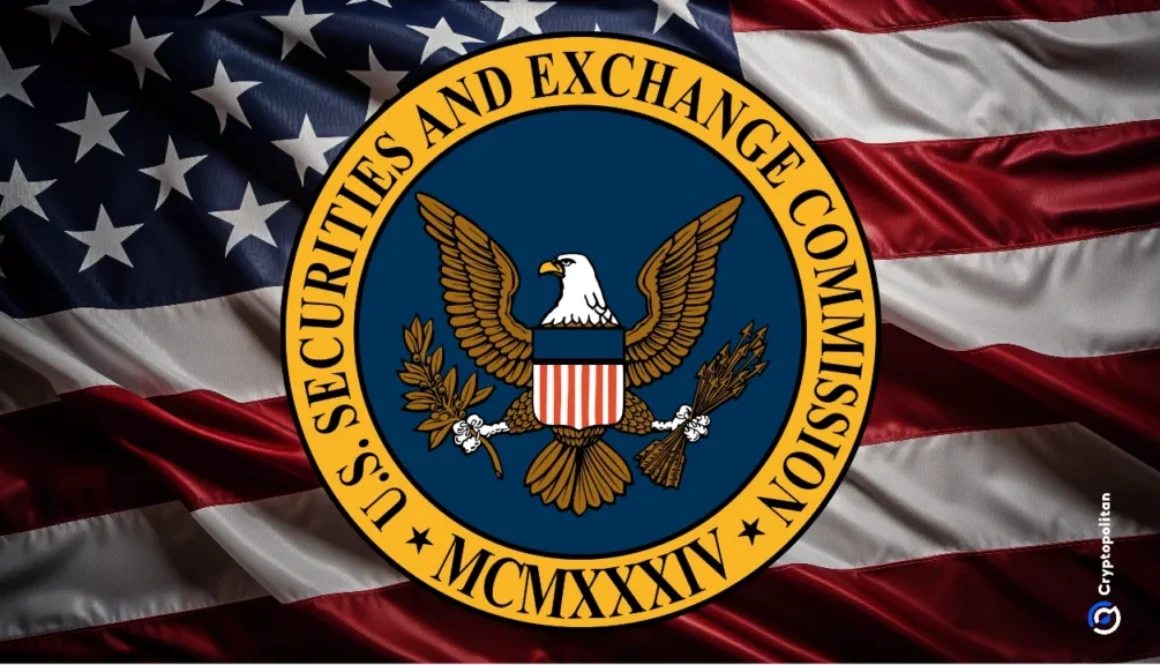
The U.S. Securities and Exchange Commission has clarified that state-chartered trust companies can serve as qualified custodians for digital assets held by investment advisers, removing regulatory ambiguity that has hindered institutional adoption of crypto custodial services.
The SEC issued its guidance through a no-action letter addressed to law firm Simpson Thacher & Bartlett LLP, which had sought formal clarification on whether state-chartered trust companies could legally hold Bitcoin, Ether, and other digital assets for registered investment advisers. The agency confirmed that such entities qualify as “banks” under Section 202(a)(2) of the Investment Advisers Act of 1940, permitting them to function as custodians under both the Investment Advisers Act and the Investment Company Act.
The no-action letter designation carries significant practical weight. It signals that the SEC will not pursue enforcement action against advisers or funds that utilize state trust companies to safeguard client crypto holdings. This creates a safe harbor for financial institutions seeking to expand their custodial services in the digital asset space.
This additional clarity was needed because state-chartered trust companies were not universally seen as eligible custodians for crypto assets.
— Brian Daly, Director, SEC Division of Investment Management
Addressing a Critical Market Gap
Prior to this guidance, investment advisers faced uncertainty about which entities could legally hold cryptocurrencies on their behalf. While large custodians had begun offering digital asset storage, the regulatory status of state-chartered trust companies remained unclear, creating friction for advisers seeking to work with regional or specialized custodians.
Brian Daly, the SEC’s Director of Investment Management, emphasized that the clarification addresses a genuine regulatory gap. He noted that the letter provides current guidance while leaving the door open for formal rulemaking to address the topic more comprehensively in the future.
The SEC’s no-action letter treats state-chartered trust companies as qualified custodians under existing law, rather than creating new rules. This allows institutional adoption to proceed while regulatory frameworks continue to evolve.
The Wyoming Precedent
Senator Cynthia Lummis highlighted Wyoming’s role in paving the way for this decision. The state issued its own no-action relief in 2020, establishing a regulatory framework for digital asset custody that was initially questioned by some SEC staff members.
Lummis emphasized that the SEC’s recognition of state trust companies validates Wyoming’s approach to digital asset supervision. The state’s early leadership has now gained formal federal acknowledgment, demonstrating how state-level innovation can influence national regulatory policy.
Wyoming’s framework has served as a testing ground for crypto-friendly financial regulation, and the SEC’s letter suggests that other states’ supervisory approaches may gain similar recognition. This development could accelerate competition among states to establish themselves as centers for digital asset financial services.
They finally recognized the rigor & value of Wyoming’s digital asset supervision.
— Senator Cynthia Lummis, U.S. Senate
Institutional Implications
The ruling has immediate relevance for cryptocurrency market infrastructure. Registered investment advisers managing digital assets now have expanded options for custody arrangements, potentially reducing costs and improving service quality through competition among regional providers.
State-chartered trust companies can now market crypto custodial services to institutional clients without regulatory ambiguity. This is particularly significant for advisers operating in states with progressive financial regulation or those seeking to diversify their custodian relationships.
Expanding the universe of qualified custodians could lower custody fees, increase service diversity, and enable more advisers to incorporate digital assets into client portfolios with confidence in their regulatory compliance.
The clarification also supports the broader infrastructure necessary for institutional crypto adoption. Asset managers have consistently cited custody concerns as a barrier to deeper market participation. By validating state trust companies, the SEC removes one structural obstacle to institutional capital flows.
Context Within Broader Regulatory Tensions
The SEC’s letter arrives against a backdrop of competing regulatory signals. The Federal Reserve and Treasury Department have implemented restrictions on how banks and regulated financial institutions can service cryptocurrency firms—an approach characterized as “Operation Choke Point 2.0” by industry observers.
This creates an interesting regulatory bifurcation. While some agencies have moved to restrict bank engagement with crypto, the SEC has clarified pathways for institutional participation in digital asset markets through qualified custodians. The distinction reflects different regulatory perspectives within the federal government.
The SEC’s position favors investor protection through custody standards rather than categorical restrictions on institutional participation. By establishing clear custodial requirements, the agency enables market growth within a defined regulatory framework, contrasting with more restrictive approaches elsewhere in government.
Industry Context and Market Significance
The digital asset custody market has experienced explosive growth, with institutional allocations to cryptocurrency increasing substantially over the past five years. However, this growth has been constrained by custody infrastructure limitations and regulatory uncertainty. Traditional custodians like Fidelity and established institutions like Coinbase Custody have captured significant market share, but competition has remained limited due to regulatory barriers.
State-chartered trust companies represent a significant untapped resource. Thousands of these entities operate across the United States, managing trillions in traditional assets. Many possess sophisticated compliance infrastructure, insurance arrangements, and technological capabilities that could support digital asset custodial services. The SEC’s clarification opens this entire category of financial institutions to the crypto custody market.
This expansion of qualified custodians addresses a fundamental market structure problem. In traditional finance, custody competition drives innovation and cost reduction. A fragmented custodial landscape for digital assets has limited competitive pressure, allowing existing providers to maintain higher fees and slower service improvements. Introducing state trust companies into this market creates conditions for competitive pressure that benefits institutional clients.
Regional banks and trust companies now have explicit regulatory permission to develop crypto custodial capabilities without fear of SEC enforcement action. This is particularly important for institutions already familiar with managing complex compliance requirements in traditional custody operations. The learning curve for adding digital asset services is substantially lower for established custodians than for new market entrants.
Broader Institutional Adoption Pathways
The custody clarification represents one of several regulatory developments facilitating institutional crypto adoption. The SEC’s approval of spot Bitcoin ETFs in January 2024 similarly removed structural barriers to institutional participation. Together, these regulatory moves create a more coherent framework for traditional financial institutions to engage with digital assets.
However, significant gaps remain. Custody clarity for alternative assets like non-fungible tokens and emerging layer-two protocols remains ambiguous. Tax treatment of staking rewards and other yield-bearing crypto activities continues to create compliance complexities. Securities law treatment of tokenized securities remains an open question.
The SEC’s approach through no-action letters provides flexibility but also creates planning uncertainty. Institutions cannot rely indefinitely on letters addressed to other parties. Formal rulemaking would provide greater certainty and permanence, but regulatory processes move slowly. Market participants must balance the current safe harbor against the possibility of future formal rules that could differ from current guidance.
Forward-Looking Regulatory Landscape
Going forward, the SEC indicated that this issue could be addressed through formal rulemaking. A formal rule would provide even greater clarity and potentially codify the treatment of state trust companies in regulatory text. However, the current no-action letter provides immediate workable guidance for market participants.
The letter represents incremental but meaningful progress toward a more defined regulatory environment for institutional crypto adoption. As custody infrastructure develops and state-level innovation continues, the formal rulemaking process could build on this foundation to create more comprehensive federal standards. The timing of such rulemaking may depend on broader policy priorities within the SEC and evolving congressional interest in digital asset regulation.
For market participants, the immediate opportunity involves accelerating custody infrastructure development to capture institutional demand. State trust companies that move quickly to establish digital asset custodial capabilities will establish market positions before competitive intensity increases. The regulatory clarity provided by the SEC’s letter substantially improves the risk-reward calculus for institutions considering these investments.
The custody clarification also signals that the SEC remains committed to enabling institutional participation in digital asset markets through regulatory frameworks rather than categorical prohibitions. This philosophy contrasts sharply with other regulatory agencies and may influence how digital asset regulation develops across the broader financial system. As institutional adoption accelerates, custody infrastructure quality and competitive dynamics will prove essential to sustainable market development.
Get weekly blockchain insights via the CCS Insider newsletter.