
Tesla stock drops as Musk focuses on robots instead of current sales
Tesla’s stock fell nearly 4% in after-hours trading following third-quarter earnings results and a earnings call dominated by CEO Elon Musk’s vision for autonomous vehicles and humanoid robots, while critical near-term business challenges went largely unaddressed.
During the Wednesday call, Musk sidestepped multiple pressing operational questions that typically concern institutional investors. He offered no commentary on vehicle demand following the expiration of a key federal tax credit, made no mention of Cybertruck performance, declined to discuss tariff impacts on automotive components, and provided no fourth-quarter guidance to Wall Street analysts.
The earnings report itself underperformed expectations. Yet rather than address profitability concerns or current sales momentum, Musk pivoted to longer-term strategic bets that remain years away from commercialization.
The Robotaxi Promise Versus Reality
Musk has long promoted a vision where Tesla owners could generate income by deploying their vehicles as autonomous taxis. On the earnings call, he doubled down on this narrative, stating that millions of Tesla vehicles could become fully self-driving with a software update. However, the gap between rhetoric and execution has widened considerably.
In July, Musk predicted Tesla would offer autonomous ride-hailing services to roughly half the U.S. population by year-end. That timeline has already slipped. On Wednesday, he announced plans to launch driverless robotaxi operations in Austin before 2024 closes, with expansion to eight to 10 additional cities by the end of 2025—though those vehicles would still require safety drivers.
People just don’t quite appreciate the degree to which this will take off. We’re making a couple million cars a year, and we have millions of cars out there that with a software update become full self-driving cars.
— Elon Musk, CEO, Tesla
Competitors are demonstrating faster real-world progress. Waymo, owned by Alphabet, continues expanding paid robotaxi operations across multiple U.S. cities, while Baidu’s Apollo Go service is scaling throughout China and internationally. Tesla’s efforts remain confined to limited pilot programs despite years of development.
Full Self-Driving (FSD) adoption remains minimal among Tesla owners. Only 12% of users pay for the feature, which generated less than 2% of total quarterly revenue—a decline from the previous year’s $326 million.
Finance chief Vaibhav Taneja acknowledged that FSD Supervised, Tesla’s driver-assistance system, remains “small” in terms of revenue contribution. The company has run multiple promotional campaigns to boost adoption, but payment figures suggest consumer enthusiasm remains lukewarm.
Optimus and the Humanoid Robot Bet
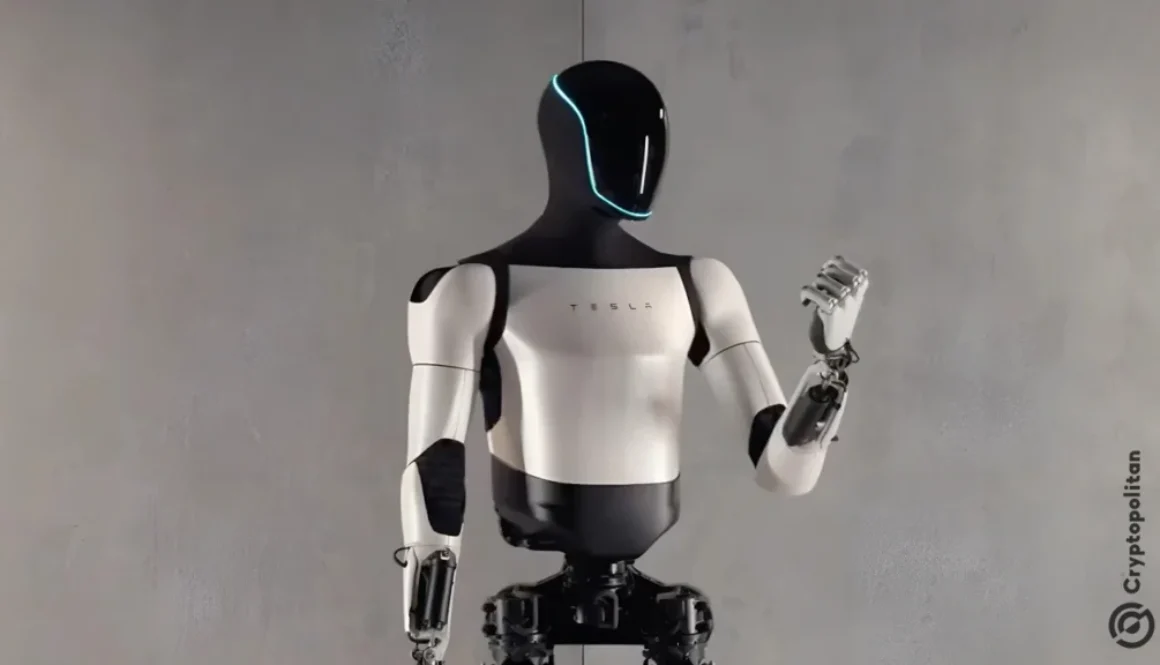
After discussing autonomous vehicles, Musk shifted focus to Optimus, Tesla’s in-development humanoid robot. He reiterated claims that Optimus represents “the potential to be the biggest product of all time”—a statement Musk has made before without timeline specifics.
On Wednesday, Musk expanded the theoretical applications dramatically. Beyond factory work and childcare scenarios he has previously mentioned, he suggested Optimus could perform surgical procedures. He framed the robot alongside self-driving cars as tools capable of eliminating poverty globally.
These are speculative assertions about technology that Tesla has not yet commercialized or demonstrated at scale. The company has shown prototypes but has made no public announcements regarding production timelines, safety certifications, or commercial deployment schedules.
Market Reaction and Investor Concerns
The after-hours stock decline reflected investor disappointment with both earnings results and guidance. Wall Street expected concrete answers about market conditions, competitive positioning, and near-term profit drivers. Instead, shareholders received CEO commentary focused on multi-year moonshot projects.
Tesla’s earnings missed analyst predictions, yet the earnings call avoided addressing immediate headwinds including federal tax credit expiration, tariff exposure, and fourth-quarter demand forecasts.
This disconnect between investor priorities and management communication has become a recurring pattern at Tesla. The company operates in an increasingly competitive automotive and autonomous technology landscape where near-term execution matters significantly to valuations.
For cryptocurrency and blockchain investors tracking macro trends, Tesla’s strategic divergence merits attention. The company’s capital allocation decisions—favoring long-term robotics investments over immediate profitability improvements—signal how tech sector leaders are prioritizing future technological dominance over current shareholder returns.
Competitive Industry Landscape and Market Implications
Tesla’s struggle to deliver on near-term autonomous vehicle promises comes at a critical juncture for the automotive industry. The electric vehicle market has matured considerably since Tesla’s early dominance, with traditional automakers including Ford, General Motors, and Volkswagen now investing heavily in EV production and autonomous driving capabilities. Legacy automotive manufacturers collectively invested over $100 billion annually in electrification and autonomous technology development, creating formidable competition that Tesla cannot dismiss through rhetoric alone.
The autonomous vehicle sector specifically has become increasingly fragmented and competitive. Beyond Waymo and Baidu, companies like Cruise (owned by General Motors) have launched commercial robotaxi services with actual driverless operations in San Francisco and other major markets. These competitors have demonstrated measurable progress toward Level 4 autonomy—vehicles capable of handling complex driving scenarios without human intervention. Tesla’s Full Self-Driving Supervised remains classified as Level 2 assistance, meaning drivers must remain actively engaged and monitoring road conditions at all times.
The broader implications for Tesla extend beyond robotaxi markets. Institutional investors increasingly view the company through a traditional automotive valuation lens, recognizing that Tesla’s extraordinary stock multiple depends on execution of transformative projects. When management provides no concrete timelines, production forecasts, or revenue models for these projects, institutional capital naturally seeks opportunities with clearer near-term catalysts and cash flow visibility.
Financial Performance and Capital Allocation Questions
Tesla’s third-quarter earnings revealed net income margins compressing amid pricing pressures and increased competition. The company’s ability to maintain premium valuations historically relied on superior growth rates and profitability metrics. As those advantages narrow, investors question whether capital should be allocated toward profitable automotive production or speculative robotics development.
The company currently manufactures approximately 1.8 million vehicles annually across global facilities. This existing production capacity generates stable, predictable cash flows. Meanwhile, Optimus development remains capital-intensive with no revenue contribution. The Gigafactory network has undergone multiple expansion announcements, some of which have been delayed or scaled back, raising questions about management’s ability to execute on ambitious timelines.
Federal tax credit expiration deserves particular scrutiny in this context. For years, the $7,500 U.S. tax credit boosted Tesla’s competitive advantage by reducing effective vehicle costs. This subsidy’s elimination removes a significant demand tailwind precisely when traditional automakers are launching competitive EV models at aggressive price points. Tesla’s silence on how this impacts fourth-quarter demand and full-year delivery targets signals management awareness that the news is unfavorable.
Looking Forward: Execution Reality and Investor Expectations
Tesla faces a critical window through year-end to demonstrate whether Musk’s Austin robotaxi launch materializes. The credibility of longer-term promises increasingly depends on near-term execution. Investors will scrutinize Q4 results and any updates regarding autonomous vehicle deployment timelines.
The tension between Musk’s visionary statements and Tesla’s operational challenges reflects broader dynamics in technology leadership. Visionary narratives can drive long-term stock appreciation, but they require consistent progress milestones to maintain investor confidence. Tesla’s current trajectory—missing near-term guidance while making bold long-term claims—may sustain retail investor enthusiasm but increasingly concerns institutional managers responsible for fiduciary obligations.
The robotaxi market opportunity is genuinely substantial. Industry analysts estimate that autonomous ride-hailing could represent a multi-trillion-dollar market if successfully deployed at scale. However, Waymo’s demonstrated progress suggests this opportunity may be captured by competitors willing to execute transparently against defined timelines rather than manage investor expectations through aspirational rhetoric alone.
For those tracking broader market trends and institutional money flows, Tesla’s recent performance highlights how growth-stage companies face pressure when current fundamentals disappoint and future promises remain unproven. The stock market historically rewards execution over vision; Tesla’s next quarterly results will determine whether current investor skepticism represents a temporary correction or the beginning of a longer-term valuation reset for a company that can no longer claim autonomous vehicle leadership through delivery alone.
Get weekly blockchain insights via the CCS Insider newsletter.