
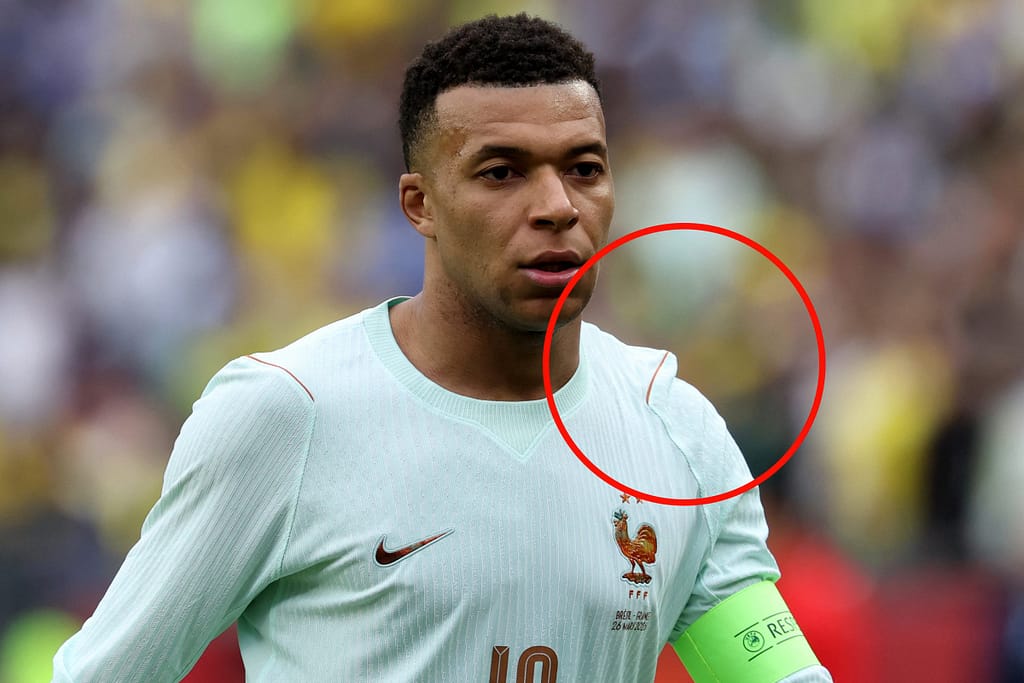
Nike’s AI Designed World Cup Jerseys Are a Disaster
Nike’s AI-assisted design system has produced a widespread manufacturing flaw in World Cup jerseys for multiple national teams, creating a shoulder seam bulge that affects the fit of kits worn by elite players and purchased by fans at premium prices. The defect raises institutional questions about the reliability of AI-driven design in high-stakes commercial applications and whether computational tools are adequately tested before mass production deployment.
- Nike’s “Aero-FIT” kits for England, France, US, and Uruguay feature a bunching defect at shoulder seams that mars athlete appearance and fit.
- Fans paid up to $200 per jersey only to receive products with acknowledged quality issues months before tournament play begins.
- Nike confirmed the defect involves computational design and specialized knitting processes, but has not disclosed remediation plans or production timelines.
- $200 Maximum retail price paid by fans for defective Nike World Cup jerseys.
- Multiple National teams affected by shoulder seam manufacturing flaw across kits.
- Months Remaining before World Cup begins with unresolved jersey quality issue.
Nike has encountered a significant manufacturing defect in its World Cup jersey collection that undermines both professional athlete appearance and consumer confidence, just as the tournament approaches.
The defect, a pronounced bulging at shoulder seams where fabric bunches unnaturally, has become visible across kits worn by star players including France’s Kylian Mbappé and Uruguay’s captain Federico Valverde, raising questions about quality assurance in AI-assisted design workflows.
The issue affects national teams that Nike manufactures for, including England, France, the United States, and Uruguay, suggesting a systemic problem rather than an isolated production error.
Nike admits shoulder seams fail despite “computational design” investment
Nike acknowledged the defect directly to The Guardian, stating that “during the recent international break, we observed a minor issue with our Nike national team kits, most noticeable around the shoulder seam.” The company characterized the problem as aesthetic rather than functional, claiming “performance is unaffected, but the overall aesthetic is not where it needs to be.” The language mirrors how a manufacturer might describe a cosmetic car defect, yet in athletic wear, where visual presentation forms part of professional branding and sponsorship value, aesthetic failure carries material commercial weight.
The “Aero-FIT” design system that produced these kits represents Nike’s major technological push into what the company describes as “computational design and a highly specialized, stitch-specific knitting process.” A source with knowledge of the design process confirmed to The Guardian that the system incorporates AI elements working alongside human designers.
This hybrid approach was meant to optimize kit performance in the tournament’s expected heat conditions, but the shoulder seam failures suggest insufficient testing before mass manufacturing commenced.
The scale of the problem remains unclear, with possibly millions of jerseys already produced and distributed to national teams and retail consumers.
Consumer backlash highlights quality control gap in premium merchandise
Retail customers who purchased World Cup jerseys at prices up to $200 have expressed frustration on social media platforms, particularly Reddit, where one user characterized the design as “a stupid, STUPID design” and described how “the way the shoulders are sewn together just makes them bunch like this no matter what.” This complaint suggests the defect is inherent to the pattern rather than a random manufacturing error, pointing to a validation problem at the design stage before production tooling was finalized.
For institutional investors evaluating Nike’s operational competence and quality management, the incident raises concerns about the integration of AI tools into product development pipelines.
Apparel manufacturing at scale depends on extensive sampling and testing protocols before mass production; the fact that a defect this visually obvious reached consumers and professional athletes suggests those checkpoints either failed or were accelerated to meet tournament deadlines.
The reputational damage extends beyond social media complaints, professional athletes appearing in poorly fitting kits during televised matches create negative brand associations at precisely the moment global audience attention is highest.
Nike has not disclosed whether affected kits will be replaced, recalled, or remediated before tournament play.
Remediation strategy and timeline remain undisclosed with weeks until competition
As of Nike’s public statement, the company has not announced a plan to address the defect. The World Cup tournament is months away, leaving a narrow window for either redesign-and-production cycles or strategic deployment of alternative kits.
For the national teams affected, this creates operational uncertainty: athletes may face either continued use of defective kits or last-minute substitutions that disrupt preparation routines immediately before competition.
The incident also carries implications for how enterprises adopt AI-assisted design at scale. Unlike software development, where iteration and patching are routine, apparel manufacturing for global sporting events requires months-long lead times and long-term tooling commitments.
Deploying an AI system into that pipeline without demonstrating sufficient maturity and testing discipline creates risks that are difficult to remedy mid-cycle. For Nike’s C-suite and board, the question is not merely how to fix these particular jerseys, but whether the “computational design” approach has been validated rigorously enough to use again for future commercial campaigns.
The defect emerged during international play weeks before the main tournament, providing time for corrective action but limited margin for error.
Nike must publish a clear remediation timeline and disclose whether affected kits will be replaced, redesigned, or used as-is during World Cup play. The company’s next statement will indicate whether this was treated as a design validation failure requiring process overhaul, or a contained manufacturing incident addressed through targeted fixes.
Institutional stakeholders should watch for any disclosure of whether AI tools will continue to lead design workflows for future Nike campaigns, or whether the failure triggers a reversion to traditional human-led design with computational assistance in a secondary role.
Nike’s AI Design Workflow Under Institutional Scrutiny Following Mass Production Failure
The shoulder seam defect represents a critical breakdown in Nike’s design-to-manufacturing pipeline at a moment when institutional investors and apparel manufacturers are closely monitoring AI adoption in high-volume production.
Nike invested substantially in computational design tools over the past three years, positioning AI-assisted knitwear engineering as a competitive advantage in speed-to-market and customization.
The World Cup failure suggests those tools either lack adequate validation protocols or that human quality gates were bypassed in favor of accelerated production schedules, a pattern that has plagued other major manufacturers who adopted AI without commensurate testing infrastructure.
Industry sources indicate Nike’s Aero-FIT system was designed to optimize aerodynamic properties and reduce weight, using machine-learning models trained on professional athlete movement data.
However, the computational models appear not to have been stress-tested against real-world knitting machinery tolerances or validated against fit testing with actual athletes before mass production commenced.
This gap between digital simulation and physical manufacturing has emerged as a recurring institutional risk: AI design systems optimize for measurable parameters (weight, drag coefficient, thread tension algorithms) while overlooking qualitative factors like seam consistency that only emerge at scale.
Nike has not disclosed whether it will halt production, retrofit existing inventory, or replace all affected jerseys before tournament kickoff, a decision that will reveal whether the company prioritizes supply chain momentum over quality remediation. The resolution will set precedent for how institutional investors evaluate AI manufacturing claims from athletic apparel suppliers, particularly ahead of earnings reports that typically highlight technology investments as efficiency drivers.