
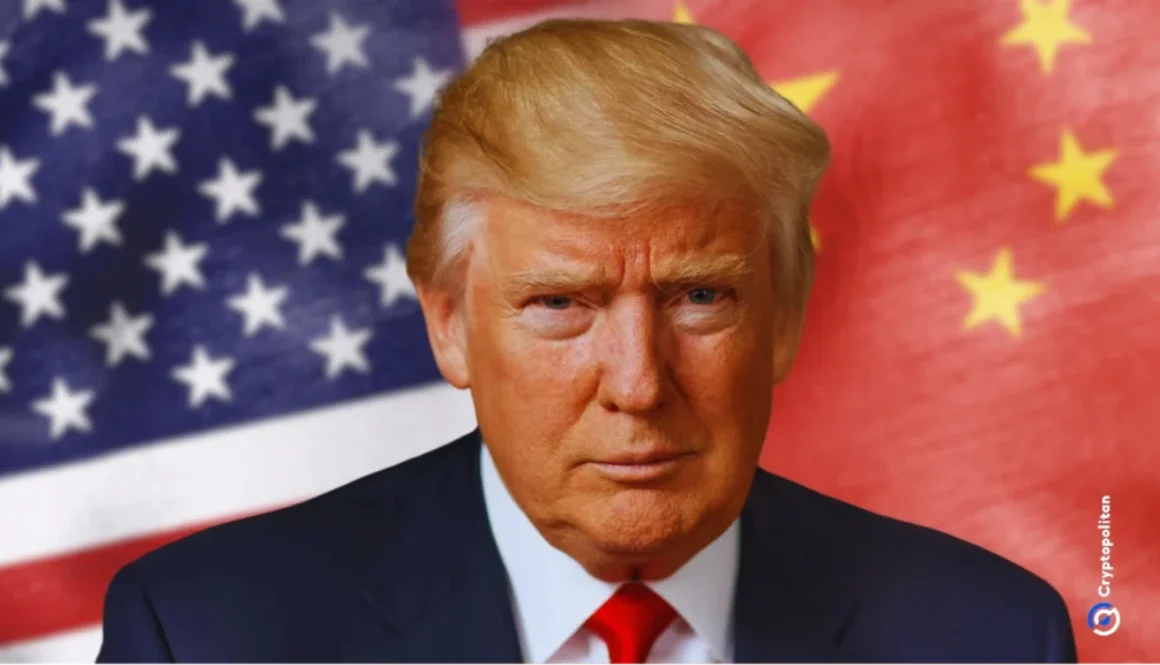
Trump faces backlash from China hawks as he pushes trade deal
The Trump administration’s pivot toward negotiating a comprehensive trade agreement with China is creating friction within Washington’s foreign policy establishment, as hardline officials worry the president may be abandoning the confrontational stance that defined his first term. The shift has prompted concerns from national security advisers and China hawks about whether economic and technology sector interests are now outweighing strategic considerations in U.S.-China relations.
A Change in Direction
During his initial presidency, Trump upended decades of U.S. policy toward China through aggressive tariffs and a combative trade posture. His second term, however, suggests a different calculus. As the administration signals intent to negotiate what Trump characterizes as “a big deal,” officials advocating for tougher China policies report feeling increasingly sidelined.
The shift became more apparent following the announcement of planned discussions between Trump and Chinese President Xi Jinping. Ahead of those talks, Beijing laid out specific demands aimed at reshaping U.S. policy—including relaxed investment rules to attract American capital and reduced support for Taiwan.
The administration’s willingness to negotiate on issues like TikTok operations and artificial intelligence chip exports suggests economic priorities may be superseding security concerns.
— Policy analysts tracking U.S.-China relations
Hawks Losing Ground
Several recent decisions have alarmed those advocating a harder line. Trump has permitted advanced AI chip sales to China and demonstrated openness to preserving TikTok’s U.S. operations—decisions framed around economic pragmatism rather than security grounds.
The president has also removed National Security Council advisers known for supporting stricter China policies, effectively reducing institutional resistance to closer economic ties. This personnel shift has left some observers questioning whether meaningful counterbalance remains within the administration’s decision-making structure.
During his first term, Trump cited national security rationales for imposing tariffs on steel, aluminum, and other products. He also occasionally paused enforcement actions against Chinese technology sales, creating a pattern that puzzled policy observers.
The Business Community Pushes Back
Silicon Valley’s influence on Trump’s China approach appears to have grown measurably. Jensen Huang, chief executive of Nvidia, recently used a public platform to criticize hardliners, describing them as wearing a “badge of shame” and questioning their patriotism—remarks that reverberated through policy circles.
Huang’s comments, made during a podcast interview, reflect the technology sector’s interest in maintaining market access to China. The executive’s intervention illustrates how business leaders are now actively shaping the terms of the China debate within Trump’s orbit.
Defenders of Huang’s position argued his remarks were being mischaracterized by critics. Yet the controversy highlighted deeper tensions: between national security frameworks and commercial opportunity, between longtime advisers skeptical of Beijing and executives viewing China as essential to future profitability.
The emergence of tech executives as powerful informal advisers on China policy marks a significant shift in how the administration is processing these decisions.
— Washington policy observers
The Backlash Intensifies
Former Trump strategist Steve Bannon and other hardliners responded forcefully to Huang’s comments, with Bannon calling for investigation into the executive and alleging he functions as a Chinese Communist Party agent of influence. These accusations reflect the ideological fault lines now visible within Trump’s broader coalition.
Economic experts have raised substantive concerns about the administration’s negotiation approach, particularly given the economic interdependencies between the two powers and China’s emerging dominance in critical sectors like semiconductors, artificial intelligence, and cybersecurity.
China’s technological capabilities in AI, chip manufacturing, and cybersecurity represent genuine strategic concerns. The balance between engaging economically and maintaining technological security has become one of the administration’s central policy dilemmas.
The debate encompasses more than tariffs or trade volumes. It involves fundamental questions about whether the United States can simultaneously negotiate favorable commercial terms while protecting against technological and security vulnerabilities. Those concerns carry particular weight given recent developments in blockchain technology and digital infrastructure, where Chinese innovation has accelerated.
Industry Context and Market Implications
The U.S. semiconductor industry has become the focal point of this policy disagreement. American chipmakers like Nvidia, Intel, and Qualcomm collectively generate billions in annual revenue from Chinese customers, including tech manufacturers, telecommunications companies, and government-affiliated enterprises. Restrictions on chip exports to China have already cost these companies significant market share, which foreign competitors—particularly those from South Korea and Taiwan—have capitalized on.
The broader technology sector similarly faces pressure. Companies in cloud computing, software services, and semiconductor design stand to benefit substantially from normalized trade relations with Beijing. For many of these firms, the Chinese market represents not merely current revenue but essential long-term growth projections. This economic reality creates powerful incentives for executives to advocate for policy moderation.
Conversely, the national security establishment argues that unrestricted technology transfer would undermine American technological advantages that have historically translated into military and economic superiority. Advanced semiconductors power military systems, artificial intelligence applications, and cyberwarfare capabilities. From this perspective, permitting uncontrolled Chinese access to cutting-edge technology represents an existential strategic vulnerability.
Entity Background and Policy Evolution
Understanding Trump’s approach requires recognizing his historical relationship with both business interests and confrontational posturing. Throughout his career as a developer and then politician, Trump has demonstrated preference for transactional negotiations over ideological consistency. His first-term tariff strategy, while aggressive, occasionally incorporated pauses and exemptions that suggested openness to deal-making.
The current administration’s composition reflects this pragmatic orientation. Treasury Secretary appointees and trade advisers with backgrounds in mergers and acquisitions have joined national security officials with more hawkish perspectives. This structural tension has produced the current policy instability, with different factions competing to shape decisions through both formal briefing processes and informal channels.
The administration’s internal struggle also reflects genuine policy complexity. Trade relationships generate jobs and investment. Yet unrestricted technology transfer could erode American advantages in critical sectors. Finding equilibrium between these competing interests remains a core challenge.
Trump’s instinct toward deal-making has historically favored negotiation over protectionism, though his first-term China tariffs suggested nuance in that approach. His current direction implies he believes major agreements offer superior outcomes to the tariff strategy. Whether that calculation proves correct will likely shape U.S.-China relations for years ahead.
Long-Term Consequences and Strategic Realignment
The resolution of this internal debate will carry consequences extending far beyond immediate trade flows. An agreement emphasizing commercial access could accelerate Chinese technological development across sectors where American companies currently maintain advantages. Alternatively, maintaining restrictions would likely invite retaliatory measures from Beijing against American agricultural exports and other sectors where the U.S. maintains competitive advantages.
European and Asian allies have watched these developments with concern. Japan, South Korea, and allied nations in Southeast Asia have built economic strategies around assumptions about American technological leadership and security commitments. A dramatic shift in U.S.-China relations could force recalculation of their own approaches to Beijing, potentially accelerating regional economic realignment.
The internal Washington conflict over China policy will probably intensify if negotiations advance. Business interests will push for expanded access and reduced restrictions. Security-focused officials will advocate for protections. The president will ultimately decide which voices carry more weight in shaping American strategy toward its largest economic rival.
The coming months will reveal whether Trump’s administration can craft a China agreement that addresses both commercial and security concerns, or whether fundamental contradictions between those objectives prove irreconcilable. The outcome will likely influence not just trade flows but also access to critical technologies—including those underpinning digital assets and blockchain infrastructure.
What remains clear is that the post-World War II framework of U.S. technological dominance and strategic advantage is entering a transitional phase. How the Trump administration navigates between business pressure and security imperatives will establish precedents affecting American competitiveness and global positioning for the next decade. The stakes extend beyond any single trade agreement to encompass fundamental questions about America’s role in an increasingly multipolar technological landscape where China has become a genuine peer competitor rather than a subordinate participant in an American-led order.
Get weekly blockchain insights via the CCS Insider newsletter.