
Elizabeth Warren pushes SEC to delay SpaceX IPO as valuation debate intensifies
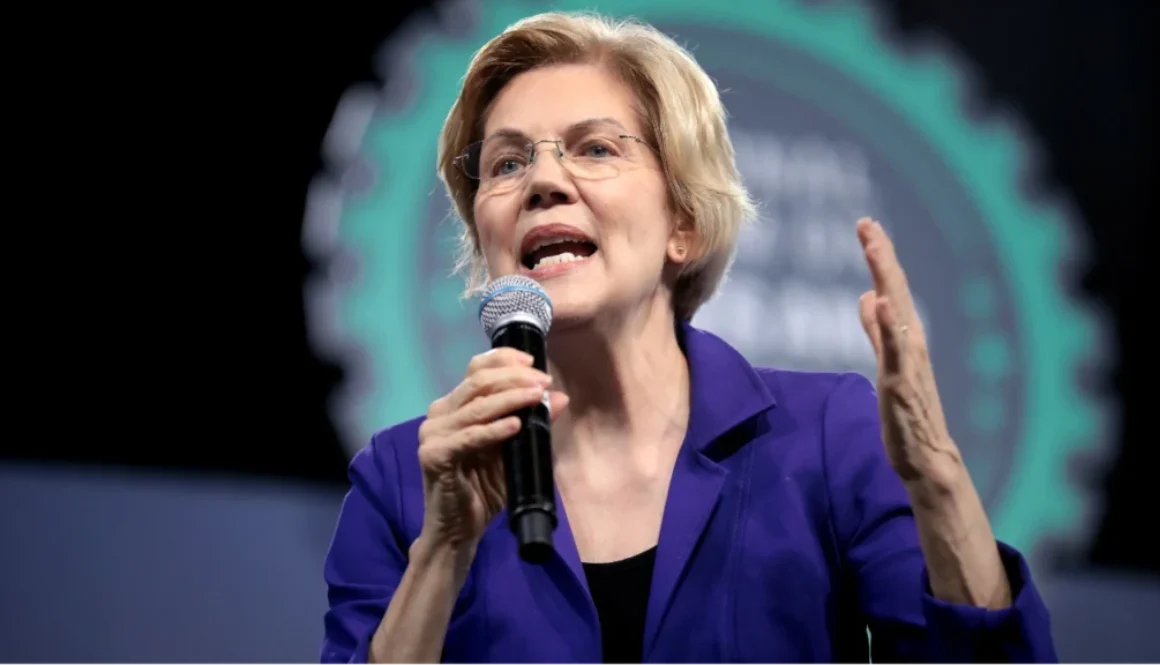
Sen. Elizabeth Warren (D-Mass.), in yet another attack on big tech, has called on the SEC to delay SpaceX’s planned initial public offering.
Wall Street was already having arguments over whether or not a $1.75 trillion price tag can be justified, and now Senator Warren has intervened just days before SpaceX is set to begin trading on the Nasdaq under the ticker SPCX.
Why does Senator Warren think the SpaceX IPO is risky?
Senator Elizabeth Warren has formally asked the U.S. Securities and Exchange Commission (SEC) to delay the IPO of Elon Musk’s SpaceX that was scheduled to begin trading on the Nasdaq as early as June 12 under the ticker “SPCX.”
Cryptopolitan’s earlier reporting states that SpaceX plans to list 555 million Class A shares priced at $135, aiming to raise roughly $75 billion. At the current target price, the offering would be the largest in U.S. history, with a valuation of approximately $1.75 trillion.
Warren, a Democratic senator from Massachusetts known for her criticism of large corporations, has built a reputation for intervening in major financial events.
Senator Warren wrote a letter to SEC Chair Paul Atkins in which she laid out several specific concerns including that the IPO is structured in a way that puts regular, non-professional investors at a disadvantage.
She argues that the $1.75 trillion price tag may be severely overvalued.
Wall Street analysts are also deeply divided over whether the company is actually worth its massive price tag. The target price gives SpaceX a price-to-sales (P/S) ratio of about 103 to a revenue of $19.3 billion over the last four quarters. This ratio is roughly 40% higher than Palantir, the current most expensive stock in the S&P 500.
Recently, rules have changed that could force major stock indexes to add SpaceX very quickly after its debut. If the stock is overpriced, index funds would have to buy it at that high price anyway, which could spread the risk of a price crash to millions of retirement savings accounts that track these indexes.
Warren has a history of launching investigations during politically charged moments. In May 2026, she investigated the approval of national charters for crypto companies like Coinbase and Ripple, accusing the government of letting them bypass banking rules.
She has sent formal demands for records to agencies ranging from the Treasury to the OCC, and her office has tracked more than a dozen separate investigations targeting the Trump administration since January.
She has also raised alarms about the rising energy costs of AI data centers, accusing private equity firms of buying utility companies to profit from the AI boom while raising prices for consumers.
Is SpaceX actually worth $1.75 trillion?
Cryptopolitan previously reported that Morningstar analyst Nicolas Owens pegged the company’s fair value closer to $780 billion, roughly half the IPO target. He said he expects investors will get a chance to buy at a lower price after the debut.
SpaceX posted a $1.9 billion operating loss in the first quarter of 2026, dragged down by xAI, which alone burned through $2.5 billion in the same period. Starlink remains profitable, generating $4.4 billion in operating income, but the satellite business cannot offset losses from Musk’s AI ambitions on its own.
Beyond the company’s financial reality and the warnings from Senator Warren and financial analysts, history shows that the 10 largest U.S. IPOs by initial market cap have trailed the S&P 500 by an average of 127 percentage points since listing.
A Motley Fool analysis of more than 100 technology stocks found only eight that ever reached 100 times sales, and all of them suffered average peak-to-trough declines of 75%.
Still, there are two large cloud computing contracts that can bolster SpaceX’s revenue outlook. An SEC filing disclosed that Google will pay the company $920 million per month from October 2026 through June 2029 for access to roughly 110,000 Nvidia GPUs.
The company has a similar deal with Anthropic for full access to SpaceX’s Colossus 1 facility in Memphis, Tennessee, which houses more than 220,000 Nvidia processors. Together the contracts carry a combined value above $70 billion if neither is terminated early.
On an annual basis, those two deals alone would generate $26 billion in revenue. Investor Ron Baron has predicted SpaceX could eventually reach $30 trillion in value, and Goldman Sachs has told prospective buyers that the company’s total revenue could exceed $474 billion by 2030.
The smartest crypto minds already read our newsletter. Want in? Join them.