
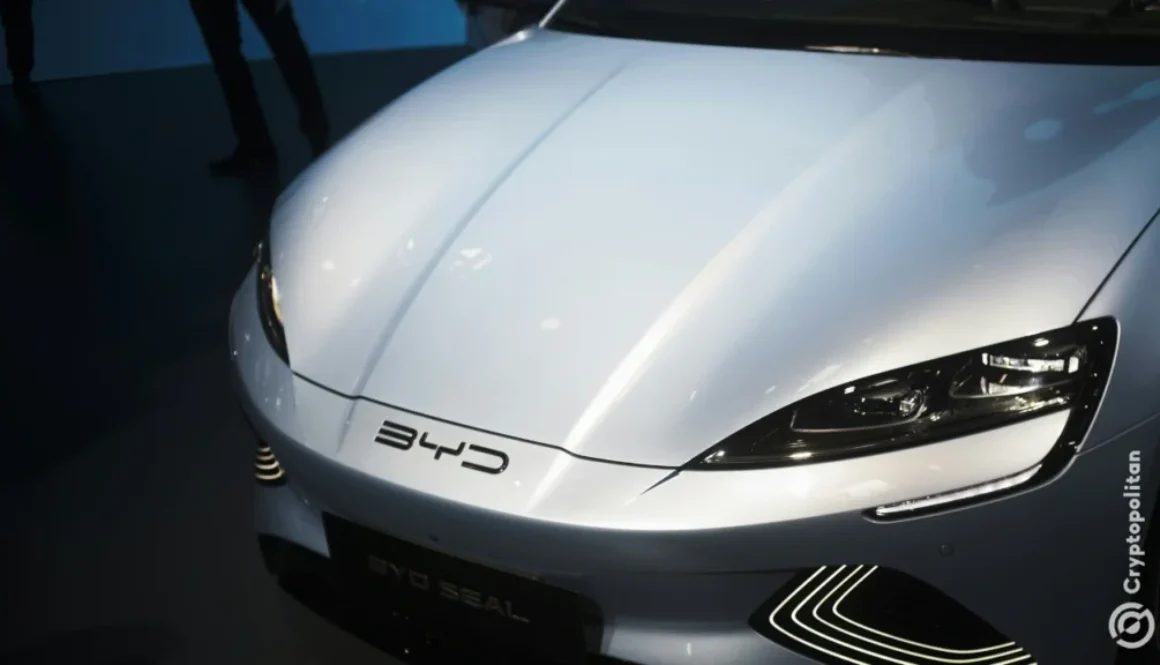
BYD battles price wars locally while accelerating global expansion
China’s largest electric vehicle manufacturer is confronting a profitability squeeze at home even as it aggressively expands overseas. BYD reported a sharp earnings decline in the second quarter, with net income falling nearly 30% year-over-year—a troubling signal for a company that has dominated the world’s most competitive EV market.
Earnings Under Pressure
BYD’s second-quarter net income dropped to approximately 6.36 billion yuan ($892 million), falling well short of analyst expectations. While the Shenzhen-based automaker achieved 14% revenue growth to 201 billion yuan, the gains proved insufficient to counteract margin compression driven by aggressive discounting strategies.
Gross margins contracted to roughly 18%, down from 18.8% a year earlier. This deterioration reflects the mounting cost of competing in an increasingly crowded marketplace where price cuts have become the primary competitive weapon.
The current discounting situation is not sustainable and poses a genuine threat to industry health.
— BYD Executive Statement, June 2024
The company’s financial performance marks its first quarterly profit decline in three years, signaling that growth-at-any-cost strategies carry real consequences for the bottom line.
Understanding BYD’s Global Significance
BYD Company Limited has evolved into the world’s leading battery manufacturer and the second-largest automaker globally by production volume, commanding approximately 19% of the worldwide EV market as of mid-2024. Founded in 1995 as a battery company before pivoting to automotive manufacturing, BYD developed proprietary Blade Battery technology that significantly reduced costs while improving safety metrics. This vertical integration—controlling battery production, thermal management, and vehicle assembly—historically provided competitive advantages that competitors struggle to replicate.
The company operates across multiple market segments including battery electric vehicles (BEVs), plug-in hybrid vehicles (PHEVs), conventional vehicles, and energy storage systems. This diversification has traditionally insulated BYD from sector-specific downturns, yet profitability pressures now penetrate all divisions simultaneously.
Price Wars Reshape Chinese Competition
China remains the world’s largest EV market, but profitability has eroded as competition has intensified dramatically. BYD competes alongside Tesla, Geely, Nio, Xpeng, and dozens of smaller manufacturers in a market where price discounting has become endemic.
To maintain sales volume, BYD reduced prices on more than 20 vehicle models this year. Discounts reached as high as 34% on certain vehicles. The strategy succeeded in moving inventory but devastated unit economics and industry-wide margins.
Excess inventory across the EV sector has forced competitors into deeper price cuts, creating a destructive cycle that regulators now recognize as threatening industry viability.
The relentless downward pressure on pricing has already eliminated weaker competitors. Several smaller EV startups have exited the market entirely, unable to sustain operations under current margin conditions.
Chinese authorities have begun intervening. In July, regulators issued a statement cautioning automakers against what officials termed “involution”—a self-defeating competitive dynamic where price competition destroys profitability for all participants. Officials warned that unchecked discounting risks damaging the supply chain and undermining the international reputation of Chinese-made electric vehicles.
Regulatory officials view the current price war as a destructive cycle that threatens the long-term health of the entire Chinese EV industry and its global standing.
— Chinese Regulatory Authorities, July 2024
Notably, BYD—which initiated aggressive pricing in 2023—has publicly acknowledged that the current discounting trajectory is neither sustainable nor advisable. Company executives stated in June that the pricing war threatens lasting damage to industry fundamentals.
Structural Industry Transformation
The Chinese EV market entered maturity phase during 2023-2024, transitioning from capacity-constrained growth to demand-constrained overcapacity. Total Chinese EV production capacity currently exceeds 40 million units annually, while realistic domestic demand projections suggest approximately 12-15 million units by 2025. This structural oversupply has forced producers to compete aggressively for market share rather than compete on profitability.
Government subsidies that previously supported EV adoption have largely concluded, removing a financial cushion that supported margin structures. Consumer purchasing decisions now depend primarily on vehicle specifications and pricing rather than government incentives, fundamentally altering competitive dynamics and eliminating cost floors that previously existed.
Foreign Expansion Accelerates Despite Domestic Softness
While margins compressed at home, BYD’s international operations delivered robust growth. In the first seven months of 2024, overseas sales more than doubled compared to the prior year period. The company has established meaningful market share in Europe, Southeast Asia, and Latin America.
In Europe, BYD notably surpassed Tesla in monthly sales during May. The automaker is constructing new manufacturing facilities in Hungary and Turkey to localize production and reduce export logistics costs. The company has also chartered a dedicated fleet of roll-on/roll-off cargo vessels to accelerate vehicle shipments globally.
Brazil has emerged as BYD’s largest international market, accounting for approximately one-third of all international sales. This geographic diversification reflects the company’s strategic focus on regions where it faces less entrenched competition than in China.
However, international growth—while impressive in percentage terms—remains insufficient to offset the margin compression occurring in the domestic market. Analysts note that expanded marketing expenses and investments in emerging battery technologies are weighing on overall profitability.
Global EV Market Implications
BYD’s challenges carry implications extending beyond the Chinese market. As the world’s leading EV manufacturer by volume, BYD’s pricing strategies and profitability pressures influence global automotive industry dynamics. International competitors including Volkswagen Group, General Motors, and legacy automakers observe BYD’s market tactics while recalibrating their own EV investment timelines and production targets.
The company’s international expansion simultaneously represents a long-term opportunity and an immediate financial drain. Establishing manufacturing capacity in Hungary and Turkey requires substantial capital investment, extended development timelines before profitability, and sustained market presence investments to compete against established European and American manufacturers with established distribution networks and brand recognition.
Balance Sheet Pressures Mount
Beyond operational challenges, BYD faces escalating financial pressures. The company’s working capital position deteriorated significantly between March and June, with the working capital deficit expanding from approximately 95.8 billion yuan to 122.7 billion yuan.
BYD’s debt-to-assets ratio reached 71.1% in the second quarter, indicating elevated financial leverage at a time when profitability is declining. This combination constrains financial flexibility.
The company faces a complex balancing act: it must continue managing steep inventory discounts while simultaneously restructuring payment terms with suppliers. Historically, BYD extended payment cycles beyond 200 days—well above global automotive industry norms—but supplier relationships are increasingly strained under current market conditions.
The convergence of margin pressure, elevated leverage, and working capital constraints suggests BYD may need to recalibrate its business strategy. Sustaining international expansion while maintaining profitability in a hypercompetitive domestic market presents a genuine strategic challenge.
Looking Ahead: Strategic Inflection Point
BYD’s earnings report underscores a fundamental tension in the global EV transition. Rapid growth and market expansion, achieved through aggressive pricing, can hollow out profitability and create financial instability. The Chinese market has reached a maturity inflection point where volume growth no longer compensates for margin erosion.
The company stands at a strategic crossroads. Continuing current discounting practices threatens financial stability and constrains capital available for technology advancement and international expansion. Alternatively, accepting market share losses to stabilize margins risks ceding leadership position to competitors willing to accept lower returns for market dominance.
Regulatory pressure and industry acknowledgment that current pricing dynamics are unsustainable may eventually force consolidation or strategic recalibration. However, the path forward remains uncertain, as competitors face identical pressures and incentives.
For investors tracking global technology and manufacturing sectors, BYD’s trajectory offers a cautionary case study: scale without profitability is ultimately self-defeating, regardless of market share gains. The company’s ability to navigate this transition will significantly influence not only its own future but the competitive structure and profitability expectations across the global automotive industry for years ahead.
Get weekly blockchain insights via the CCS Insider newsletter.