China’s Xiaomi plans 550,000 EV deliveries in 2026 after smashing 2025 targets
Xiaomi has set an ambitious electric vehicle delivery target of 550,000 units for 2026, representing a 34% increase from its 2025 performance. The Chinese technology conglomerate delivered 410,000 EVs last year, surpassing initial expectations and signaling accelerating momentum in its automotive division. Billionaire founder Lei Jun announced the expansion during a livestream, positioning the company for deeper penetration in China’s fiercely competitive EV market while preparing for international expansion.
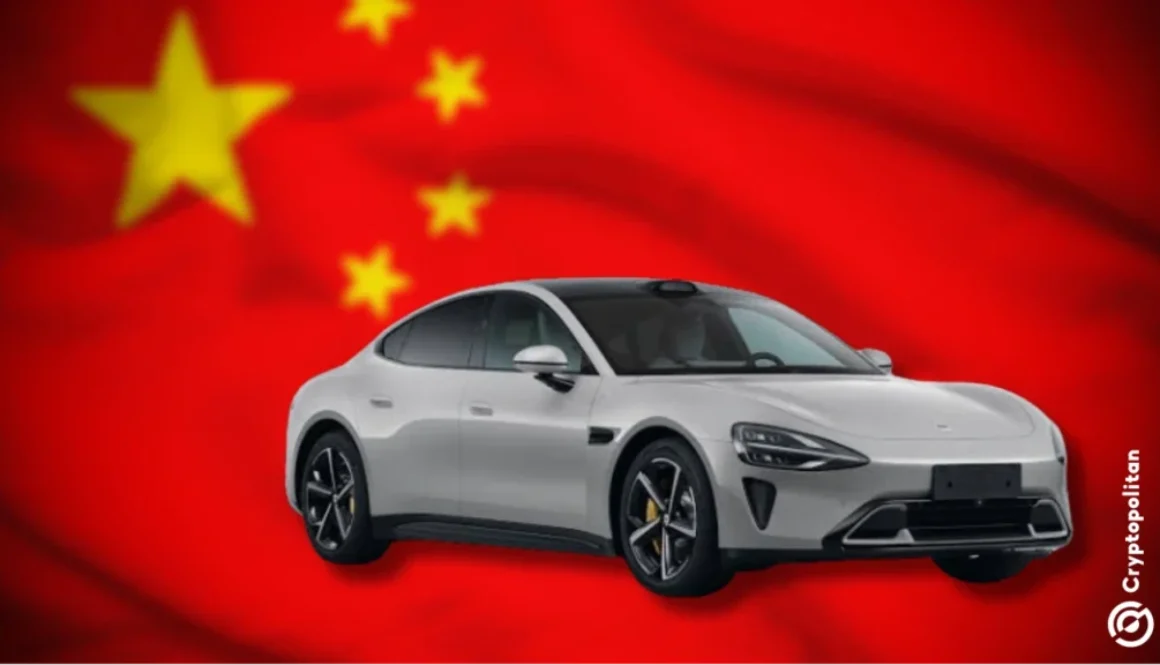
The aggressive scaling comes as Xiaomi’s EV unit reached profitability in November, roughly 18 months after the first production sedan launched. This milestone marks a notably faster path to profitability than Tesla achieved during its early manufacturing phases. The company’s SU7 sedan has garnered substantial attention both domestically and internationally, drawing commentary from industry executives and technology reviewers alike.
Profitability Milestone Amid Market Skepticism
Despite achieving operational profitability ahead of schedule, Xiaomi’s stock performance lagged significantly among Chinese technology names in 2025. Market participants cited concerns about sector-wide overcapacity, softening consumer demand, and deteriorating conditions across the broader EV industry. The gap between operational achievements and equity market sentiment reflects broader uncertainty regarding China’s automotive transition.
The EV unit turned profitable in November, around 18 months after the first electric sedan hit the road. That timeline landed faster than Tesla, which took years to reach the same point.
— Lei Jun, Xiaomi Founder
Investors remain cautious about whether Xiaomi can sustain profitability while executing aggressive growth plans. The company’s automotive venture represents a significant capital allocation, competing directly against established players and well-funded startups across China’s saturated market. Industry analysts have questioned the sustainability of profitability margins as competitive intensity increases and raw material costs fluctuate. The automotive sector demands sustained capital investment for manufacturing facility expansion, technology development, and supply chain optimization—commitments that could pressure margins even as unit volumes increase.
Xiaomi’s entry into automotive manufacturing challenged conventional industry wisdom about technology companies entering capital-intensive manufacturing. The company leveraged its existing supply chain expertise, software engineering capabilities, and brand recognition to compress typical development timelines. This approach contrasts with traditional automotive manufacturers that require substantially longer periods to develop new vehicle architectures and establish production capabilities. However, maintaining profitability while scaling production to 550,000 units annually will require operational efficiency improvements exceeding historical automotive industry benchmarks.
Two serious accidents involving the SU7 model triggered regulatory intervention and heightened oversight of advanced driver assistance systems. Chinese authorities responded by releasing draft regulations addressing ADAS functionality, door handle design specifications, and battery safety protocols. These standards reflect growing concerns about software control systems and physical engineering choices in next-generation electric vehicles.
The regulatory response underscores tensions between rapid innovation and consumer safety assurance. Xiaomi must navigate these compliance requirements while maintaining competitive advantages in software integration and autonomous features. Market monitoring of regulatory developments will remain critical for investor assessment. Compliance costs associated with new safety standards could impact profitability calculations, particularly if implementation requires substantial engineering modifications across the product lineup. Chinese regulatory authorities have demonstrated willingness to enforce safety standards aggressively, setting precedents that may influence regulatory approaches in international markets where Xiaomi plans expansion.
The SU7 Ultra performance version was a “crying loud warning sign” for Western carmakers.
— Karl-Thomas Neumann, Former Volkswagen China Chief Executive
Despite regulatory pressure, international recognition of the SU7’s technological capabilities has expanded. Karl-Thomas Neumann, former Volkswagen China chief executive, characterized the performance variant as a significant competitive threat. Technology reviewer Marques Brownlee highlighted the sedan’s software integration as a notable strength, demonstrating appeal beyond Chinese domestic markets. This international recognition validates Xiaomi’s technology positioning and supports expansion strategies targeting European and Asian markets where premium EV segments command higher price points.
Product Expansion and Technology Development
Xiaomi plans to introduce up to four new vehicle models and refreshed variants across multiple segments. The roadmap includes a five-seat configuration and a seven-seat extended-range SUV designed for customers seeking greater charging flexibility. Extended-range vehicles incorporate small gasoline engines that recharge batteries when electrical power depletes, reducing dependence on charging infrastructure availability.
Xiaomi’s multi-segment approach targets different consumer segments and use cases. Extended-range technology addresses range anxiety concerns while transitioning buyers toward electrification incrementally.
Extended-range vehicle adoption reflects market realities in regions where charging infrastructure remains underdeveloped or unreliable. This technology bridges consumer preferences between pure electric and traditional combustion powertrains, potentially expanding addressable markets beyond early-adopter segments. Xiaomi’s willingness to develop extended-range variants demonstrates pragmatic market positioning, prioritizing sales volume growth over pure electrification ideology. This approach contrasts with some competitors that maintain exclusively battery-electric lineups despite infrastructure limitations.
Beyond automotive, Xiaomi announced development of the Xring O1, a 3-nanometer processor designed for tablets and connected devices. The company positions this chip to compete with offerings from Apple and Qualcomm, extending its technology ecosystem beyond smartphones and vehicles. This diversification strategy reflects Xiaomi’s broader ambitions across consumer electronics and emerging technologies. Semiconductor development capabilities strengthen Xiaomi’s vertical integration, potentially enabling differentiated vehicle software and autonomous system capabilities unavailable to competitors relying on third-party chipsets.
However, supply chain headwinds present near-term challenges. Xiaomi has warned of potential memory chip shortages affecting its core smartphone business during 2026, with potential implications for pricing and product availability. These constraints could impact overall profitability across the company’s diversified portfolio, particularly if semiconductor allocation prioritizes higher-margin smartphone and tablet segments over automotive applications.
Global EV Market Headwinds and Competitive Landscape
Xiaomi’s expansion targets contrast sharply with cooling global EV demand trajectories. Industry forecasts project worldwide EV sales growth of 13% to 14% during 2026, decelerating substantially from 22% growth in 2025. This slowdown reflects weakening demand across multiple major markets including China, Europe, and the United States. The transition from rapid growth to mature market consolidation creates significant implications for manufacturers pursuing aggressive expansion strategies.
Chinese domestic demand has begun moderating after years of double-digit expansion. Consumers face increasing product choices and pricing pressures from established competitors and emerging manufacturers. The domestic market includes formidable competitors including BYD, NIO, XPeng, and Li Auto, each possessing substantial capital resources and established customer bases. Price competition has intensified dramatically, with multiple manufacturers introducing sub-200,000 yuan vehicles designed to capture price-sensitive segments. This competitive intensity could constrain Xiaomi’s ability to maintain profitability margins while scaling production volumes.
European growth has decelerated as economic uncertainty persists and regulatory timelines have shifted. The European Union recently softened its planned 2035 combustion engine ban, signaling policy adjustments around electrification pace. This policy shift reduces regulatory urgency for EV adoption, extending the timeline for internal combustion engine phase-out. For new market entrants like Xiaomi, extended transition periods complicate market entry strategies and reduce first-mover advantages in European segments.
Global EV sales are projected to grow 13-14% in 2026, down from 22% in 2025. Growth rates vary significantly by region, with China moderating, Europe slowing, and the United States declining amid policy changes.
United States policy developments have introduced additional uncertainty. The Trump administration ended federal EV tax incentives that previously supported consumer purchasing decisions. This reversal removes a meaningful economic lever that supported American EV adoption rates, particularly among price-sensitive buyers. The combination of these factors creates a more challenging operating environment for automotive manufacturers pursuing aggressive growth targets. International expansion becomes increasingly complex as policy environments diverge, requiring localized product strategies and manufacturing capabilities adapted to specific regulatory and market conditions.
Xiaomi’s 550,000 unit target assumes the company can gain market share while overall industry growth slows. This strategy requires sustained competitive differentiation through technology, pricing, and customer experience advantages. Success remains contingent on execution across manufacturing, supply chain, and international market development initiatives. The company’s technological capabilities and brand recognition provide competitive advantages, but sustained profitability amid industry headwinds will demand continuous operational improvements and strategic focus.
Get weekly blockchain insights via the CCS Insider newsletter.