
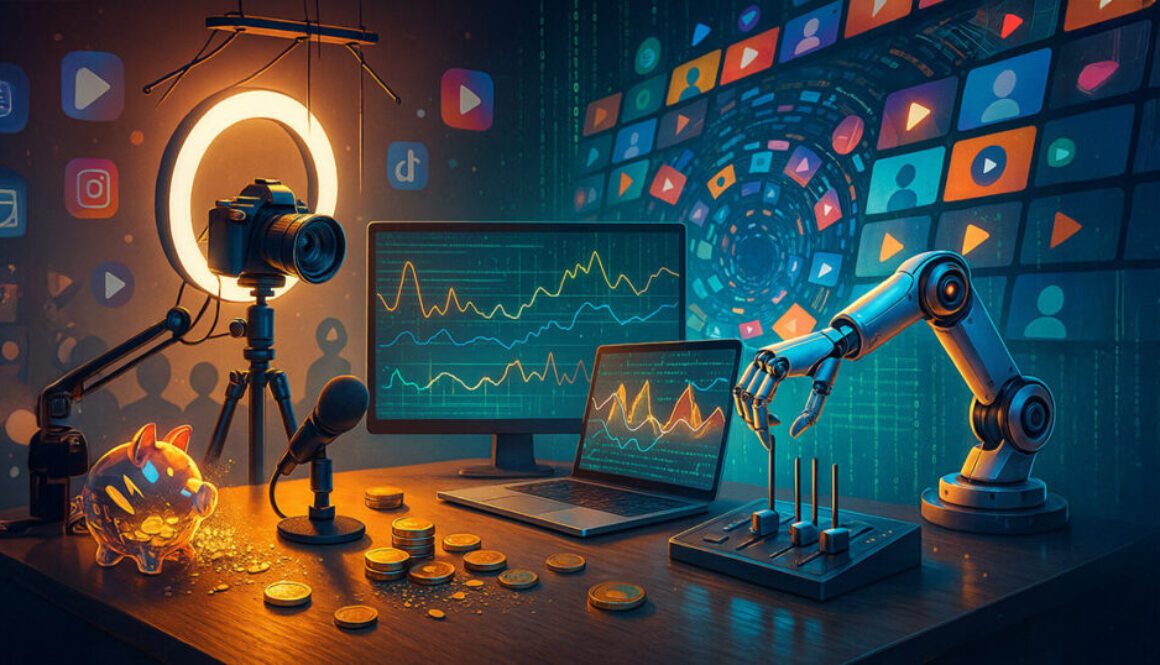
Is the creator economy broken? Rethinking video streaming in the age of algorithms and AI
The creator economy faces a fundamental structural problem. Algorithmic platforms have built recommendation systems designed to maximize user engagement and retention, often at the expense of creator autonomy, financial sustainability, and content diversity. As artificial intelligence begins flooding platforms with synthetic media, the tension between what algorithms optimize for and what creators need has reached a critical inflection point.
How Algorithms Reshaped Video Distribution
Over the past 15 years, video streaming transformed through the rise of algorithmic curation. YouTube’s watch-time metric became the industry standard, followed by Netflix’s data-driven approach to binge optimization and TikTok’s granular tracking of micro-interactions—every pause, swipe, and skip fed into systems designed to predict and shape viewing behavior.
These systems work. Platforms achieve impressive retention metrics and user engagement. But the mechanism itself carries hidden costs. Behavioral research demonstrates that repeated algorithmic exposure conditions user preferences over time, effectively manufacturing taste rather than discovering it.
Algorithms now actively mold user preferences. Engagement rules, favoring sensational hooks over nuanced storytelling.
— Industry Analysis
Content strategy shifted accordingly. Creators learned that originality mattered less than conformity to algorithmic signals—hook length, posting frequency, retention thresholds. The result: platforms optimized for engagement, not depth.
The economic consolidation has been dramatic. In 2024, the top 1% of creators on YouTube generate approximately 90% of all views, while median creator income from platform monetization remains below $500 annually. This concentration reflects algorithmic recommendation favoring established channels with existing audience momentum—a self-reinforcing cycle that disadvantages emerging talent. Mid-tier creators, those with 10,000 to 100,000 followers, face the steepest visibility walls, making sustainable income increasingly difficult without diversified revenue streams or external funding.
The Creator Burnout Crisis
The pressure to “play the feed” has taken a measurable toll. A 2022 Awin/ShareASale report found that 72% of creators experienced burnout directly tied to algorithmic demands, a figure corroborated by subsequent 2024 surveys. Creators reported loss of creative joy, reliance on formulaic strategies, and deteriorating well-being.
72% of creators report burnout directly linked to algorithmic pressure, with 2024 studies confirming the trend persists and worsens.
The economic layer compounds the problem. Large studios with established intellectual property dominate distribution, while mid-tier creators struggle for visibility despite quality work. Quantity is rewarded over craft. The landscape has become increasingly homogenized, with limited space for experimentation or risk-taking.
Platforms extract enormous value from creator labor while offering little visibility into how recommendations function. This opacity makes it impossible for creators to understand what drives their success or failure—they must simply chase signals they cannot fully see.
The creator economy now represents an estimated $104 billion market globally, yet creators themselves capture a disproportionately small share of that value. Platforms take 30-50% of creator revenue through direct cuts, while algorithmic suppression forces creators to pursue attention-maximizing rather than value-maximizing content strategies. This misalignment between platform incentives and creator interests has become the defining structural flaw of contemporary content distribution.
Synthetic Media and the Signal-to-Noise Collapse
Generative AI introduces a new stress test. Synthetic video, audio, and imagery can now be produced at near-zero marginal cost, threatening to flood platforms with undifferentiated synthetic content. Industry analysts warn that this volume could drown out human creators entirely, further degrading the signal-to-noise ratio for audiences.
Regulators are responding. The EU AI Act mandates transparency and watermarking for synthetic content. Meanwhile, debate over algorithmic distribution has become geopolitical—the TikTok divestiture discussion in the United States reflects how platform curation is now intertwined with national security concerns.
The EU AI Act introduces mandatory transparency and watermarking for synthetic content, while U.S. scrutiny of algorithmic platforms intensifies around data control and curation power.
Without transparent curation standards, creators face compounding visibility challenges while audiences encounter an increasingly polluted information environment. The current model is approaching a breaking point.
Market research suggests that 61% of creators would migrate to alternative platforms offering transparent algorithmic systems and higher revenue shares, if viable alternatives existed. This represents latent demand for structural change. The barrier is network effects—platforms gain value as more creators and audiences participate, making competition difficult. However, vertical or niche-focused platforms have begun capturing creator communities underserved by generalist algorithmic systems, suggesting the market is fragmenting around alternative distribution models.
Peer-to-Peer Distribution and Tokenized Ownership
One proposed solution involves fundamental architectural change: replacing centralized algorithmic gatekeeping with peer-to-peer distribution networks and transparent, blockchain-based economic models. Instead of platforms controlling visibility, creators would maintain direct relationships with audiences and retain ownership of their distribution reach.
Tokenized economics introduce several advantages. Creators could issue tokens tied to their content, allowing fans to participate directly in success while creators maintain transparent, verifiable records of their audience relationships. Smart contracts could automate fair revenue splits without intermediary extraction.
P2P networks remove the single point of algorithmic control. Content spreads through explicit user choice and social signals rather than opaque recommendation engines. Creators regain agency over their creative direction because they are no longer chasing invisible metrics.
This model also addresses synthetic media concerns. Transparent provenance—who created what, when, using what tools—becomes verifiable on a blockchain layer. Audiences can distinguish human-created content from AI-generated material without relying on platform enforcement.
The economic transparency matters enormously. Creators would see exactly how many people accessed their work, which segments engaged most, and how revenue distributed. No more black-box feedback loops. Strategic decisions could be made with actual data, not algorithmic hunches.
Creators could issue tokens tied to their content, allowing fans to participate directly in success while maintaining transparent, verifiable records of audience relationships.
— Creator Economy Innovation
Challenges remain substantial. P2P networks require user adoption and education. Tokenization introduces regulatory complexity in most jurisdictions. Building sustainable alternatives to centralized platforms demands both technical sophistication and network effects to achieve scale.
Early implementations demonstrate feasibility. Platforms like Mirror, Lens Protocol, and emerging creator-owned networks have facilitated millions in direct creator-to-fan transactions. While still representing a small fraction of overall creator economy activity, growth rates exceed 200% annually in these segments, indicating accelerating adoption as tools mature and become more accessible.
But the status quo is increasingly untenable. Creator burnout accelerates. Algorithmic homogenization deepens. Synthetic media threatens to render human creativity economically invisible. Incremental reforms to existing platforms will not address these structural problems.
The rebuild requires new infrastructure: transparent curation, verifiable ownership, direct creator-audience relationships, and economic models that align platform success with creator well-being rather than engagement metrics alone. Blockchain technology and decentralized networks provide technical tools. The harder work is cultural—convincing creators and audiences that an alternative is worth building.
This shift is already underway in early stages. Decentralized video platforms, creator tokens, and community-owned networks remain niche today. But as centralized platforms face mounting pressure from regulation, creator exodus, and audience skepticism, the window for viable alternatives expands. The next three to five years will likely determine whether platform-native alternatives capture sufficient market share to meaningfully compete with established incumbents, or whether the creator economy remains dominated by algorithmic gatekeepers for the foreseeable future.
Get weekly blockchain insights via the CCS Insider newsletter.