
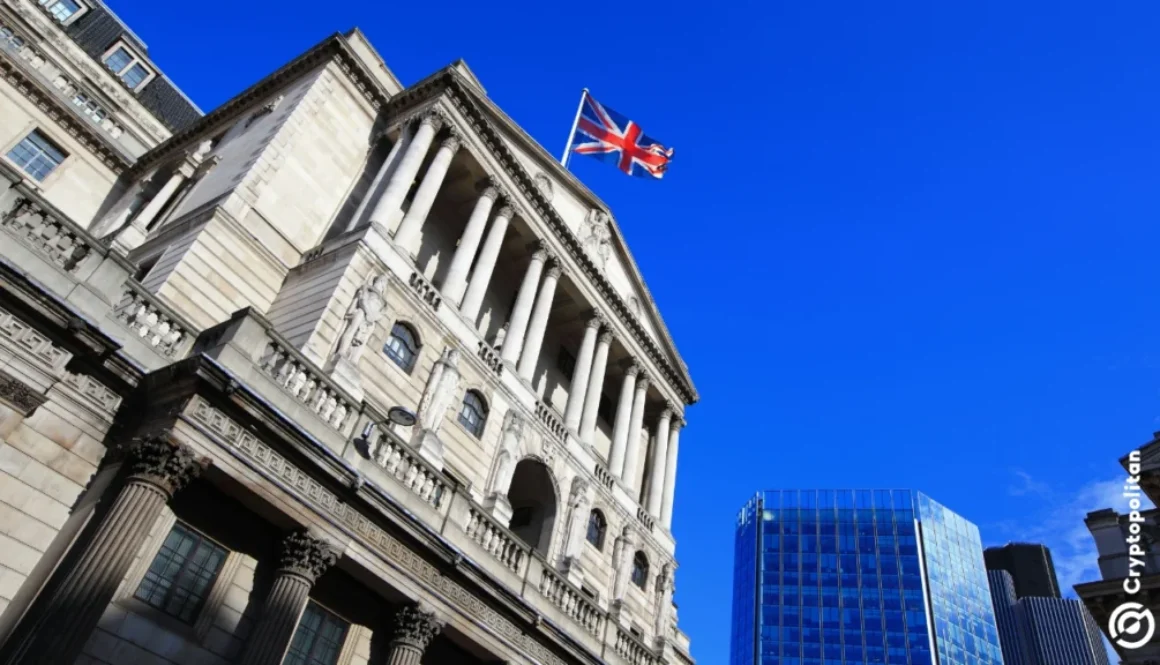
BOE set to cut rates again as growth fears mount
The Bank of England is preparing to reduce its key interest rate by a quarter percentage point this week, as policymakers grapple with mounting signs of economic weakness across the United Kingdom. Markets are pricing in near-certainty that the central bank will lower borrowing costs to 4%, marking another step in its gradual easing campaign even as inflation recently accelerated to levels not seen in over a year and a half.
Growth Takes Priority Over Price Pressures
Britain’s economy has contracted for two consecutive quarters, and employment growth has slowed considerably following the Labour government’s hefty payroll tax on employers. The £26 billion ($34.5 billion) levy, combined with mandated wage increases, has made businesses reluctant to expand headcount.
BOE Governor Andrew Bailey has consistently framed the central bank’s approach as one emphasizing gradual rate relief. He has characterized the recent inflation spike as likely temporary, a view that diverges sharply from how the U.S. Federal Reserve continues to assess domestic price pressures.
We think the central bank will be cautious about signaling more rate cuts are in the offing – inflation has surprised to the upside and price expectations are elevated.
— Dan Hanson, Chief UK Economist, Bloomberg Economics
The timing of Thursday’s decision coincides with the release of updated quarterly economic forecasts. These projections will carry particular weight given that previous BOE estimates, published in May, underestimated the momentum building in price growth.
The BOE’s bond portfolio strategy will be closely scrutinized. A September decision on quantitative tightening (QT) looms, and market participants suspect the central bank may dial back its gilt sales program as volatility in longer-dated UK bond yields persists.
Central Banks Chart Divergent Paths
Rate-setting committees worldwide are reaching different conclusions about where monetary policy should head. Mexico’s central bank is anticipated to deliver its ninth consecutive reduction, bringing its benchmark rate to 7.75%, despite the extension of U.S. tariffs that threaten to weigh on its economy. For further insight into how crypto markets typically respond to global monetary shifts, see our crypto prices coverage.
In southern Africa, Lesotho’s monetary authority is expected to reduce its rate to 6.75% in response to export damage linked to American trade policy. Meanwhile, central banks in the Czech Republic, Serbia, and Romania are signaling a pause, citing conflicting signals on inflation and fiscal conditions.
This divergence reflects broader uncertainty about the direction of global growth and inflation. Some policymakers fear recession risk justifies preventive rate cuts. Others believe faster price growth demands restraint.
Fresh U.S. trade data released Tuesday is projected to show a narrowing of the goods-and-services deficit for June, following months of declining imports. Additionally, the Institute for Supply Management’s July services purchasing managers’ index will offer a window into the health of America’s largest economic sector.
U.S. Policy Steady Amid Uncertainty
The Federal Reserve held its benchmark rate unchanged this week, with Chair Jerome Powell citing persistent economic uncertainty as justification for the pause. Unlike the BOE’s easing stance, the Fed appears less convinced that near-term recession risk warrants immediate action.
The July employment report disappointed investors with weaker-than-expected job creation, but Powell resisted pressure to cut rates immediately. That cautious posture contrasts with central banks in other developed economies now shifting into easing mode.
Political developments are also reshaping expectations about future Fed policy. The resignation of Federal Reserve Governor Adriana Kugler has sparked speculation about potential White House appointments to fill vacancies on the board. More significantly, attention is beginning to focus on who might succeed Powell when his term expires in May, a decision that could materially alter the Fed’s policy trajectory.
The July jobs report disappointed markets, and Fed Chair Jerome Powell held rates steady, citing persistent economic uncertainty.
— Market Assessment
Industry Context and Market Structure
The divergence in central bank policy reflects fundamental shifts in how major economies are responding to interconnected challenges: slowing growth, persistent inflation volatility, and trade policy uncertainty. The BOE’s position is particularly notable given the UK’s status as a leading global financial center. Sterling weakness could amplify capital flows toward safe-haven assets and alternative investments, including digital currencies that operate outside traditional monetary policy regimes.
Commercial banks across the UK and eurozone are adjusting lending strategies in anticipation of lower borrowing costs. Lower rates typically compress net interest margins, forcing financial institutions to seek alternative revenue streams. This structural pressure on traditional banking has historically coincided with periods of increased institutional interest in non-correlated assets and fintech solutions.
The Bank of England’s quantitative tightening decisions carry particular weight for gilt market stability. The UK sovereign debt market remains sensitive to policy shifts, and any acceleration or deceleration in the BOE’s asset rundown could trigger repricing across longer-dated maturities, affecting everything from pension fund valuations to corporate refinancing conditions.
Implications for Crypto and Digital Assets
The divergence in central bank policy carries implications for bitcoin and other digital assets. Environments characterized by easing monetary policy and negative real interest rates have historically supported risk appetite for alternative assets, including cryptocurrencies.
The BOE’s apparent pivot toward growth-focused policy, even in the face of elevated inflation, could influence how international investors allocate capital across asset classes. A UK economy facing stagflationary pressures might drive some participants toward assets perceived as inflation hedges, including blockchain-based alternatives to traditional currencies.
For traders and institutions monitoring global monetary conditions, the pattern emerging this week—with some central banks cutting while others pause—suggests a world where interest rate expectations remain highly fragmented. That fragmentation itself can create trading opportunities and volatility across traditional markets, often correlating with ethereum and broader crypto market movements. Our latest news section tracks these interconnections closely.
Trade tensions add another layer of complexity. As tariff policies reshape import and export flows, central banks face pressure to support domestic demand through looser monetary conditions. That dynamic appears especially acute in Mexico and smaller economies more directly affected by U.S. trade measures.
Market Implications and Forward Outlook
The current monetary policy divergence is likely to persist through the remainder of 2024 and into 2025. Market participants should anticipate continued volatility in currency pairs, particularly sterling against the dollar and euro, as rate expectations shift. Bond yields will remain reactive to each central bank’s guidance, creating challenges for long-duration asset pricing.
The emerging consensus among some developed-market central banks—favoring gradual easing despite inflation concerns—represents a meaningful shift from 2023’s restrictive stance. This easing cycle, even if modest, could support equity valuations and encourage yield-seeking behavior that benefits both traditional growth assets and alternative investments. The UK’s particular vulnerability to slowdown, combined with its reliance on financial services, underscores why the BOE’s decisions carry outsized importance for global markets.
Looking ahead, the September BOE meeting and any accompanying quantitative tightening review will be critical junctures. If the central bank signals a more aggressive easing path than currently priced, sterling will face downward pressure and carry-trade unwinding could accelerate. Conversely, if inflation data forces the BOE to pause further cuts, the market repricing could be sharp and disruptive across leveraged positions.
The coming weeks will clarify whether we are entering a sustained period of coordinated global easing, or whether central banks will remain fractured in their assessments of recession versus inflation risk. That answer will substantially influence positioning across traditional markets and digital assets alike.
Get weekly blockchain insights via the CCS Insider newsletter.