
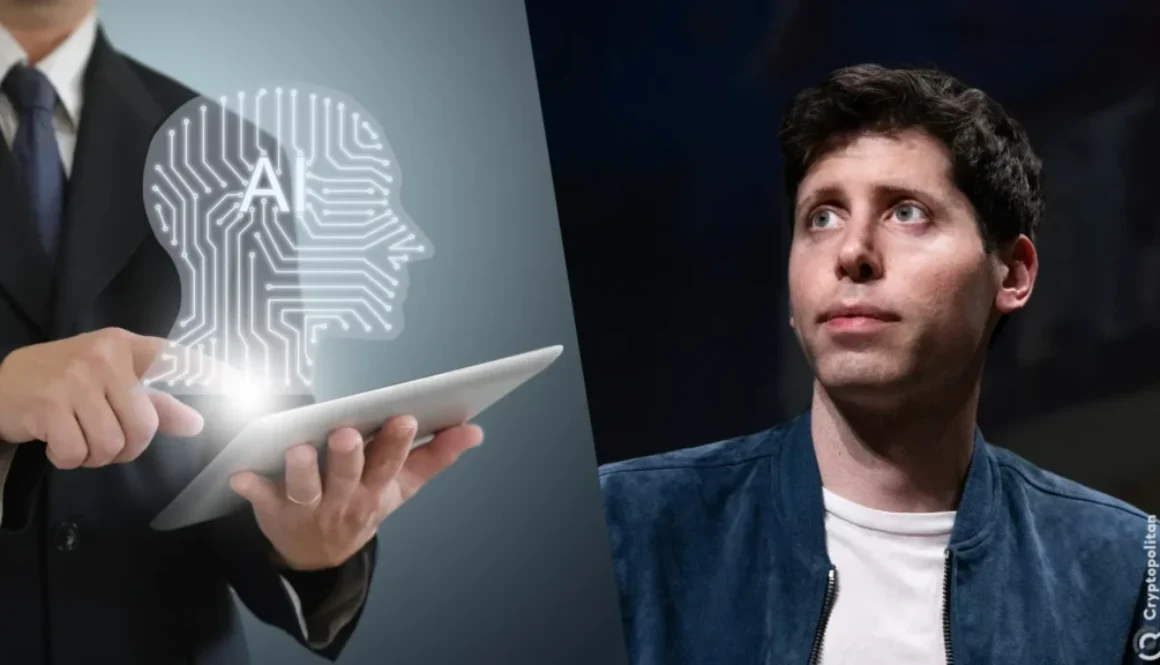
Sam Altman says AI will give 2035 grads high paying space jobs
Artificial intelligence is accelerating faster than many anticipated, and its impact on the workforce could reshape entire industries within the next decade. OpenAI CEO Sam Altman recently outlined a vision where recent college graduates entering the job market in 2035 may find themselves launching careers in space exploration—positions that barely exist today but could offer substantial compensation and unprecedented opportunity.
During a conversation with video journalist Cleo Abram, Altman described a scenario where AI-driven advances in aerospace and space technology create entirely new career paths. He suggested that 2035 graduates stepping into roles supporting lunar bases, asteroid mining operations, or deep space missions could experience work fundamentally different from current professional norms.
The trajectory toward this future is already visible. NASA is targeting the 2030s for human Mars missions, while private companies including SpaceX and Blue Origin are actively developing lunar infrastructure and long-term space operations. The U.S. Bureau of Labor Statistics projects above-average growth in aerospace engineering positions, with median salaries already exceeding $130,000 annually.
AI as the Enabler of Space-Age Careers
Altman’s optimism centers on AI’s capacity to accelerate technological development across the aerospace sector. Machine learning systems can design spacecraft components more rapidly, identify potential mission risks through predictive analysis, and manage autonomous systems operating in extraterrestrial environments.
This means future space professionals may spend as much time managing AI systems and writing code as they do studying traditional engineering disciplines. The skillset required for these roles will blend data science, software development, and domain expertise in ways that today’s aerospace curricula are only beginning to address.
Young people entering the workforce today are the luckiest generation in history, as AI can serve as a personal expert, collaborator, and accelerator for almost any task.
— Sam Altman, CEO of OpenAI
Altman emphasized that individuals aged 22 today will have distinct advantages as they navigate a workforce increasingly augmented by AI tools. The ability to learn alongside advanced AI systems from the start of one’s career could compound into significant competitive advantages over time.
The aerospace industry is experiencing measurable expansion. NASA’s Moon-to-Mars initiative, private space station development, and commercial space tourism are all creating demand for specialized technical talent. These sectors represent some of the fastest-growing employment areas in engineering.
Market Implications and Industry Transformation
The commercial space economy has already reached $440 billion in global valuation, with projections to exceed $1 trillion by 2040. This expansion goes beyond traditional aerospace contractors. Supporting industries—from materials science to robotics to environmental systems—will require thousands of new technical professionals over the coming decade.
Companies operating in low Earth orbit, lunar operations, and deep space missions will demand expertise that educational institutions have barely begun to formalize. Universities are establishing space systems programs, but demand for graduates significantly outpaces supply. This talent shortage creates both opportunity and risk: opportunity for skilled workers commanding premium compensation, but risk that insufficient pipeline development could constrain industry growth.
The relationship between AI capabilities and space industry expansion is bidirectional. AI accelerates space technology development, but space operations also drive AI advancement—autonomous systems managing spacecraft, predictive maintenance algorithms preventing mission failures, and optimization systems improving resource allocation all push machine learning capabilities forward. This positive feedback loop explains Altman’s confidence in rapid career path creation.
The Generational Divide in AI Adaptation
While Altman’s vision offers optimism for younger workers, he acknowledged a sharper challenge for professionals approaching retirement. Workers in their 60s face steeper barriers when retraining becomes necessary or when labor markets shift beneath them.
The core issue is not capability but timeline. A 22-year-old has decades to absorb new tools and adapt their skillset incrementally. A 62-year-old facing potential displacement has far fewer years to rebuild expertise or secure new positions in a transformed labor market.
This generational disparity concerns economists and labor policy experts. Without coordinated retraining initiatives and social safety nets, the AI transition could widen inequality between younger and older cohorts in ways previous technological shifts have not.
Bill Gates has proposed that AI could enable a three-day workweek by automating routine tasks. Jensen Huang, CEO of Nvidia, reports that AI already grants his employees “superhuman” capabilities, enabling individual contributors to accomplish work that once required entire teams. These statements reflect broad consensus among technology leaders that AI fundamentally alters productivity and organizational structure.
From Employment Displacement to Entrepreneurial Scale
Beyond discussing job creation, Altman outlined a more radical possibility: AI could enable solo entrepreneurs to build billion-dollar enterprises. Advanced language models like GPT-5 and its successors could serve as virtual teams, handling design, analysis, customer relations, and strategic planning tasks that currently demand dozens or hundreds of employees.
This represents a fundamental shift in how companies scale. Historically, growth required proportional increases in headcount, infrastructure, and operational overhead. If AI can substitute for many of those functions, a single founder with strong vision and judgment might achieve what once demanded large organizations.
The implications extend across industries. Software development, creative services, consulting, and research could all be reorganized around individual founders supported by powerful AI systems rather than hierarchical corporate structures.
AI’s real power lies in simultaneously replacing existing jobs while creating entirely new categories of work that didn’t exist before.
— Sam Altman, CEO of OpenAI
OpenAI’s Position and Industry Leadership
OpenAI’s role in shaping this future extends beyond Altman’s commentary. As the organization behind GPT-4, DALL-E, and emerging multimodal systems, OpenAI directly influences which capabilities reach market and at what pace. The company’s strategy of gradually releasing more powerful models while emphasizing safety research creates the technological foundation for scenarios Altman describes.
Competitors including Anthropic, Google DeepMind, and Meta are pursuing parallel paths with different technical approaches and safety philosophies. This competitive landscape matters because the speed and nature of AI deployment across industries depends partly on which organizations’ products dominate. A cautious deployment strategy yields different workforce impacts than aggressive commercialization.
OpenAI’s partnerships with Microsoft and integration into enterprise software platforms mean AI capabilities are rapidly embedding into existing workplace tools. This integration pathway accelerates adoption and workforce adaptation, compared to scenarios where AI remains isolated to research or specialized applications.
Preparing for a Transformed Workplace
The transition Altman describes is not inevitable—it requires sustained investment in education, infrastructure, and workforce development. College curricula need updating to prepare students for roles that barely exist. Companies must develop retention and retraining programs for existing employees. Policymakers must design social policies that protect workers during periods of rapid technological change.
For investors and technology enthusiasts monitoring the cryptocurrency and blockchain space, these workforce discussions carry indirect relevance. Decentralized finance and Web3 applications require skilled developers, and the same AI tools reshaping aerospace could accelerate blockchain infrastructure development.
The optimistic scenario—where younger generations inherit more interesting, better-compensated work in entirely new industries—depends on managing the transition thoughtfully. The pessimistic scenario—where workers face displacement without adequate support—remains possible if policy and corporate strategy fail to keep pace with technological change.
Altman’s vision of 2035 graduates working on space missions reflects genuine technological momentum. Whether that future materializes equitably, and how different age cohorts experience it, will depend on decisions made in the coming years.
The convergence of AI advancement, space industry expansion, and entrepreneurial possibility creates genuine uncertainty about what professional life looks like a decade from now. Altman’s comments reflect optimism grounded in observable technological progress—but the human and policy dimensions remain open questions. The space economy is real, the technical capabilities are advancing, and the demand for skilled talent is acute. What remains to be determined is whether institutions can adapt quickly enough to harness these opportunities while protecting workers caught in the transition. The next decade will reveal whether Altman’s optimistic scenario prevails or whether policymakers must intervene more forcefully to manage the social dimensions of technological displacement.
Get weekly blockchain insights via the CCS Insider newsletter.