Ethereum Price Retreats From Resistance—Is a Trend Reversal Starting?
Ethereum has retreated from a near-term peak, pulling back from resistance around $3,450 as sellers reassert control. The cryptocurrency is now testing support levels in the $3,200 zone, with technical indicators suggesting further downside risk if key price floors break. Whether this correction represents a temporary pullback or the start of a deeper trend reversal remains uncertain.
Recent Price Action and Resistance Levels
Ethereum staged a recovery that lifted it above $3,350 earlier this week, demonstrating buyer strength across multiple resistance thresholds. The rally pushed ETH through $3,320 and $3,400, with bulls briefly testing $3,448 before momentum stalled. That peak marked a critical turning point for the pair.
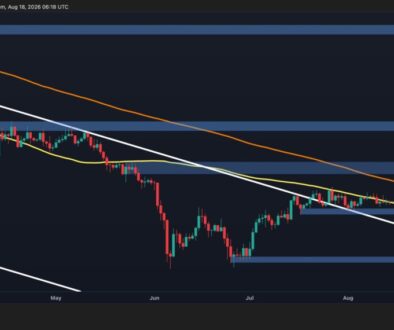
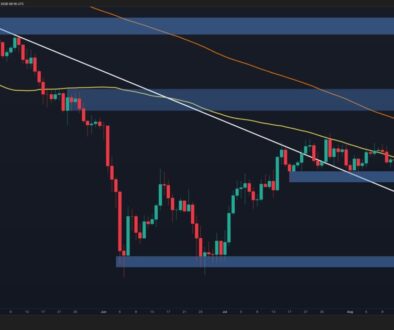
The pullback has been sharp. Ethereum has now settled near the $3,200 level, coinciding with the 100-hourly Simple Moving Average. A break below a bullish trend line that previously supported the uptrend adds to the bearish technical picture on shorter timeframes.
Ethereum’s failure to sustain gains above $3,450 suggests seller interest remains strong at elevated price levels, creating near-term headwinds for bulls.
— CCS Technical Analysis
On the upside, recovery attempts now face resistance near $3,250 and $3,300. A decisive break above $3,320 would be required to challenge the $3,400 level again. Only a sustained move above $3,400 might open the door to fresh highs toward $3,450 or even $3,500 in the immediate term.
$3,250 (near-term), $3,300 (major), $3,320 (primary), $3,400 (secondary), $3,450+ (extended)
Support Zones and Downside Risk
The bigger question is what happens if Ethereum cannot mount a sustained recovery. Initial support sits at $3,200, where the price is currently testing. Below that, $3,180 represents the 50% Fibonacci retracement level of the rally from the $2,914 swing low to the $3,448 peak.
A breakdown through $3,180 would be significant. It would open the way toward $3,150 and ultimately the $3,050 zone. The $3,000 psychological level represents the next major support pillar for Ethereum if selling intensifies further.
The deterioration in technical conditions warrants attention. The hourly RSI has dropped below the 50 midpoint, signaling weakening momentum. The MACD indicator is gaining downward momentum, reinforcing the bearish technical setup on the one-hour timeframe.
$3,200 (immediate), $3,180 (major/50% Fib), $3,150 (secondary), $3,050 (tertiary), $3,000 (psychological)
What the Charts Tell Us
The most concerning development is the break below the bullish trend line that had supported the upward movement. Combined with the failure to sustain momentum above $3,450, this suggests the near-term uptrend may be losing strength. For traders relying on technical price analysis, these are warning signs to monitor.
The 23.6% Fibonacci retracement level also broke during the pullback, another indication that selling has taken the upper hand. However, Ethereum has not yet lost critical intermediate support, so the situation remains fluid rather than conclusively bearish.
A break of the $3,180 level would signal a more serious shift in momentum and could accelerate selling pressure toward the $3,000 zone.
— CCS Technical Analysis
Industry Context and Market Implications
Ethereum’s price action occurs within a broader context of institutional adoption and network development. As the leading smart contract platform, Ethereum maintains critical importance in the decentralized finance (DeFi) ecosystem, hosting the majority of total value locked across blockchain applications. Market participants closely monitor ETH price movements as a barometer for broader sentiment toward decentralized applications and cryptocurrency infrastructure.
The current correction takes place amid evolving regulatory conditions across major markets and ongoing debates regarding Ethereum’s scalability solutions. Layer 2 implementations and the Shanghai upgrade have meaningfully enhanced network throughput, yet transaction costs and confirmation speeds remain competitive considerations against alternative blockchain platforms. These technical developments influence institutional and retail participation patterns, affecting both buy and sell pressure at key price levels.
From a market capitalization perspective, Ethereum represents approximately 18-20% of total cryptocurrency market value, making it a significant bellwether for overall sector health. During periods of risk-on sentiment, Ethereum typically outperforms Bitcoin on a relative basis. Conversely, in risk-off environments, capital often rotates toward Bitcoin as the perceived safer asset, creating potential headwinds for altcoins including ETH.
Entity Background and Ecosystem Positioning
Ethereum operates as a decentralized computing platform enabling developers to build and deploy smart contracts and decentralized applications. Since its 2015 inception by Vitalik Buterin and co-founders, the network has evolved from a theoretical framework to a $1.5+ trillion ecosystem by total value locked and market capitalization. The transition from Proof of Work to Proof of Stake consensus during the Merge consolidated Ethereum’s position as an energy-efficient alternative to Bitcoin while maintaining robust security properties.
The network’s economic model relies on gas fees denominated in ETH, creating persistent utility demand regardless of speculative trading. Staking mechanisms now generate yield for participants who lock ETH, introducing additional demand-side factors beyond trading dynamics. These structural elements provide fundamental support beneath pure technical price considerations.
Major institutional players including asset managers, exchanges, and financial services firms have integrated Ethereum infrastructure, increasing the network’s systemic importance. This institutional participation layer influences how price corrections develop and resolve, as large market participants often employ longer-term holding strategies less susceptible to short-term volatility.
The Path Forward
For bulls, the immediate priority is stabilizing price action near $3,200 and defending the $3,180 support. A reversal from these levels could set up a retest of $3,320 resistance. However, bulls will need to prove they can clear $3,320 decisively to reclaim control of the short-term trend.
For bears, the focus is on breaking $3,180 support. Should that level fail to hold, momentum could accelerate toward $3,050 and eventually $3,000. The cryptocurrency market context—including Bitcoin’s own price action and broader risk sentiment—will also play a role in determining which scenario unfolds.
Conclusion and Strategic Outlook
Ethereum’s current pullback from $3,450 resistance represents a critical juncture for the medium-term trend. Technical deterioration across multiple indicators combined with support level breaks suggest elevated downside risk if buyer interest cannot materialize. However, the cryptocurrency maintains positioning above major support structures, preserving the potential for reversal and subsequent recovery attempts.
Market participants should recognize that Ethereum’s price dynamics operate across multiple timeframes simultaneously. While hourly and four-hour charts display bearish signals, daily and weekly structures may retain constructive characteristics depending on the broader macroeconomic environment and regulatory developments. The coming sessions will clarify whether current weakness represents a healthy consolidation or the opening phase of a more significant correction toward the $3,000 psychological level.
Traders employing risk management should establish clear decision points at identified support levels, particularly $3,180 and $3,000. Position sizing and stop-loss placement become increasingly important during periods of heightened technical uncertainty. For longer-term participants focused on fundamental Ethereum value propositions, price corrections often present accumulation opportunities, though timing such entries requires patience and discipline.
Get weekly blockchain insights via the CCS Insider newsletter.