Convicted scammer’s “seized” crypto moves to unknown wallets while in prison as DOJ failed to secure funds
A federal prisoner serving time for cryptocurrency fraud allegedly moved $290,000 in forfeited digital assets through multiple exchanges and mixing services in January 2024, exposing a critical operational gap between when courts order asset seizure and when federal agencies actually secure control of the funds. The case reveals that the Justice Department may lack consistent protocols for immediately transferring cryptocurrency private keys following forfeiture orders, leaving seized assets vulnerable to transfer even after conviction.

- Rossen Iossifov, imprisoned for money laundering conspiracy, allegedly moved $290,000 in forfeited crypto through exchanges and mixing services in January 2024 while incarcerated.
- The DOJ confirmed it had not taken private keys or moved crypto into government wallets before the alleged transfer occurred, according to its own public filing.
- The case exposes whether federal agencies follow their own Asset Forfeiture Policy Manual requiring immediate transfer of seized cryptocurrency to agency-controlled cold storage.
- $290,000 in cryptocurrency assets allegedly moved by imprisoned offender after forfeiture order
- January 2024 timing of alleged unauthorized transfer while defendant remained in custody
- 900+ American victims defrauded in original scheme that generated the seized assets
The Justice Department’s announcement on July 9 detailed how Iossifov, the former operator of Bulgaria-based crypto exchange RG Coins, allegedly circumvented a court forfeiture order by routing approximately $290,000 through multiple cryptocurrency exchanges and illicit mixing services, services designed to obscure transaction trails and complicate asset recovery.
The disclosed facts raise an uncomfortable question for institutional investors and law enforcement: if the government cannot secure digital assets it has already ordered seized and forfeited, what assurance exists that any cryptocurrency holdings ordered confiscated will actually reach federal custody?
Iossifov was convicted of RICO conspiracy and conspiracy to commit money laundering following a scheme in which Romanian-based scammers posted fraudulent vehicle and goods listings on platforms including Craigslist and eBay, defrauded at least 900 Americans of substantial sums, and converted the proceeds into cryptocurrency.
The criminal proceeds were seized and a court ordered forfeiture to the United States. Yet between that court order and the present day, the assets disappeared into the blockchain ecosystem, allegedly with Iossifov’s involvement despite his incarceration.
DOJ confirms it failed to secure private keys before forfeiture order took effect
The most damaging detail in the Justice Department’s own account is its tacit admission that standard custody protocols were not followed. In the filings, prosecutors did not claim to have obtained or secured Iossifov’s private keys, nor did they state that the cryptocurrency had been moved into a government-controlled wallet before the alleged January 2024 transfer.
That omission, the absence of any assertion that the government held exclusive control, indicates the assets remained accessible to someone with valid credentials even after forfeiture.
Legal title and practical custody are not the same in digital asset seizure. A court order transfers ownership to the federal government, but without possession of private keys or exclusive access credentials, that ownership is nominal.
The Justice Department’s own Asset Forfeiture Policy Manual explicitly requires that seizing agencies immediately transfer seized cryptocurrency to an agency-controlled, unhosted wallet, then move those funds into cold storage maintained by the US Marshals Service or an approved contractor.
The fact that this step appears not to have occurred before the alleged January 2024 transfer suggests either a procedural failure or a systemic gap between policy and practice.
Institutional investors scrutinizing government custody or regulatory compliance frameworks need to understand that federal seizure authority does not automatically translate into federal possession.
Iossifov’s alleged transfer from prison raises questions about key custody and exchange coordination
The filings state that Iossifov was serving a 121-month federal sentence, later reduced to 111 months, which began in January 2021. That timeline means he was in federal custody when the alleged $290,000 transfer occurred in January 2024.
Yet the Justice Department has not disclosed where the cryptocurrency was held before transfer, which exchanges or services moved the funds, which private keys or credentials were used, or how an incarcerated individual orchestrated the movement without direct access to external systems.
Those gaps are not minor. They indicate either that law enforcement does not yet understand how the transfer occurred, or that information is being withheld during an ongoing investigation. Either scenario is material to institutional actors evaluating the reliability of federal seizure processes.
If exchanges failed to verify the legitimacy of transfer instructions purportedly from a frozen account, or if credentials remained accessible despite incarceration, both represent operational failures that could recur in other asset forfeitures.
The specific failure point, whether at the exchange, the custody layer, or the law enforcement agency itself, remains officially unresolved.
US Marshals Service custody standards may not apply retroactively to pre-existing forfeitures
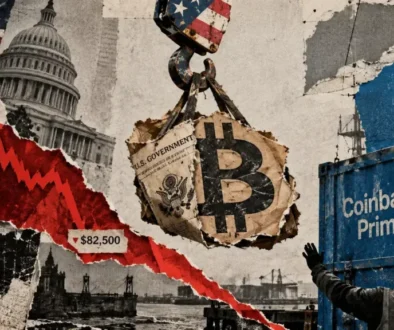
In July 2024, the US Marshals Service selected Coinbase Prime as its custodian for what the agency designated “Class 1” digital assets. That contract requires custody and liquidation procedures compliant with both DOJ policy and USMS standards.
However, the arrangement is prospective; assets forfeited and stored before that contract took effect were subject to whatever custody model agencies employed at the time of seizure.
The Iossifov case suggests that pre-2024 forfeitures may not have been transferred into agency-controlled wallets or maintained in cold storage according to the manual’s specifications. If that pattern is widespread, the federal government may be sitting on thousands of seized cryptocurrency holdings that remain partially accessible to original account holders or their associates.
The January 2024 alleged transfer occurred seven months before Coinbase Prime became the official federal custodian, meaning Iossifov’s assets were held under an earlier, less clearly defined arrangement.
For institutional participants in crypto markets, this creates regulatory opacity. If seized assets can be moved by prison inmates months after forfeiture, the credibility of government enforcement actions is undermined. Market participants cannot assume that federal seizure orders represent irreversible removal of assets from circulation or from the hands of bad actors.
That assumption had been implicit in how regulators and market infrastructure operators understood the finality of forfeiture.
Mixing services and exchange transfers created deliberate obstacles to asset tracing
The filing states that Iossifov routed the $290,000 through multiple exchanges and illicit mixing services, colloquially known as tumblers or coin mixers. Those services are specifically designed to break transaction links between addresses, making it difficult or impossible to trace proceeds through the blockchain.
The choice to use mixing services is not incidental; it indicates deliberate intent to obscure the transfer and complicate recovery.
Law enforcement agencies have grown more sophisticated at tracing mixed transactions through pattern analysis, entity clustering, and cooperation with exchange partners. However, the Iossifov case indicates that by the time the DOJ publicly acknowledged the alleged transfer, the assets had likely already reached endpoints that may not be easily reversible.
The use of multiple exchanges rather than a single point of transfer also suggests coordination or knowledge of how to navigate exchange compliance thresholds.
If an imprisoned individual can orchestrate multi-exchange mixing of $290,000 in seized funds, the assumption that forfeiture equals removal from the criminal economy requires revision.
Specific details of Iossifov’s access and coordination mechanism remain undisclosed
The Justice Department has not specified whether Iossifov had a co-conspirator outside prison who executed the transfers, whether he retained remote access to exchange accounts, or whether the transfers were authorized before his incarceration and executed automatically on a time delay. Each scenario has different implications for custody security and inmate access protocols at federal facilities.
If an outside associate coordinated the transfers, it suggests the original fraud network remained intact despite Iossifov’s conviction and incarceration. If Iossifov retained direct access to exchange credentials from inside prison, it indicates either that prison communications security failed or that he never truly lost control of the accounts.
If the transfers were pre-authorized, it raises questions about whether exchanges allowed standing instructions from accounts later seized by federal authorities.
The mechanism remains officially unresolved, and that ambigu
Original reporting: cryptoslate.com