BMX token recovers from July 24 crash as Bitmart withdrawal delay rumors spread
BitMart’s ecosystem token crashed 63-65% on July 24 before recovering 44% within hours, but the exchange has remained silent as users report significant delays in processing withdrawals across Asian trading communities. For institutional investors evaluating BitMart as a counterparty or liquidity venue, the combination of unexplained token collapse and unconfirmed operational friction represents a material due-diligence trigger.
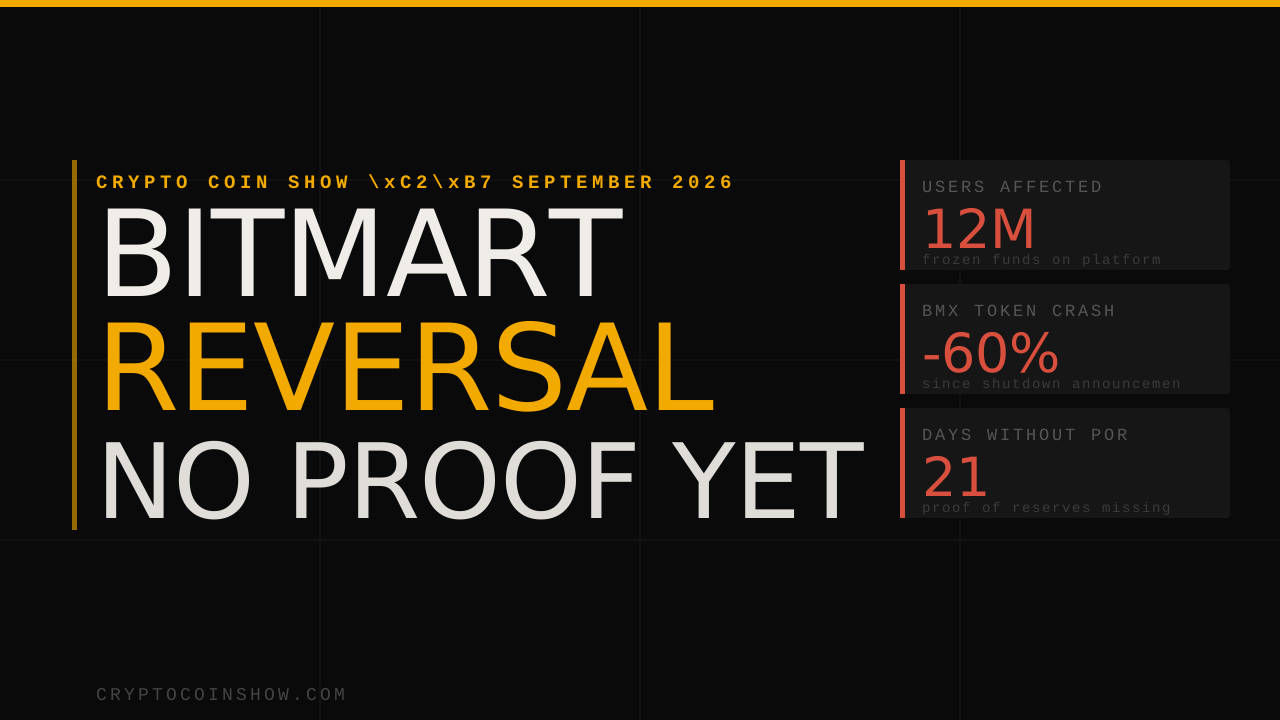
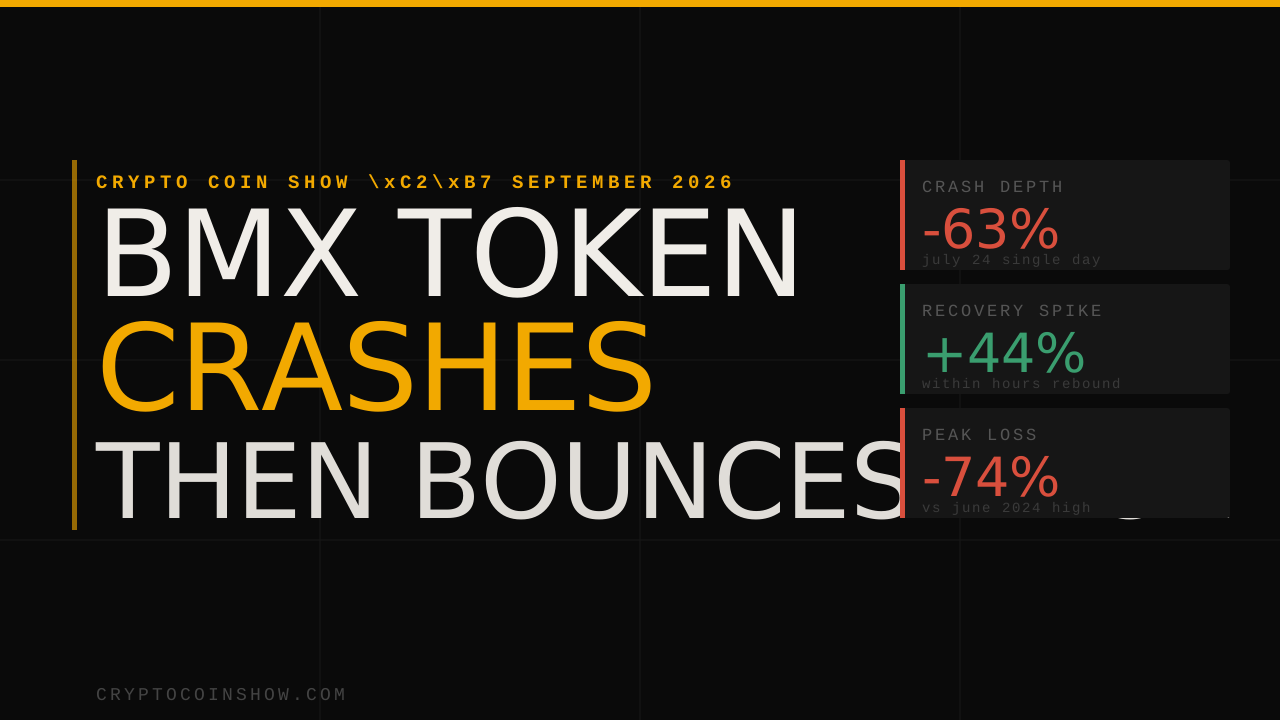
- BMX token fell 63-65% in a single day on July 24, then recovered to $0.163, still 74% below its June 2024 peak of $0.6203.
- Users in Chinese and Vietnamese crypto channels reported withdrawal processing delays lasting hours longer than normal, with one $5 USDT transfer taking over three hours.
- BitMart has published no official statement addressing either the token crash, its possible causes, or the withdrawal delays affecting user confidence.
- 63-65% BMX token single-day decline on July 24, compared to prior trading levels
- $0.163 BMX price after 44% recovery within 24 hours of the crash low
- $158 million BitMart reported reserves as of July 17, prior to this week’s events
BitMart’s native token, BMX, experienced a sudden and severe selloff on July 24 that wiped out between 63% and 65% of its value within hours. The token bottomed near $0.107 before bouncing to $0.163 within 24 hours, a 44% intraday recovery that has done little to restore confidence.
The collapse triggered immediate speculation across Chinese and Vietnamese trading communities about whether the exchange itself had suffered a security breach or whether an insider or major holder had dumped supply.
BitMart’s complete silence on the event, combined with concurrent reports of slower-than-normal withdrawal processing, has amplified uncertainty about the operational health of one of Asia’s largest retail crypto exchanges.
BMX Token Falls 65% as Speculation Points to Breach or Insider Dump
The July 24 collapse was significant enough to draw the attention of prominent Chinese crypto observers, including Lu Ge, an account with substantial following in Asia-focused trading circles. Lu Ge flagged the decline at 63% and explicitly told followers with money on the platform to monitor the situation closely.
Other analysts, including those at Cryptopolitan, calculated the loss at over 65%, suggesting the move was compressed into a narrow window and likely driven by panic selling triggered by a discrete event rather than gradual reassessment of the token’s fundamentals.
Lu Ge outlined two possible explanations: a security breach affecting the exchange, or a coordinated supply dump by someone with access to large BMX holdings. Neither scenario has been confirmed, and BitMart has offered no clarification.
The token’s continued underperformance relative to its June 2024 high of $0.6203, a gap of nearly 74% at current prices, reflects lasting investor concern rather than temporary panic.
BMX now carries a market capitalization of $52.8 million, a significant reduction from its prior valuation. The token’s primary utility is governance and fee-sharing within the BitMart ecosystem, making its collapse a direct signal about market confidence in the platform’s future and its operational integrity.
Withdrawal Delays Spread Across Asian Trading Communities Without Exchange Comment
Concurrent with the token crash, reports began circulating on social media about delays in processing user withdrawals. X account @cryptobraveHQ documented the trend on July 25, noting that community members had begun reporting extended review times for withdrawals that normally clear in minutes.
One reported case involved a several-hundred-dollar USDT withdrawal requested in the morning that had not yet landed by the time the observation was posted.
The reports were neither isolated nor dismissed by observers as routine slowness. Account @BTCs_ described a 5 USDT withdrawal that took more than three hours to complete, a timeframe that user characterized as unprecedented in their experience with the platform.
Another user, @solotop999, reported that an attempt to empty an otherwise untroubled BitMart account returned an on-chain withdrawal freeze message, suggesting a possible restriction at the protocol level rather than an administrative review delay.
Lu Ge responded by asking users to test their own withdrawals and report results, while also flagging a sudden wave of nearly identical promotional messages from BitMart marketing accounts. Lu Ge interpreted this burst of marketing activity not as reassurance but as a warning signal, a common pattern when platforms attempt to project normalcy during periods of internal stress.
The combination of delayed withdrawals and coordinated messaging without any official explanation created a negative information asymmetry that likely amplified the selling pressure on BMX itself.
BitMart Maintains Scale but Offers No Disclosure on Token Crash or Operational Issues
BitMart has not published any statement addressing the token crash, its underlying cause, or the withdrawal delays reported by users. The exchange continues to show material scale on paper: CoinMarketCap reported $1.29 billion in 24-hour spot volume and reserves of approximately $158 million as of the data available before the July 24 events.
On July 17, BitMart published an H1 2026 report highlighting 256% growth in assets under management and expansion into payments, prediction markets, and US operations.
The absence of official communication is itself a material fact for institutional counterparties. Exchanges that experience operational incidents or security concerns typically issue detailed incident reports and remediation timelines within hours, both to restore user confidence and to preempt regulatory inquiry.
BitMart’s silence, now spanning multiple days across a token crash, withdrawal delays, and unconfirmed breach rumors, suggests either that internal investigation is still ongoing, that the issue is being managed without public disclosure, or that communications protocols have themselves been disrupted.
For institutions evaluating BitMart as a liquidity provider, custody counterparty, or source of order flow, the current situation creates material uncertainty.
The $158 million in reported reserves provides a buffer, but without transparent disclosure of the July 24 event’s scope and cause, investors cannot independently assess whether the withdrawal delays represent a temporary technical issue or a symptom of deeper operational or financial stress.
Institutional Due Diligence Must Widen as Platform Credibility Deteriorates
The combination of a 65% token collapse and unconfirmed withdrawal friction has created a credibility test that BitMart has not yet addressed. For retail traders in Asian markets, where BitMart holds significant market share, the lack of transparency has likely already shifted behavior toward other platforms.
For institutional investors, the question is more granular: whether to reduce exposure to BitMart as a trading counterparty or liquidity venue pending clarity on what occurred on July 24.
The token crash itself does not necessarily imply platform insolvency, exchange tokens can collapse for many reasons unrelated to the underlying platform’s health.
However, the simultaneous reports of withdrawal delays, coupled with BitMart’s public silence, suggest that either operational disruption is occurring, or that the exchange’s management believes disclosure carries greater risk than silence. Neither interpretation is reassuring to sophisticated investors.
The critical next step is whether BitMart will issue a formal incident report within the next 24-48 hours. If withdrawal delays persist or if BitMart continues without disclosure, institutional investors should begin transferring exposure to other Asian exchanges and should request confirmation of reserve adequacy from BitMart’s compliance team directly. If the delays resolve and BMX stabilizes without official explanation, investors should treat this as a platform credibility failure even if operational recovery is confirmed, a material factor in future counterparty risk assessments.