
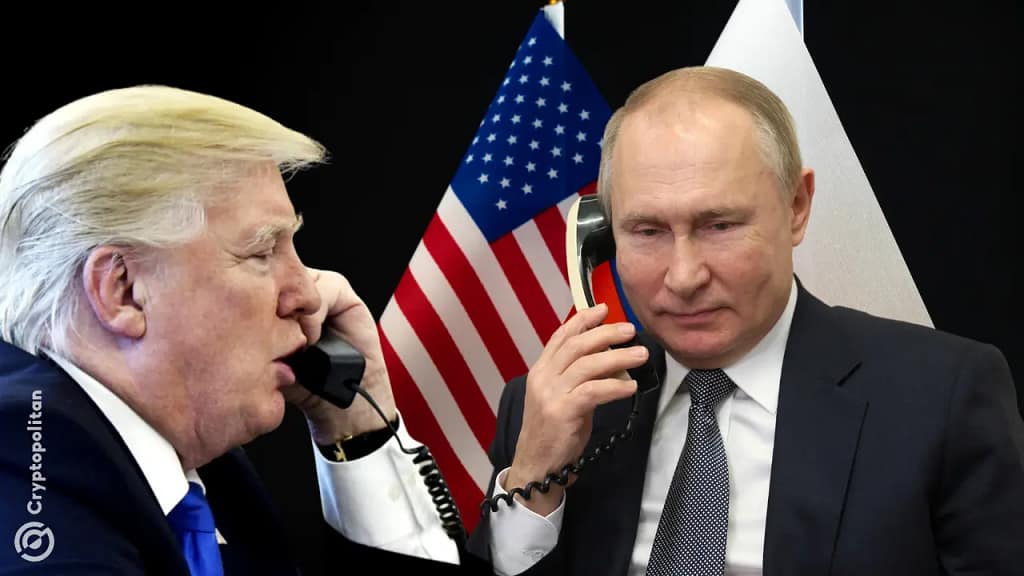
President Trump and Putin complete three-hour long private meeting with zero breakthrough
President Donald Trump and Russian leader Vladimir Putin concluded a three-hour private meeting at an Alaska military base without producing any agreement to halt the ongoing conflict in Ukraine or address international sanctions. The summit, the first between the two leaders since 2019, ended without concrete commitments despite weeks of diplomatic preparation and stated intentions to pursue peace negotiations.
Trump acknowledged during remarks that while both sides identified areas of common ground, substantive progress on Ukraine’s future remained elusive. “So there’s no deal until there’s a deal,” Trump stated, offering a candid assessment of the talks’ limited results. Putin delivered brief comments warning against interference with what he characterized as “progress,” though no formal agreements or written documents emerged from the closed-door discussions.
The Summit Setup and Key Players
The meeting took place at Elmendorf Richardson Air Force Base in Anchorage on Friday evening. Trump arrived accompanied by Secretary of State Marco Rubio and special envoy to Russia Steve Witkoff. Putin’s delegation included Foreign Minister Sergei Lavrov and foreign policy advisor Yury Ushakov.
The two presidents met alone in a secured facility while their teams waited outside. No press questions were permitted following the session. Both leaders approached the microphones afterward to offer public statements, but neither took substantive questions from journalists.
The biggest headline was the lack of one.
— Crypto Coin Show Analysis
This marked the first face-to-face meeting between Trump and Putin since their 2019 encounter. The backdrop at the summit site read “Pursuing Peace,” signaling the intended focus of discussions.
Ukraine Left Out of the Table
Ukrainian President Volodymyr Zelenskiy did not receive an invitation to the summit, raising immediate concerns from Kyiv and European capitals. The exclusion reflected a fundamental tension: whether Trump would negotiate on Ukraine’s behalf or push all parties toward direct discussions.
Western allies worried Trump might tacitly accept Russia’s territorial control over roughly 20 percent of Ukrainian land—territory Russia has occupied since its February 2022 invasion. Trump attempted to assuage these concerns, stating he was not there to “negotiate for Ukraine” but rather to encourage all sides to engage in dialogue.
“I want the killing to stop,” Trump said before boarding Air Force One to depart Alaska. The statement underscored his stated priority, yet the fundamental conflict continued unabated during the summit itself.
Zelenskiy responded via Telegram, writing that Russia must take necessary steps to end the war and expressing hope that America would follow through with concrete support. From Anchorage, however, Trump offered no new commitments or detailed pathway forward.
Even as Trump and Putin met, Russian missiles struck the Dnipropetrovsk region in eastern Ukraine, killing at least one person and injuring another. The attack demonstrated that the conflict’s tempo showed no signs of slowing despite diplomatic overtures at the highest level.
The timing underscored a recurring pattern: diplomatic efforts have repeatedly failed to produce lasting ceasefires or de-escalation. Previous peace initiatives have similarly collapsed, leaving civilian populations to bear the human cost of continued hostilities.
What Putin Gained From the Optics
While Putin failed to secure substantive concessions during the summit, the meeting itself provided significant symbolic value. For Russia, sitting across the table from the U.S. president—treated as an equal partner rather than an international outcast—carried enormous diplomatic weight.
Trump extended formal courtesies throughout Putin’s visit. The Russian leader was greeted on the tarmac with a handshake and escorted to the summit location in Trump’s presidential limousine, projecting an image of normalized relations between the two nuclear powers.
Putin got the image of Russia sitting down with the U.S. again, not as an outcast, but as a major player.
— Diplomatic Analysis
An active International Criminal Court arrest warrant accuses Putin of overseeing the deportation of Ukrainian children—charges Moscow denies. However, neither the United States nor Russia recognizes ICC jurisdiction, so the warrant carried no legal weight during the summit. Putin’s presence in Alaska proceeded without complications.
This summit occurred amid ongoing geopolitical tensions, with global markets closely monitoring developments that could affect energy prices, sanctions frameworks, and broader economic stability.
Industry Context and Market Implications
The geopolitical landscape surrounding U.S.-Russia relations carries significant implications for multiple economic sectors. The sanctions regime imposed on Russia since 2014—and substantially expanded following the 2022 Ukraine invasion—has reshaped global energy markets, commodity prices, and financial systems. Any shift in diplomatic stance could theoretically trigger sanctions relief that would flood energy markets with Russian oil and natural gas, fundamentally altering the price structures that have defined the past two years.
Beyond traditional commodities, the summit’s inconclusive nature reflects broader uncertainty affecting investment markets globally. Financial institutions, energy companies, and multinational corporations operate within strategic frameworks that assume either continued escalation or potential de-escalation. The summit’s failure to clarify direction leaves market participants uncertain about medium-term planning horizons.
For the cryptocurrency sector specifically, geopolitical uncertainty often correlates with increased demand for alternative assets perceived as less subject to traditional regulatory or governmental control. Bitcoin and other digital currencies have historically experienced price fluctuations corresponding to major geopolitical events, as investors recalibrate portfolio allocations in response to shifting risk assessments.
Trump Administration’s Diplomatic Strategy
The Trump administration’s engagement with Russia represents a significant departure from the Biden administration’s approach, which emphasized unconditional support for Ukraine and maintenance of coordinated Western sanctions. Trump has signaled willingness to engage Russia directly on terms that might diverge substantially from NATO consensus or European preferences.
The selection of Steve Witkoff as special envoy signals Trump’s prioritization of direct, personal relationships in international diplomacy. Witkoff’s background in real estate and private equity, rather than traditional foreign service, reflects Trump’s preference for negotiators outside the diplomatic establishment. This approach sometimes generates unconventional outcomes but also introduces unpredictability that foreign counterparts must navigate.
Secretary of State Marco Rubio’s participation underscores the formal government dimensions of the summit. Rubio has historically advocated for robust Russia containment policies, creating potential tension between his institutional role and the Trump administration’s apparent openness to negotiated settlements that earlier neoconservative approaches would reject.
What Happens Next
Trump indicated interest in organizing a second round of talks, potentially involving Zelenskiy and direct negotiations between the conflicting parties. However, no dates or frameworks were announced. The absence of concrete next steps left considerable uncertainty about the diplomatic trajectory.
European officials and Ukrainian leadership will scrutinize Trump’s approach carefully. Any agreement that legitimizes Russian territorial gains could reshape NATO’s strategic posture and undermine Ukraine’s long-term security interests. Conversely, continued diplomatic engagement—even without immediate breakthroughs—might eventually create conditions for meaningful negotiations.
The summit’s lack of deliverables leaves fundamental questions unanswered: What conditions would Putin require to negotiate directly with Zelenskiy? What role will the United States play in enforcing any eventual agreement? Will sanctions relief factor into peace terms? These remain open issues as diplomatic efforts continue.
For investors monitoring global markets and geopolitical risk, the summit’s inconclusive outcome suggests prolonged uncertainty. Ongoing conflict typically elevates energy costs, disrupts supply chains, and increases demand for alternative assets—factors that have historically influenced cryptocurrency valuations and broader portfolio allocation strategies.
Strategic Implications for Global Order
The Alaska summit reflects a pivotal moment in post-Cold War international relations. The Trump administration’s willingness to engage Russia bilaterally, absent formal multilateral frameworks or prior agreement from allied nations, signals a potential recalibration of how the United States approaches great power competition. Whether this approach ultimately produces sustainable peace agreements or merely postpones deeper conflicts remains uncertain.
Russia’s continued presence at the diplomatic table—despite international isolation and war crimes accusations—demonstrates the persistent leverage that nuclear weapons and energy resources provide in international negotiations. For smaller nations like Ukraine, this dynamic creates vulnerability; their security ultimately depends on decisions made by great powers negotiating according to their own strategic interests rather than international law frameworks.
The broader implications suggest that traditional multilateral institutions may diminish in favor of bilateral great power arrangements. This shift carries consequences for trade agreements, technology standards, sanctions regimes, and alliance structures that have governed international commerce for decades. Market participants must anticipate potential disruption across these established systems.
Get weekly blockchain insights via the CCS Insider newsletter.