
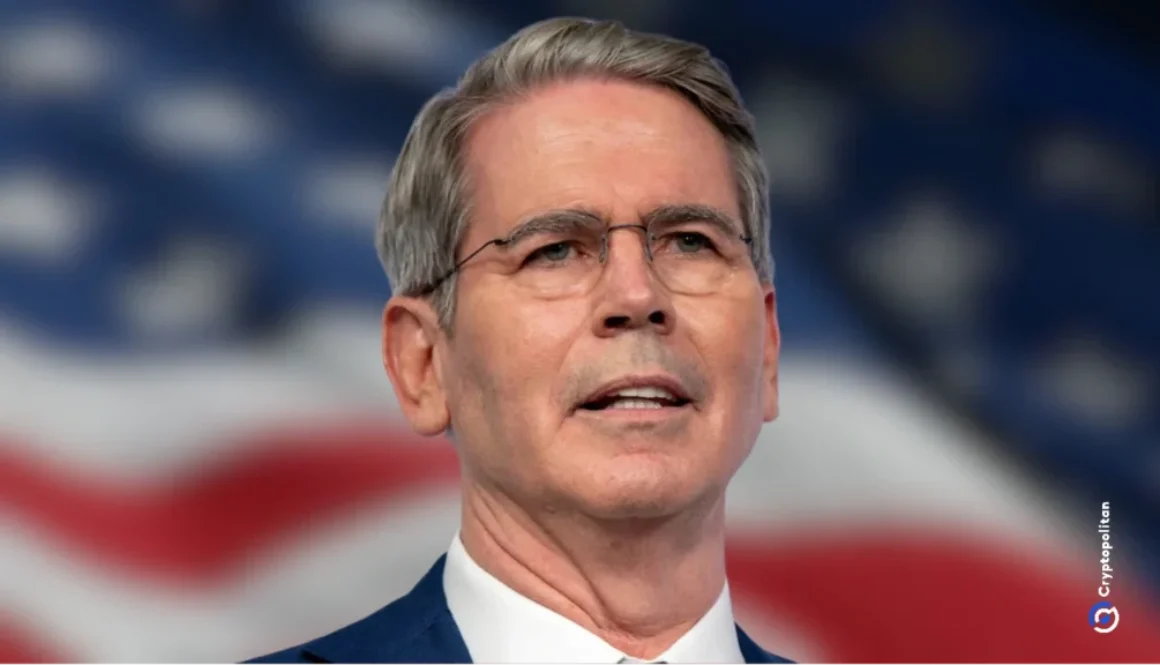
Bessent blasts Fed renovation and suggests 50 bps rate cut as U.S. pushes for major trade deals
Treasury Secretary Scott Bessent is advocating for a 50 basis-point rate cut in September, signaling the Biden administration’s confidence that economic conditions warrant more aggressive Federal Reserve action. Speaking to Fox Business this week, Bessent pointed to revised employment data revealing softer job growth in May and June than initially reported, arguing the Fed should have begun cutting rates earlier had it possessed accurate figures.
The Case for Larger Rate Cuts
Bessent’s remarks come as fresh inflation data showed the consumer price index rising 0.2% in July, with core inflation—which excludes volatile food and energy components—climbing 0.3%. While goods prices remained largely contained despite recent tariff increases, service-sector inflation accelerated, creating a mixed picture of price pressures across the economy.
The Treasury secretary characterized the inflation pattern as unexpected. Services inflation has proven stickier than anticipated, even as goods remain subdued. This divergence suggests that monetary policy’s impact varies significantly across different segments of the consumer economy.
The real thing now to think about is whether we should get a 50 basis-point rate cut in September.
— Scott Bessent, Treasury Secretary
Bessent’s proposal stands in contrast to the Fed’s July decision to hold rates steady. The Treasury secretary suggested the central bank missed an opportunity to begin easing monetary policy sooner. With unemployment data revised downward and inflation moderating in certain areas, Bessent’s framing positions a larger September cut as a reasonable response to economic conditions.
Investor Sentiment Shifts on Rate Cut Bets
Equity markets responded positively to Bessent’s comments and the latest inflation report. The S&P 500, Nasdaq, and Dow Jones each climbed between 1% and 1.4%, reflecting renewed optimism that the Fed will shift toward rate cuts. Futures markets now price in a strong probability of at least a 25 basis-point reduction in September, with meaningful odds assigned to the 50 basis-point cut scenario Bessent discussed.
Tariffs have had a milder impact on goods prices than many analysts initially forecasted. This softer-than-expected goods inflation has bolstered investor confidence that overall price pressures will eventually moderate, supporting the case for monetary easing.
The market rally also reflects expectations that the Fed may adopt a more accommodative monetary stance than previously signaled. Investors have grown increasingly confident that rate cuts are imminent rather than uncertain, driving both equity and asset price appreciation across risk categories.
Read more on how bitcoin and digital assets respond to Federal Reserve policy shifts.
Industry Context and Market Implications
The current debate over monetary policy rates reflects broader economic uncertainty in the United States. After years of elevated interest rates designed to combat inflation, policymakers and market participants are reassessing whether the Fed has tightened monetary conditions sufficiently to achieve its dual mandate of price stability and full employment without triggering economic deterioration.
The divergence between goods and services inflation carries particular significance for financial markets. Goods-producing sectors, including manufacturing and technology hardware, benefit most directly from lower borrowing costs. By contrast, services—which comprise nearly 70% of U.S. economic output—depend more on labor costs and pricing power than interest rates alone. This structural reality means that rate cuts alone may not resolve sticky service inflation, requiring either demand destruction or productivity improvements in labor-intensive industries.
For investors and corporations, Bessent’s advocacy for larger rate cuts signals potential shifts in capital allocation strategies. Lower rates typically reduce discount rates applied to future cash flows, benefiting growth-oriented equities and emerging market assets that had been punished during the tightening cycle. Conversely, financial institutions benefit from higher rates through wider net interest margins, creating conflicting incentives across market participants.
The Federal Reserve faces competing pressures in this environment. Cutting rates too aggressively risks reigniting inflation expectations, particularly in services, while cutting too timidly could trigger unnecessary economic weakness. This balancing act explains why Fed officials have signaled gradual, data-dependent moves rather than committing to specific paths in advance.
Bessent Critiques Fed Operations and Succession Planning
Beyond rate policy, Bessent launched criticism at the Federal Reserve’s $2.5 billion renovation of its Washington headquarters. The Treasury secretary noted that he personally funds his own office improvements at the Treasury Department, implying the Fed’s capital expenditure is excessive. President Trump has previously lambasted the project’s cost, adding political pressure to Fed management decisions.
Bessent’s broader critique extends to the Fed’s institutional structure. He characterized the central bank as “bloated,” arguing that its size and complexity pose risks to its operational independence. This assessment aligns with the Trump administration’s preference for a more streamlined monetary policy apparatus.
The institution has become bloated, risking its independence.
— Scott Bessent, Treasury Secretary
Regarding leadership succession, Bessent expressed hope that Stephen Miran, President Trump’s nominee to fill an open Fed board seat, will secure Senate confirmation before the September 16–17 policy meeting. Miran currently heads the White House Council of Economic Advisers and has been nominated for a term ending in January, though Bessent suggested he might be asked to extend his tenure.
On the search for Jerome Powell’s successor—whose Fed chair term expires in May 2026—Bessent indicated Trump is “casting a very wide net.” The administration is evaluating candidates based on their monetary policy philosophy, regulatory approach, and willingness to restructure the Federal Reserve’s operations and oversight framework.
The composition of the Federal Reserve’s Board of Governors will significantly influence monetary policy direction. Leadership transitions and new appointments telegraph how the central bank may respond to economic conditions in the coming years, affecting markets across crypto and traditional finance.
Entity Background and Governance Concerns
The Federal Reserve’s governance structure reflects its unique position as a quasi-public institution operating with considerable autonomy from direct political oversight. This independence, enshrined in law, has historically protected monetary policy decisions from short-term political considerations. However, that independence has become increasingly contested during periods of high inflation or economic stress when political leaders face pressure to demonstrate responsiveness.
Bessent’s criticism of the Fed’s size and complexity touches on genuine institutional questions. The Federal Reserve System comprises twelve regional banks, a Board of Governors, and numerous committees responsible for monetary policy, financial regulation, and payment system operations. While this decentralized structure was designed to prevent excessive concentration of power, critics argue it creates redundancies and complicates accountability.
The headquarters renovation project specifically exemplifies tensions between institutional maintenance and political optics. Federal Reserve facilities require modernization to meet security, technology, and operational needs. However, $2.5 billion in expenditures during a period of constrained government finances naturally attracts scrutiny, particularly when the central bank has been criticized for aggressive tightening that impacts ordinary Americans’ mortgages and job prospects.
U.S. Negotiates Major Trade Agreements
Bessent indicated the U.S. government aims to finalize substantial trade agreements with major economic partners in coming months. The administration is simultaneously leveraging tariff policy as a negotiating tool while managing inflation concerns that tariffs can create.
The Treasury secretary also highlighted over $10 trillion in committed private-sector investments since Trump’s return to office. This figure underscores administration claims that policy shifts—including regulatory rollbacks and tax incentives—are spurring capital deployment and economic expansion.
The intersection of trade policy, monetary easing, and private investment creates the economic backdrop for the Fed’s September decision. If rate cuts proceed alongside successful trade negotiations, officials believe growth momentum could accelerate while inflation remains contained.
Broader Economic Considerations and Market Outlook
The timing of Bessent’s rate cut advocacy carries strategic importance. By publicly endorsing a 50 basis-point reduction, the Treasury secretary telegraphs administration preferences to Fed leadership while also managing market expectations. This coordinated messaging between fiscal and monetary authorities influences how investors, businesses, and consumers make economic decisions.
Capital investment decisions, employment planning, and consumer spending all respond to expectations about future interest rates and economic conditions. When Treasury officials and Federal Reserve policymakers appear aligned on the need for monetary easing, confidence increases across business sectors, potentially accelerating investment cycles and job creation.
However, the approach carries risks. If inflation reaccelerates despite rate cuts, or if economic growth disappoints despite monetary accommodation, credibility damage extends to both institutions. This reality explains why Fed officials typically resist direct political pressure, maintaining independence is essential to long-term policy effectiveness.
Monetary policy, trade dynamics, and investor sentiment collectively shape conditions across digital asset markets and traditional finance. Understanding these relationships helps investors anticipate volatility and opportunity.
The coming weeks will clarify whether the Fed embraces Bessent’s rate-cut arguments. Markets have already positioned for easing, but confirmation through actual policy decisions remains pending. Treasury-Fed coordination on these objectives will be closely monitored by investors and analysts alike. The September decision carries implications far beyond basis points—it signals whether independent central banking persists as a governing principle or whether political economy increasingly shapes monetary policy direction.
Get weekly blockchain insights via the CCS Insider newsletter.