
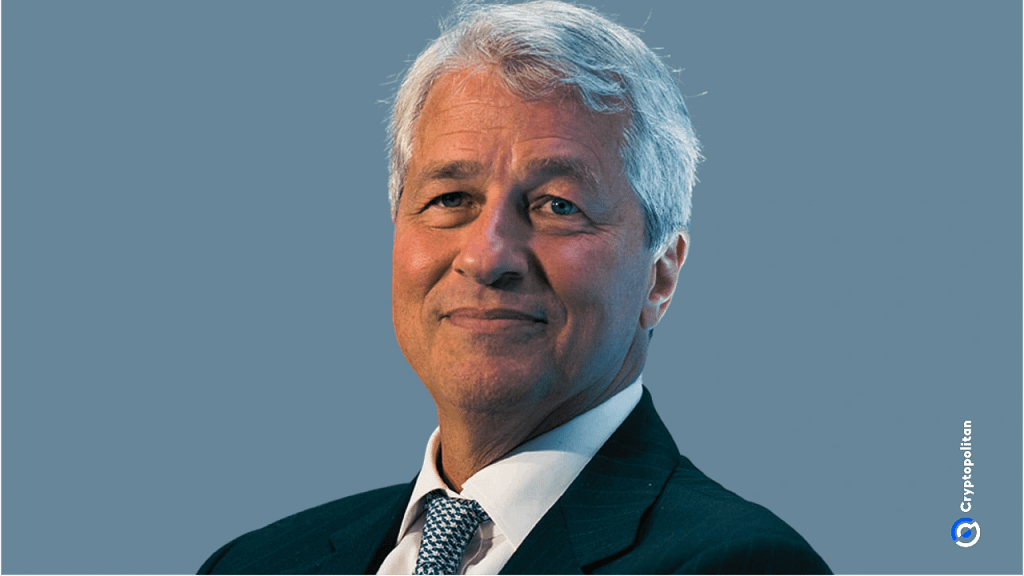
Trump says Dimon lied about Fed chair offer, calls him unfit for the job
Former President Donald Trump has disputed claims that he offered JPMorgan Chase CEO Jamie Dimon a position leading the Federal Reserve, escalating tensions between the two figures and raising questions about the future of banking policy under the incoming administration.
Trump took to Truth Social on Saturday to deny what The Wall Street Journal had reported—that he met with Dimon months ago at the White House to discuss the Fed chair role. Trump called the report false and criticized the outlet for not contacting him before publication.
“There was never such an offer,” Trump stated, adding that he would have immediately said no if asked. He suggested Dimon was either joking or misrepresenting the conversation entirely.
Treasury Secretary Claims and Credit Card Rate Proposals
Trump also rejected reports that he had offered Dimon the position of Treasury Secretary. He pointed to his selection of Scott Bessent for that role, calling Bessent “a superstar” in the job.
Beyond these personnel disputes, Trump has begun advancing policy proposals that directly affect the banking sector. He is pushing for a hard cap on credit card interest rates, capping them at 10%—a move that has already rattled markets.
Banking stocks have suffered measurable losses as investors assess the impact of Trump’s regulatory agenda, even as some institutions report strong earnings.
— Market Analysis
JPMorgan shares declined roughly 5% over the past week despite the company beating earnings expectations. Other major bank stocks have similarly fallen following Trump’s ultimatum that financial institutions comply with his directives by January 20.
Account Closure Dispute and Debanking Allegations
The broader conflict between Trump and JPMorgan centers on account closures that occurred after January 6, 2021. Trump has characterized this as “inappropriate and incorrect debanking” and plans to file a lawsuit against the institution within two weeks.
Trump has consistently alleged that JPMorgan Chase and Bank of America both rejected his accounts for political reasons following his first term. He provided no documentation but maintained the decisions were politically motivated.
In August 2025, Trump signed an executive order instructing banks that they cannot reject clients based on political or religious beliefs. This policy framework underpins his legal strategy against major financial institutions.
JPMorgan responded to these accusations by stating it does not close accounts based on customers’ political beliefs. Bank of America declined to comment on individual cases but signaled openness to clearer regulatory guidance on account management standards.
Crypto Adoption and Family Support
Trump’s family members have previously cited banking barriers as a catalyst for their cryptocurrency involvement. Donald Trump Jr. disclosed last year that the family encountered obstacles accessing traditional banking services, which motivated their shift toward digital assets.
“We got into crypto, not because it was like, ‘hey, this is the next cool thing,’ we got into it out of necessity,” Trump Jr. explained in earlier remarks. This statement underscores how regulatory and banking friction can drive adoption of alternative financial systems.
Banking restrictions on political grounds, whether real or perceived, have become a rallying point for cryptocurrency advocates who view digital assets as censorship-resistant alternatives to traditional finance.
— Crypto Policy Analysis
The Trump family’s public endorsement of cryptocurrency, born from necessity rather than ideology, has implications for how the incoming administration may approach digital asset regulation. For more on this evolving landscape, see our coverage of Bitcoin adoption trends and current market movements.
Federal Reserve Leadership and Policy Outlook
The dispute over the Fed chair position carries significance for monetary policy direction. Current Federal Reserve Chair Jerome Powell’s term concludes on May 15, creating a window for Trump to shape the central bank’s leadership if he wins office.
Trump’s public conflict with Dimon and JPMorgan, combined with his interest rate proposals and banking regulations, suggests a confrontational approach to the financial sector. The combination of policy announcements and legal threats indicates Trump intends to reshape relationships between the executive branch and major financial institutions.
Federal Reserve Chair Jerome Powell’s current term expires May 15. Trump has stated he will file suit against JPMorgan within two weeks. Banks have until January 20 to comply with Trump’s credit card interest rate proposal.
The dispute reflects deeper ideological differences about debanking, political speech, and the role of financial institutions in American life. Trump frames the situation as persecution; financial institutions maintain they follow compliance and risk management standards without political consideration.
Industry Context and Banking Sector Implications
The banking industry faces unprecedented regulatory pressure as Trump prepares to take office. JPMorgan Chase, as the nation’s largest bank by assets with over $4 trillion in total assets, stands at the center of this conflict. The institution’s scale and influence make it both a target and a potential bellwether for broader financial sector policy under the new administration.
The proposed 10% cap on credit card interest rates would fundamentally reshape consumer lending economics. Currently, credit card rates average between 18% and 24%, with some issuers charging rates exceeding 30%. Such a dramatic reduction would compress profit margins on high-risk lending products, potentially forcing banks to tighten underwriting standards or reduce credit availability to subprime borrowers—outcomes that could paradoxically harm the consumers the policy aims to protect.
Analysts estimate that aggressive interest rate caps could reduce bank profitability by 8-15% across the consumer lending segment, with smaller regional banks facing disproportionate impact. Community banks, which rely more heavily on consumer lending revenue than investment banking fees, have already begun lobbying congressional representatives for exemptions or phase-in periods.
The broader banking sector has weathered significant disruption over the past three years, including the failures of Silicon Valley Bank and Signature Bank in 2023, which eroded consumer confidence in smaller institutions. Regulatory uncertainty under the incoming administration adds another layer of risk to an already fragile confidence landscape. Market participants are closely monitoring whether Trump’s anti-establishment rhetoric will translate into concrete deregulation that could restore bank profitability, or whether new restrictions will further constrain the sector.
Entity Background: JPMorgan Chase and Its Market Position
JPMorgan Chase operates as a diversified financial services institution with three major business segments: Consumer & Community Banking, Corporate & Investment Bank, and Asset & Wealth Management. CEO Jamie Dimon has led the organization since 2006 and has become one of Wall Street’s most influential figures, known for both his banking expertise and his willingness to engage in public policy debates.
Dimon’s reputation extends beyond banking circles. He has served as a trusted advisor to multiple administrations and has been mentioned for significant government roles in previous transitions. His involvement in Fed chair speculation reflects both his qualifications and his visibility in financial policy discussions.
The institution’s decision to close accounts associated with Trump-related entities in 2021 stemmed from JPMorgan’s compliance and risk management protocols following January 6. The bank maintained that account closures reflected reputational risk assessment and regulatory compliance obligations, not political animus. However, this rationale has become a flashpoint for Trump allies who view financial deplatforming as political persecution.
Market Implications and Future Banking Landscape
The escalating conflict between Trump and JPMorgan carries broader implications for the financial services industry. If Trump follows through on litigation against major banks and implements aggressive regulatory changes, the sector could face a period of sustained uncertainty that depresses valuations and constrains lending expansion.
Conversely, if the incoming administration pursues regulatory rollback—potentially undoing Dodd-Frank provisions and relaxing capital requirements—bank stocks could experience significant appreciation. Market participants are currently pricing in mixed expectations, reflected in banking sector volatility that exceeds broader market movements.
The cryptocurrency industry stands poised to benefit from sustained banking friction. If traditional financial institutions face regulatory hostility or reduced profitability, alternative financial systems—particularly blockchain-based services—may experience accelerated adoption among businesses and individuals seeking to avoid the political and regulatory complications that have characterized traditional banking relationships.
As these conflicts develop, the banking sector faces a period of regulatory uncertainty. The combination of potential interest rate caps, anti-debanking executive orders, and litigation creates an environment that may accelerate alternative finance adoption among businesses and individuals who perceive themselves as politically vulnerable.
Conclusion: Reshaping Financial Sector Governance
The Trump-JPMorgan dispute represents more than a personal clash between powerful figures; it signals a fundamental reimagining of how the executive branch will engage with the financial services industry. Rather than the cooperative regulatory framework that has characterized recent administrations, Trump appears committed to a more adversarial approach that challenges both specific business practices and the underlying assumptions about financial institution independence.
The outcome of this conflict will likely shape banking regulation for years to come. If Trump prevails in his litigation and successfully implements interest rate caps, the precedent could embolden future policymakers to directly intervene in bank pricing decisions. If JPMorgan successfully defends its account closure practices, the precedent would affirm institutional independence in compliance decisions.
Regardless of litigation outcomes, the reputational damage has already accumulated. JPMorgan and other major banks now face public perception challenges as Trump supporters view them as politically hostile institutions. This perception could accelerate capital flows toward alternative financial systems, cryptocurrency platforms, and regional banks perceived as more politically aligned with the incoming administration’s philosophy.
The Trump administration’s banking policy agenda—combining interest rate intervention, anti-debanking executive orders, and aggressive litigation—represents a departure from decades of consensus around central bank independence and regulatory separation of powers. Whether this approach delivers promised benefits to consumers or creates unintended economic consequences will occupy policymakers and investors for the duration of his term.
Get weekly blockchain insights via the CCS Insider newsletter.