
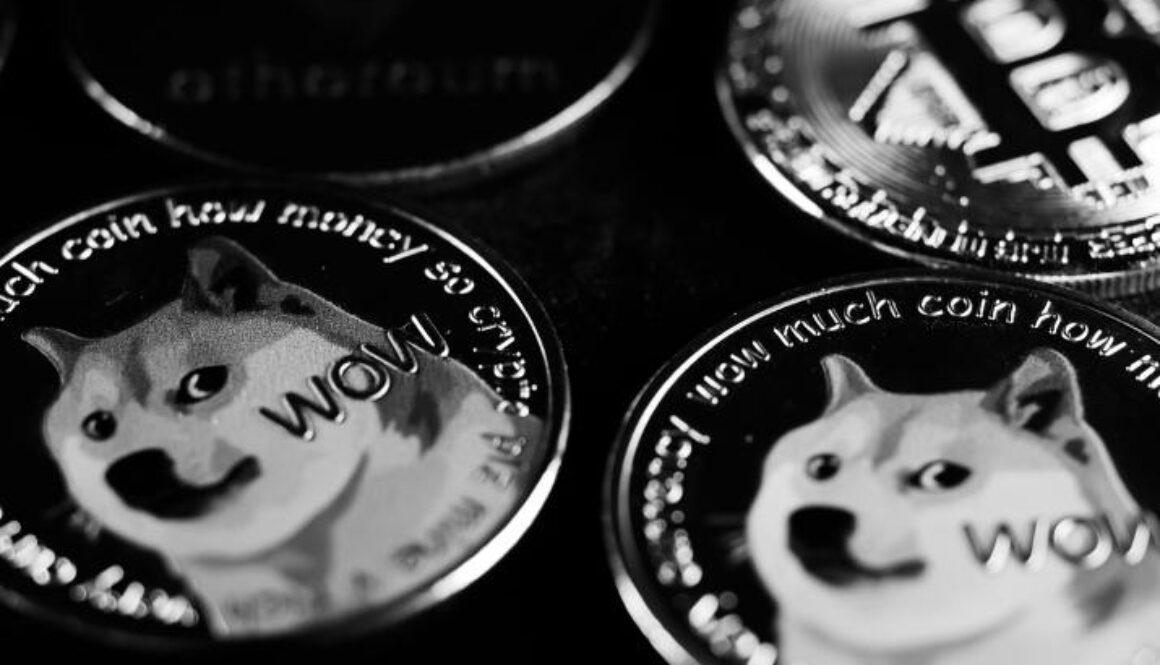
Dogecoin Flashback: Mirror Move Hints At Record-Breaking Surge
Dogecoin technical analysts have identified a chart pattern that resembles a pivotal setup from nearly a decade ago, sparking debate about whether the meme-token could be positioned for a significant rally. A symmetrical triangle formation observed in recent price action mirrors conditions that preceded a dramatic surge in early 2017, when DOGE climbed from roughly $0.0003 to $0.0194 within a year. While the historical parallel has drawn attention from traders monitoring dogecoin price patterns, the broader question remains whether technical resemblance translates into predictive power in today’s market environment.
The Historical Pattern Under Scrutiny
Technical analyst Trader Tardigrade has drawn comparisons between the current dogecoin consolidation and the 2016–2017 period using two-month charting intervals. The earlier cycle saw DOGE break out from a narrowing range and rally approximately 6,400% over the course of roughly one year. That historical move captured significant mainstream attention and demonstrated the kind of volatility meme coins could deliver during periods of focused investor interest.
The pattern in question—a symmetrical triangle—forms when price action becomes increasingly compressed, with both higher lows and lower highs contracting toward a central point. According to pattern theory, such formations often precede directional breakouts. Chart watchers monitoring dogecoin have noted that price compression has intensified since late 2024, narrowing the trading range considerably.
Visual similarity between past and present chart setups has fueled speculation, but technical patterns alone do not guarantee outcomes without broader market catalysts.
— CCS Market Analysis
Recent Price Movement and Market Context
At the time of analysis, dogecoin was trading near $0.18 per token, having experienced a 20% decline through October. This monthly performance stood in sharp contrast to recent seasonal trends. October 2024 saw DOGE gain 40%, while October 2023 posted a 10% advance, and October 2022 delivered a 100% monthly surge.
The pullback underscores an important reality: historical seasonal patterns do not guarantee repetition. Even tokens with established price cycles can behave differently depending on broader market conditions, bitcoin momentum, and shifts in retail participation.
Dogecoin’s October track record shows inconsistency, ranging from double-digit declines to triple-digit gains. This variability suggests that month-to-month seasonal factors alone are insufficient for predicting direction.
Projected Targets and Mathematical Extremes
Should the symmetrical triangle break upward, technical analysts have proposed several price targets. A first target of $3.90 would represent approximately a 2,000% gain from the $0.18 level, a move that would require sustained accumulation and renewed public attention on the token.
More aggressive forecasts circulating among bullish traders extend toward $18 and beyond. One widely discussed projection targets $48 per token, which at current circulating supply levels of roughly 151 billion DOGE would imply a market capitalization near $7 trillion. That valuation would exceed the combined market value of most major asset classes globally and is regarded as extremely unlikely by mainstream analysts.
Extremely bullish price targets often rely on chart pattern recognition alone, without fundamental catalysts or realistic assessments of capital inflow requirements.
— Crypto Market Reality Check
For dogecoin to reach $48 per token from its current price would require trillions of dollars in new capital entry. Historical precedent suggests such moves occur in narrow windows driven by coordinated retail participation, social media momentum, and favorable macroeconomic timing—conditions that are difficult to predict or sustain.
Industry Context and Evolution of Meme Coin Markets
Dogecoin’s position within the broader cryptocurrency ecosystem has evolved significantly since its creation in 2013. Originally launched as a satirical joke based on the Shiba Inu meme, DOGE has developed into one of the top ten cryptocurrencies by market capitalization, commanding billions of dollars in total value despite lacking the smart contract capabilities of platforms like Ethereum or the store-of-value narrative that anchors Bitcoin.
The meme coin category itself has exploded in recent years, with thousands of projects attempting to replicate Dogecoin’s lightning-in-a-bottle success. The 2021 bull market saw retail investors and social media communities drive valuations for tokens with minimal utility or development activity, a dynamic that attracted both unprecedented participation and regulatory scrutiny. Exchanges worldwide have implemented stricter listing requirements, and regulatory bodies from the SEC to international financial authorities have begun establishing frameworks for cryptocurrency oversight.
This regulatory backdrop differs markedly from the 2016–2017 period when technical analysts point to for historical precedent. Cryptocurrency markets in that era operated with minimal regulatory oversight, allowing for more extreme volatility and speculative pricing. Today’s environment, while still permissive compared to traditional finance, constrains certain trading mechanisms and requires clearer disclosures from exchange operators and token issuers.
Market Implications and Capital Flows
The attention dogecoin has received from technical analysts reflects broader dynamics in cryptocurrency markets, where retail traders increasingly rely on chart patterns and social media communities to identify opportunities. Major institutional investors have begun allocating to cryptocurrency, yet their entry into meme coins remains limited compared to their participation in Bitcoin and Ethereum.
Any significant rally in dogecoin would likely require capital reallocation from other speculative assets, particularly lower-ranked altcoins and newer meme tokens that have proliferated across decentralized exchanges. The total cryptocurrency market capitalization, while substantial, remains relatively small compared to traditional equity and bond markets. Competition for investor capital within crypto is therefore intense, and gains in one asset typically come at the expense of another.
Economic conditions also play an underestimated role in meme coin performance. During risk-on periods when equities are rallying and retail investors feel confident deploying capital into speculative positions, meme coins can attract outsized attention. Conversely, rising interest rates, market uncertainty, and recessionary concerns tend to dry up speculative buying across alternative assets.
Technical Analysis Limitations in Practice
While symmetrical triangles are recognized patterns in technical analysis, their predictive reliability remains contested among market professionals. Patterns can form and resolve in either direction, and identical-looking setups across different time periods can produce vastly different outcomes.
Multiple variables influence whether a breakout materializes or how far a move extends. Liquidity depth at key resistance levels, real-time changes in retail investor interest, the direction of crypto market prices more broadly, and shifts in social media attention all play material roles. A 2,000% move requires not just initial breakout momentum but sustained buying pressure over weeks or months—a challenging dynamic to maintain in any asset class.
The dogecoin case also illustrates a common pitfall in technical analysis: retrofitting historical narratives. Once a major rally occurs, it becomes easy to identify patterns that preceded it. Looking backward, many historical periods show similar chart formations that never resulted in significant moves, a phenomenon known as apophenia in statistics.
Academic research on technical analysis has produced mixed results regarding its predictive power. While some studies find modest evidence supporting certain chart patterns in heavily traded assets like major currency pairs and stock indices, results weaken considerably when applied to lower-liquidity or more volatile assets. Cryptocurrencies, particularly meme tokens with fragmented liquidity across multiple exchanges, fall into the category where technical analysis becomes less reliable.
Conclusion: Weighing Speculation Against Reality
For traders and investors evaluating these technical arguments, skepticism remains warranted. Pattern recognition provides useful frameworks for identifying potential trading opportunities but does not constitute a guarantee of future price action. The 2017 rally that bulls reference occurred during a specific period of cryptocurrency market euphoria, nascent retail participation, and media amplification that may not recur in identical form.
Dogecoin remains a speculative asset whose price reflects sentiment and narrative shifts more than underlying utility. Technical patterns offer a vocabulary for discussing possible scenarios, but they should not be mistaken for prediction tools. Anyone considering exposure to meme coins should do so with realistic expectations about volatility and risk, and with capital they can afford to lose entirely.
The symmetrical triangle may indeed lead to a breakout in either direction. History shows that such formations can precede dramatic moves, but equally demonstrates that many similar patterns resolve into lateral consolidation or reversals. Rather than viewing this technical setup as a reliable indicator of imminent wealth creation, investors should examine whether dogecoin has developed new use cases, whether adoption metrics show meaningful growth, and whether broader market conditions favor speculative asset appreciation. These fundamental questions, often overshadowed by chart pattern enthusiasm, ultimately matter more for long-term returns than any technical formation can predict.
Get weekly blockchain insights via the CCS Insider newsletter.