
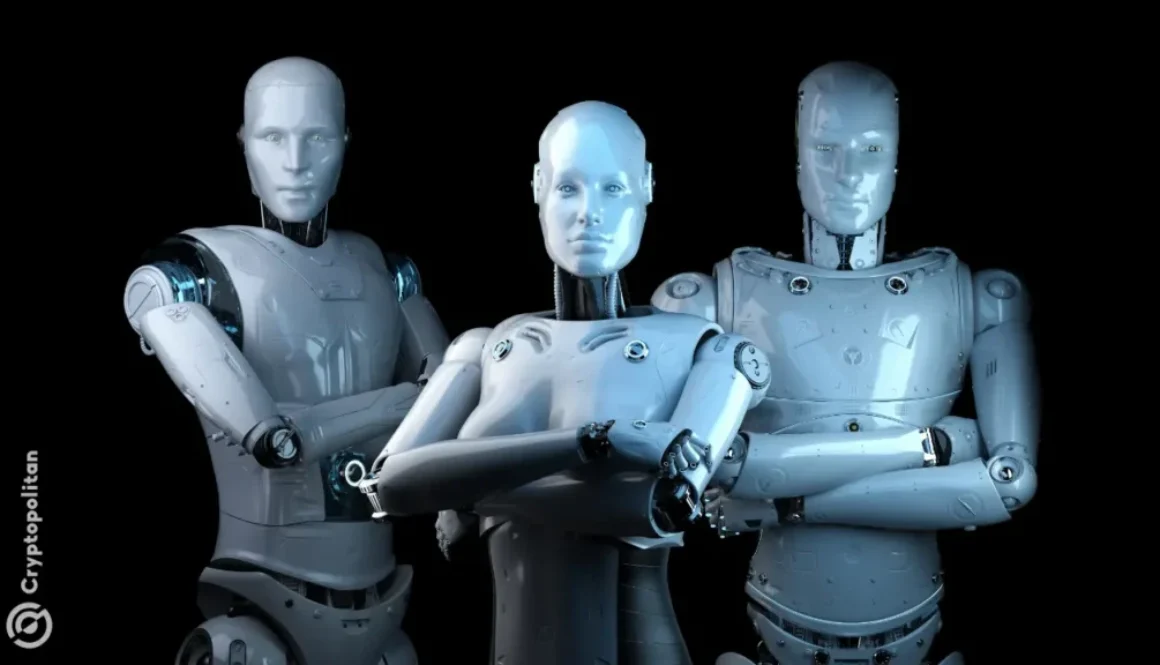
Democrats push robot tax as AI threatens jobs
A sweeping Senate investigation has found that artificial intelligence and automation could displace nearly 100 million American jobs over the next decade, with Democrats now proposing a “robot tax” on companies that replace human workers with machines. The findings paint a stark picture of labor market disruption, prompting lawmakers to consider new policy measures designed to cushion the economic blow on workers and communities.
Scope of Potential Job Displacement
The Senate HELP Committee, led by Senator Bernie Sanders, examined 20 major employment sectors and identified widespread vulnerability to automation. The analysis revealed that more than half of available positions in 15 of those sectors could be replaced by artificial intelligence or robotic systems.
The threat extends across multiple industries and wage levels. Fast food and counter service roles face the most acute risk, with approximately 89% of the 3 million positions in that sector potentially vulnerable to displacement. Customer service, freight and material handling, and office-based positions including executive assistants also show high susceptibility, with roughly 80% of these roles at risk from automation.
More than half of jobs in 15 major economic sectors could be displaced by artificial intelligence and automation within the next decade, according to Senate analysis.
The research drew insights from advanced AI systems, including ChatGPT, to model automation’s trajectory. The findings suggest rapid expansion into customer-facing roles, information management, scheduling, office administration, and complex analytical tasks.
Industry Context and Technological Acceleration
The automation wave described in the Senate report reflects convergence of several technological developments reaching critical maturity simultaneously. Large language models like GPT-4 have demonstrated unprecedented versatility across writing, analysis, and coding tasks. Computer vision systems now exceed human accuracy in image recognition and object detection. Robotic process automation (RPA) has evolved from specialized enterprise software to accessible platforms that non-technical workers can deploy. Meanwhile, advances in robotics—from warehouse automation to humanoid systems—have accelerated commercialization timelines dramatically.
These technologies are not emerging in isolation but forming integrated ecosystems. Cloud computing infrastructure enables deployment at scale. Machine learning platforms continuously improve through accumulated data. Supply chain maturation reduces costs for hardware components. This convergence creates compounding effects where each technological advance amplifies the viability of others, accelerating the timeline for labor market disruption well beyond previous automation cycles.
Unlike previous waves of mechanization that unfolded over decades, modern automation can cascade through entire sectors within years. A retail company implementing self-checkout technology, for instance, simultaneously eliminates cashier positions while capturing transaction data that improves inventory management systems, reducing demand for stockers and warehouse workers. The ripple effects propagate faster and wider than historical precedents.
The Democratic Response: A Robot Tax Proposal
In response to these projections, Democrats have advanced the concept of a “robot tax”—a levy on corporations that replace human workers with automated systems or AI technologies. Proponents argue this mechanism would slow the pace of workforce displacement while generating revenue for worker support programs.
Sanders and his team contend that companies reaping substantial profits through automation should contribute financially to addressing the resulting social disruption. The collected revenue would fund retraining initiatives, education programs, and financial assistance for displaced workers, ensuring that automation’s gains are not entirely captured by corporations while workers bear the costs.
Companies that generate profits by replacing workers with AI or robots should contribute to addressing the issues that automation creates.
— Bill Gates, Microsoft Founder
The proposal reflects growing concern that without intervention, economic inequality will widen dramatically. Lawmakers worry that concentrating wealth-generation in automated systems while leaving workers without income, health benefits, or financial security will destabilize families, communities, and the broader economy.
Support for some form of corporate accountability extends beyond Democratic circles. Tech industry figures, including Bill Gates, have acknowledged that companies profiting from worker displacement bear responsibility for mitigating negative consequences.
Market Implications and Competitive Dynamics
The Senate report carries significant implications for capital markets and business strategy. Companies that successfully deploy automation can reduce labor costs substantially—often by 30-50% depending on industry and implementation quality. This creates enormous competitive pressure on rivals to follow suit or face margin compression and market share loss. The result is a prisoners’ dilemma dynamic where individual rational decisions by companies collectively produce systemic disruption.
Stock markets have rewarded automation investments, as evidenced by surging valuations of companies demonstrating AI integration and labor-reducing technologies. Investors view automation as margin-accretive and scalable, characteristics that command premium valuations. This capital flow dynamic ensures continued acceleration of automation adoption regardless of societal consequences, until regulatory intervention changes the calculus.
A robot tax would alter these incentives by internalizing costs that companies currently externalize onto workers and communities. By increasing the cost of automation relative to human labor, such policies could moderate the pace of displacement and preserve labor-intensive sectors longer. However, poorly designed taxation could push automation investment overseas or into less regulated jurisdictions, creating competitive disadvantages for domestic companies without achieving workforce protection goals.
Economic and Social Consequences
The Senate report emphasizes cascading effects that extend far beyond individual job losses. Workers who lose positions will face income disruption, loss of employer-provided health insurance, and compromised retirement security. These personal hardships ripple outward to affect family stability and community economic health.
Entire sectors may experience structural transformation. Businesses dependent on displaced workers will face reduced consumer spending, while local economies anchored to specific industries could suffer severe contraction. Without preparation and transition support, the report warns, widespread dislocation could trigger broader economic dysfunction.
Workers in affected sectors face limited options: acquiring new skills through retraining, transitioning to different careers, or moving to new industries entirely. This path is neither certain nor accessible for all workers, particularly older employees or those without resources for extended education.
The Senate report recommends that lawmakers implement comprehensive training programs, educational initiatives, and direct financial support to prepare workers for the automation transition ahead.
Entity Background and Senate Oversight
The Senate HELP Committee (Health, Education, Labor and Pensions) has jurisdiction over workforce development, education, and labor policy. Senator Bernie Sanders leveraged this platform to launch an investigation that synthesized findings from economists, technologists, and labor analysts. The committee’s bipartisan membership includes both automation advocates and worker protection champions, lending credibility to findings despite partisan origins of the proposal.
Sanders has long championed worker interests against capital concentration, making this investigation consistent with his legislative priorities. However, the investigation’s findings transcend partisan politics—economists across the ideological spectrum acknowledge significant automation potential, though they disagree on timelines and policy responses. The Senate analysis therefore represents institutional acknowledgment that technological unemployment poses genuine policy challenges requiring governmental response.
Policy Recommendations and Path Forward
The Senate analysis calls for proactive government investment in workforce development. Lawmakers should establish robust training and reskilling programs, enhance educational infrastructure, and provide financial assistance to workers facing displacement.
The “robot tax” represents one policy tool among several potential responses. Other approaches might include expanded unemployment benefits, wage insurance, wage subsidies, or direct job creation programs. The fundamental principle underlying these proposals is that society should distribute automation’s benefits more broadly rather than concentrating them among capital owners.
The timing of this report coincides with rapid advancement in blockchain and AI technologies that could accelerate automation timelines. Policymakers face pressure to act before displacement reaches the scale projected in the Senate study.
Business leaders, workers, and policymakers increasingly recognize that automation’s trajectory requires coordinated response. Whether through taxation, regulation, investment in human capital, or other mechanisms, the emerging consensus suggests that market forces alone will not adequately address the human and social costs of rapid technological change.
Conclusion: Navigating Economic Transformation
The Senate HELP Committee’s investigation serves as a critical wake-up call for American policymakers facing unprecedented labor market disruption. With nearly 100 million jobs potentially at risk within a decade, the stakes could not be higher. Unlike previous industrial transitions that allowed for gradual workforce adaptation, modern automation’s pace threatens to outstrip society’s capacity for adjustment.
The “robot tax” proposal, while controversial, represents a necessary first step toward acknowledging that automation’s benefits and costs should not accrue entirely to capital owners. Whether this specific mechanism proves viable or alternative approaches emerge, the fundamental challenge remains: how can society harness automation’s productivity benefits while protecting workers from catastrophic displacement?
The coming months will reveal whether Democratic proposals gain bipartisan support or face sustained opposition from business interests and Republicans. The outcome will significantly shape how America navigates one of the most consequential economic transitions in modern history. Without proactive policy intervention, the automation wave risks not only individual hardship but broader economic instability as consumer spending contracts and inequality accelerates beyond sustainable levels.
Get weekly blockchain insights via the CCS Insider newsletter.