
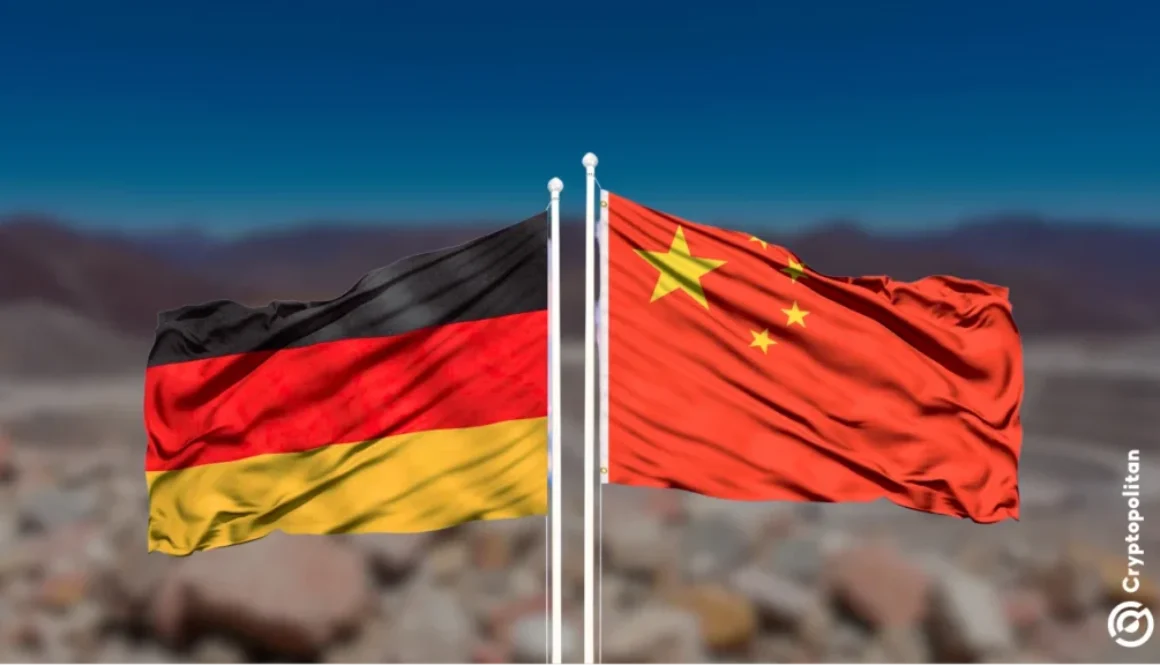
Germany urged to rethink China trade strategy after rare earths trip canceled
Germany’s Foreign Minister Johann Wadephul postponed a scheduled diplomatic visit to Beijing this week after Chinese officials confirmed only one meeting, signaling deepening friction over rare earths and semiconductor export restrictions that threaten European supply chains. The canceled trip reflects broader concerns about trade dependencies and access to critical materials that underpin Germany’s manufacturing and technology sectors.
Wadephul, a member of Chancellor Friedrich Merz’s Christian Democratic Union, had planned to address export controls on rare earths and semiconductors during his visit, which was rescheduled to begin on October 26. The decision to delay came after Beijing confirmed availability for only a single meeting with his direct counterpart, falling short of the Foreign Minister’s diplomatic objectives.
Strategic Reassessment Needed
Officials within Merz’s government have called for a fundamental rethink of Germany’s approach to China. Adis Ahmetovic, a Social Democratic Party representative on foreign policy matters, characterized the last-minute postponement as a negative signal for bilateral relations already under strain.
We must reconsider Germany’s strategy toward China. Now more than ever, we need an active and strategic foreign policy emphasizing dialogue, transparency, and long-term goals.
— Adis Ahmetovic, Social Democratic Party Foreign Policy Representative
Germany’s position carries significant weight given its status as Europe’s largest economy. China remains Germany’s top trading partner, with Beijing serving as the primary supplier of critical components including rare earths and semiconductors essential for industrial competitiveness.
In 2023, Berlin adopted a comprehensive China strategy characterizing the country simultaneously as a partner, competitor, and systemic rival—reflecting the complex nature of economic interdependence alongside strategic concerns.
Rare Earths and Supply Chain Vulnerabilities
Export restrictions imposed by Beijing on rare earths and semiconductors have intensified scrutiny of European supply chain resilience. These materials are foundational to everything from consumer electronics to industrial manufacturing and renewable energy infrastructure.
The shortage of critical components amid escalating global trade tensions has prompted analysts to warn that Germany must develop alternative strategies before dependencies become untenable. Current restrictions limit access to materials for which viable substitutes or alternative suppliers remain limited.
Wadephul emphasized during recent statements that encouraging China to relax its export restrictions would be a central focus of diplomatic engagement. Fair trade principles, he stressed, are essential for sustainable economic relations between the two countries.
China supplies the majority of global rare earth elements and maintains significant control over semiconductor supply chains, making negotiations over export controls strategically critical for European manufacturing.
Industry Context and Market Implications
The automotive and electronics manufacturing sectors represent the backbone of Germany’s industrial economy, collectively accounting for approximately 28 percent of national GDP and employing over 2 million workers. Both industries depend critically on access to rare earth elements for electric vehicle batteries, semiconductor chips for advanced driver assistance systems, and specialized components for industrial automation.
Chinese restrictions on rare earth exports have already triggered supply chain realignments across European manufacturers. Premium automakers including BMW, Mercedes-Benz, and Volkswagen have faced production delays and increased component costs, pressuring profit margins at a time when transition to electric vehicles demands significant capital investment.
Market analysts estimate that continued export restrictions could reduce German manufacturing competitiveness by 3-5 percent within two years if alternative supply chains are not established. This carries implications for export revenues, employment levels, and Germany’s ability to maintain technological leadership in advanced manufacturing.
The semiconductor shortage specifically threatens the defense and critical infrastructure sectors. German companies developing next-generation autonomous systems and industrial control technologies face extended lead times and reduced design flexibility when procurement becomes dependent on Chinese government approvals.
Entity Background: Germany’s Economic Position
Germany’s manufacturing excellence has historically derived from access to global supply chains combined with sophisticated engineering capabilities and precision production systems. The country’s economy generated approximately €4.3 trillion in GDP during 2023, with exports representing roughly 46 percent of total economic output.
The European Union’s largest economy serves as a critical anchor for continental trade architecture. Germany’s supply chain disruptions therefore carry consequences extending throughout European manufacturing networks, affecting Czech automotive suppliers, Belgian chemical companies, and Polish electronics manufacturers.
Chancellor Merz’s government has signaled intentions to pursue strategic autonomy in critical technology sectors while maintaining pragmatic engagement on commercial matters. This balancing act proves increasingly difficult as geopolitical competition intensifies and countries prioritize national security over liberal trade principles.
Approximately 18 percent of German manufacturing inputs originate from China, while Chinese markets absorb roughly 12 percent of German exports. This asymmetric dependency creates negotiating disadvantages during trade disputes.
Diplomatic Friction in Broader Context
The postponement reflects mounting uncertainty in global trade relations extending well beyond bilateral Germany-China dynamics. Tensions have roots in competing economic systems, technology development priorities, and diverging strategic interests in critical infrastructure and emerging technologies.
Wang Yi, spokesperson for the German Foreign Ministry, confirmed that Beijing had limited available meeting slots during the initially scheduled visit window. The narrow scope of confirmed engagements effectively constrained Wadephul’s ability to achieve substantive progress on contested trade matters.
Industry observers have noted that the incident underscores how traditional diplomatic channels are becoming strained as underlying economic and strategic competitions intensify. Regular high-level dialogue has historically served as a mechanism for managing trade disputes before they escalate.
The timing of Wadephul’s postponement coincides with broader European reassessment of China relations. European Commission officials have simultaneously launched investigations into Chinese industrial subsidies and state-directed capital flows that allegedly distort competition in critical technology markets.
Path Forward Remains Uncertain
Germany faces a delicate balancing act. Maintaining economic engagement with China remains important given trade volumes and component dependencies, yet security concerns about systemic rivalry and unfair trade practices cannot be ignored.
The 2023 strategy framework acknowledged this complexity by refusing to characterize China in purely competitive or cooperative terms. Whether that balanced approach can sustain diplomatic engagement while protecting German economic interests remains an open question.
Ahmetovic’s call for active, strategic foreign policy emphasizing transparency suggests that future engagement should pursue clearer frameworks around fair trade, supply chain transparency, and reciprocal market access. Such approaches could help establish more durable commercial relationships.
European policymakers increasingly recognize that unilateral trade dependence creates vulnerabilities that adversaries can exploit during strategic disagreements. Building resilient supply chains for semiconductors, rare earths, and advanced manufacturing inputs has therefore become a matter of national security rather than pure economic optimization.
Germany and European allies are investing in alternative sourcing strategies, including partnerships with Vietnam, Indonesia, and Australia for rare earth processing, and expanded domestic semiconductor manufacturing capacity through EU Chips Act commitments. These initiatives require substantial capital investment and technological development timelines measured in years rather than months.
As Wadephul prepares for his rescheduled visit, observers will watch whether discussions yield concrete commitments on export restrictions or whether the pattern of limited access to Chinese decision-makers continues. The outcome will signal whether the world’s largest economy and Asia’s dominant power can navigate trade disputes through diplomatic channels or whether escalation becomes inevitable.
For investors monitoring crypto and commodity markets, these trade dynamics carry implications for inflation expectations, technology stock valuations, and the broader geopolitical backdrop affecting Bitcoin and digital assets pricing. Supply chain disruptions and trade restrictions historically correlate with currency movements and risk asset behavior.
Germany’s predicament reflects a wider challenge facing developed economies: how to maintain profitable trade relationships with strategic competitors while protecting supply chains and technological sovereignty. There are no easy answers, only tradeoffs between short-term economic benefits and longer-term strategic autonomy.
The rare earths dispute serves as a useful case study in how resource nationalism and export controls can become leverage points in broader geopolitical competition. Countries controlling essential materials gain disproportionate influence over manufacturing capabilities and technology development timelines.
Resolution of Germany-China trade tensions will require either meaningful commitments to reciprocal market access and transparent supply chain management, or accelerated development of alternative sourcing and manufacturing strategies within Europe. Current trajectory suggests both pathways will occur simultaneously, with European manufacturing resilience gradually increasing as Chinese leverage diminishes over five to ten-year timeframes.
For additional context on global trade dynamics and their impact on crypto markets and blockchain adoption, follow ongoing developments in policy frameworks shaping digital asset regulation and infrastructure investment priorities.
Get weekly blockchain insights via the CCS Insider newsletter.