
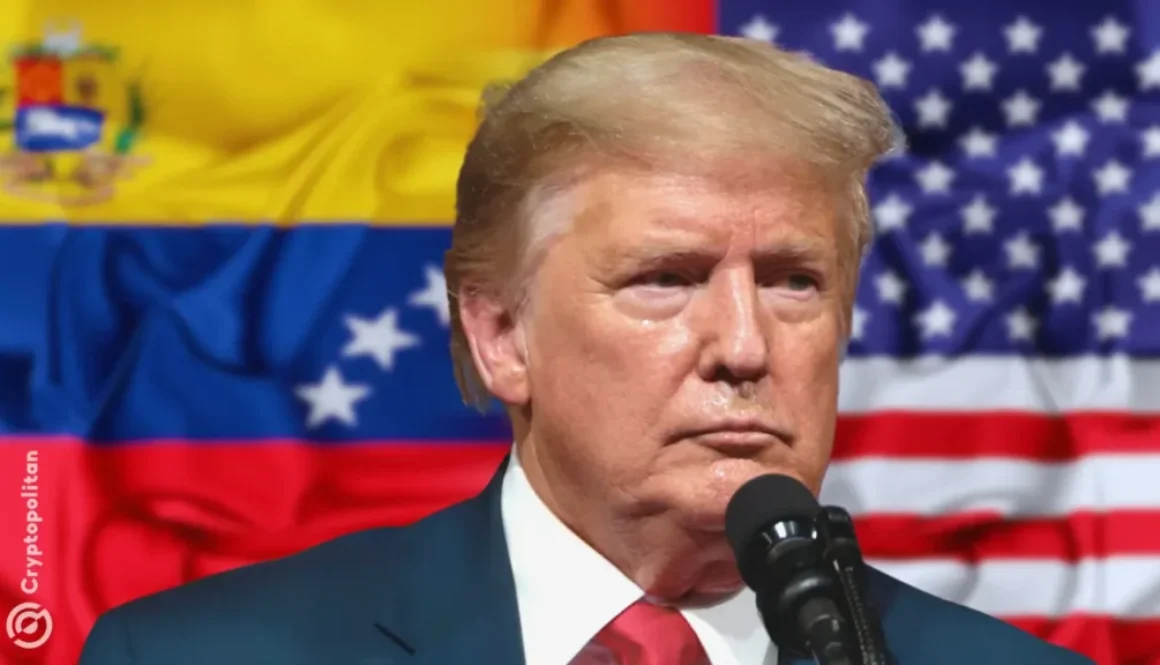
Trump abruptly accuses Venezuela of “stealing” U.S. oil and vows to take it back after Maduro capture
President Trump announced Saturday that the U.S. military operation resulting in Venezuelan President Nicolás Maduro’s capture will grant American control over Venezuela’s vast oil reserves, signaling a dramatic shift in U.S. policy toward the South American nation. Speaking hours after forces secured Maduro in Caracas, Trump outlined plans for major U.S. oil companies to rehabilitate the country’s deteriorating energy infrastructure and resume large-scale production—framing the move as reclaiming what he characterized as stolen American assets.
The Oil Prize at Stake
Venezuela sits atop the world’s largest proven oil reserves, containing approximately 300 billion barrels—surpassing even Saudi Arabia’s deposits. Despite this enormous resource advantage, the country’s oil sector has contracted severely in recent decades due to mismanagement, aging infrastructure, and international sanctions.
Trump claimed that American companies built Venezuela’s oil industry and that prior regimes had essentially stolen it. “We built Venezuela’s oil industry with American talent, drive, skill, and the socialist regime stole it from us,” he stated at the press conference. He characterized the situation as one of the largest thefts of American property in U.S. history.
We’re going to have our very large United States oil companies, the biggest anywhere in the world, go in, spend billions of dollars, fix the badly broken infrastructure and start making money for the country.
— President Trump, Press Conference
The Trump administration confirmed that existing oil embargoes remain in full effect. Currently, only Chevron operates significantly within Venezuela under a limited license, focusing on maintaining employee safety and protecting existing assets.
Restoring Production Capacity
Revitalizing Venezuelan oil production would require substantial investment. The U.S. Energy Information Administration estimates that bringing output to 1990s levels alone would cost more than $8 billion, citing projections from PDVSA, Venezuela’s state oil company. Many pipelines exceed 50 years in age and require extensive replacement or repairs.
Venezuela’s oil infrastructure has deteriorated significantly. Restoring production to historical 1990s levels requires investments exceeding $8 billion, with critical pipelines and equipment decades old.
Trump indicated that American energy firms would fund and execute this reconstruction. The administration suggested that rehabilitated production would generate revenue for Venezuela while supplying oil to global markets, though specific timelines and production targets remain undefined.
Industry Context and Market Transformation
The global oil industry has undergone significant restructuring over the past two decades. Major integrated oil companies including ExxonMobil, Shell, and BP have diversified portfolios away from pure crude extraction toward downstream refining, petrochemicals, and renewable energy initiatives. Venezuela’s potential return as a major producer represents an unprecedented opportunity for capital-intensive upstream investment, a sector where many Western majors have reduced exposure due to energy transition priorities and climate commitments.
The proposal directly contradicts prevailing industry trends toward decarbonization. Most major oil companies have committed to net-zero emissions targets and reduced capital allocation to new exploration and production projects. A multibillion-dollar Venezuelan infrastructure rebuild would represent a countercyclical investment strategy, betting against the global energy transition narrative that has dominated corporate strategy for five years.
For smaller, independent oil operators and legacy producers focused primarily on crude extraction, Venezuelan rehabilitation presents a different calculus. Companies like Occidental Petroleum and continental producers have maintained stronger exploration-and-production orientations. However, Venezuela’s operational complexity—requiring coordination with U.S. government entities, managing geopolitical risk, and operating within embargo frameworks—limits the investor pool substantially.
International Reactions and Geopolitical Implications
China responded swiftly to Maduro’s removal, with the Foreign Ministry stating that U.S. military action violated international law and Venezuelan sovereignty while threatening regional stability. Beijing has been Venezuela’s largest oil buyer in recent years, though exact shipment data remains opaque due to limited transparency in trade reporting.
When questioned about how U.S. control of Venezuelan oil might affect relations with China, Russia, and Iran, Trump indicated that energy sales would continue internationally. “We’re in the oil business. We’re going to sell it to them,” he said, suggesting that geopolitical tensions would not prevent global oil commerce.
Venezuela’s return to significant oil production could reshape energy markets. With 300 billion barrels of reserves, increased Venezuelan supply would influence prices and supply dynamics worldwide, potentially affecting global commodity markets.
The operational details of the U.S. military action remain limited. Trump confirmed that American armed forces and law enforcement conducted a coordinated operation striking multiple locations in Caracas early Saturday morning. He stated the U.S. would temporarily administer Venezuelan affairs, though he provided no specifics regarding governance structure, timeline, or transition planning.
Economic and Asset Considerations
Beyond crude reserves, Venezuela holds substantial gold deposits that could factor into broader economic reconstruction plans. The country’s mineral wealth—combining oil and precious metals—represents significant collateral and revenue potential under American management, according to Trump’s framing.
Chevron’s statement focused narrowly on operational continuity rather than expansion plans. The company emphasized compliance with all applicable regulations and prioritization of employee welfare, suggesting a cautious approach to deepening involvement in Venezuelan operations amid the political transition.
The broader energy sector implications warrant attention. For decades, global energy markets have priced in Venezuelan production constraints. A dramatic increase in output from the world’s largest reserve holder could significantly influence crude pricing, supply chains, and energy geopolitics across multiple regions and sectors.
Market Implications and Commodity Dynamics
If Venezuelan production capacity reaches even 50% of historical peaks—approximately 1.5 million barrels daily—the global oil market would absorb roughly 2% of current world consumption. This quantity proves material enough to influence Brent and WTI pricing trajectories, though the impact depends heavily on OPEC+ responses and broader macroeconomic conditions.
Crude price suppression from increased Venezuelan supply could benefit consuming economies and downstream refining margins while pressuring producer nations reliant on elevated oil revenues. Gulf Cooperation Council members, Russia, and other OPEC participants might respond through production adjustments or diplomatic channels to mitigate revenue loss.
The timeline for production recovery remains critical. Analysts estimate eighteen months to three years minimum for operational facility rehabilitation, well integrity assessment, and export infrastructure restoration. During this extended development period, oil markets may incorporate anticipatory pricing, potentially depressing crude values preemptively as traders adjust positions ahead of Venezuelan supply growth.
Financial markets broadly could experience disruption from the geopolitical uncertainty surrounding American operational control of foreign sovereign resources. Emerging market currencies, particularly those of commodity exporters, face pressure from potential crude price volatility. Investors in energy equities and commodity futures warrant careful monitoring of evolving operational details and regulatory frameworks governing this unprecedented arrangement.
Governance and International Legal Precedent
Trump’s comments suggest a departure from decades of U.S. Venezuela policy, replacing diplomatic isolation with direct economic engagement and infrastructure development. Whether this represents a temporary operational arrangement or long-term structural change remains unclear.
The administration’s approach contrasts with traditional international relations frameworks, which typically respect national sovereignty and recognize legitimately constituted governments. The assertion of American control over Venezuelan state assets and natural resources raises questions about international legal precedent and potential responses from other nations.
Historical parallels exist in 20th-century interventions where resource access motivated military action, yet modern international law provides limited framework for legitimizing such arrangements. The United Nations, multilateral development institutions, and regional organizations may challenge the legitimacy of this control structure, particularly if domestic Venezuelan governance does not transition toward internationally recognized democratic systems within defined periods.
Markets will likely monitor developments closely over coming weeks. Energy traders, cryptocurrency investors, and international observers await clarity on operational timelines, governance structures, and production schedules as this situation unfolds.
- Trump announced U.S. control of Venezuela’s 300 billion-barrel oil reserves following Maduro’s military capture
- American oil companies would fund infrastructure rehabilitation exceeding $8 billion to restore production capacity
- Existing U.S. oil embargoes remain active; only Chevron currently operates under limited license
- China objected to the action, stating it violates international law and Venezuelan sovereignty
- Production timeline, governance structure, and transition duration remain unspecified
- Global oil markets face substantial repricing risk and supply disruption throughout extended rehabilitation period
- International legal frameworks lack precedent for legitimizing direct American resource control over foreign sovereign assets
Get weekly blockchain insights via the CCS Insider newsletter.