
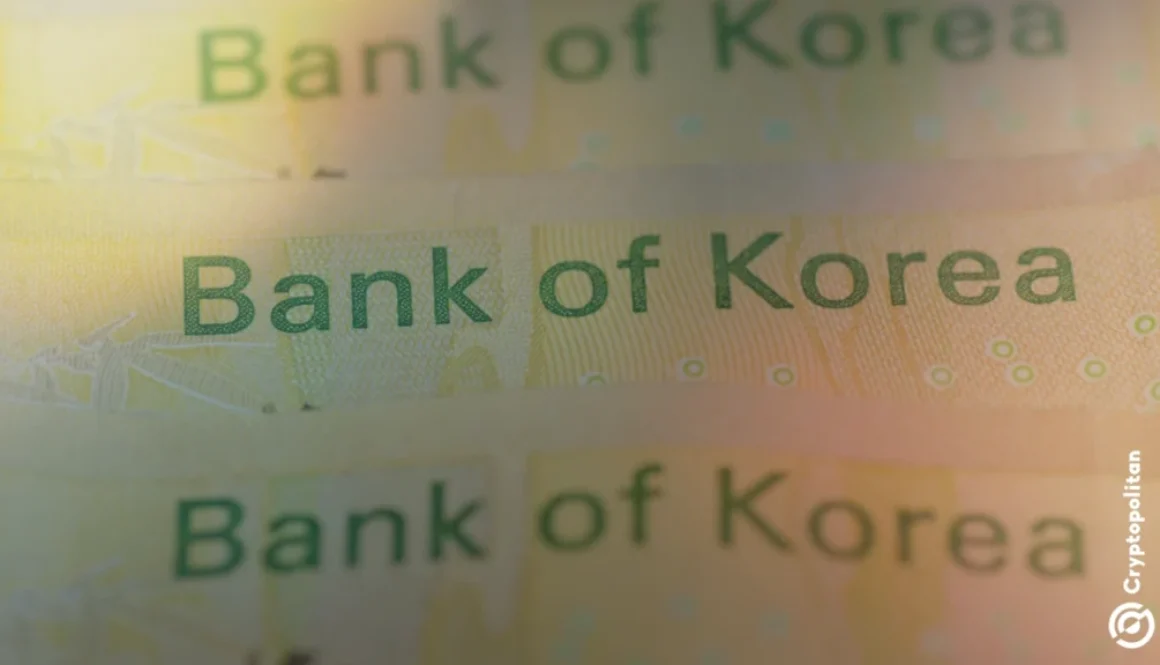
Bank of Korea ready to cut rates as inflation slows
South Korea’s consumer inflation decelerated to 2.1% year-over-year in July, creating openings for the Bank of Korea to resume monetary easing as the export-dependent economy faces mounting trade uncertainties. The slowdown from 2.2% in June aligns with consensus expectations and signals that price pressures are gradually moderating, though they remain marginally above the central bank’s 2% target.
Core inflation, which excludes volatile food and energy components, held steady at 2% for a second consecutive month. This stability underscores a broader disinflationary trend that is reshaping policy discussions at the Bank of Korea ahead of its August 28 decision.
Inflation Moderates, Rate Cut Prospects Emerge
The deceleration in headline inflation reflects cooling demand across several categories. Food and non-alcoholic beverage prices climbed 3.5% annually, while transportation costs actually declined 0.2%. Education expenses rose 2.6%, housing-related outlays increased 1.8%, and food and lodging services gained 3.2%.
While inflation is still slightly above the Bank of Korea’s 2% target, the economy is underperforming and both current and expected inflation remain contained. That leaves room to consider a rate cut.
— Bumki Son, Economist, Barclays
For investors tracking crypto asset valuations, inflation data matters considerably. Lower inflation readings often reduce the urgency for aggressive rate hikes, which can support risk appetite in cryptocurrency and broader financial markets.
The Bank of Korea paused its rate-cut cycle in June and July after tightening aggressively in prior months. Most economists now expect a 25-basis-point reduction at the August 28 policy meeting, with potential for additional cuts in the autumn if growth and inflation trends align.
Trade Tensions and External Headwinds
South Korea’s economic outlook is clouded by newly imposed U.S. tariffs. The Trump administration agreed to levy 15% on most Korean imports—a compromise that averted an initial 25% threat. Given that exports represent over 40% of South Korea’s GDP, tariff escalations pose genuine near-term risks to growth.
Trade exposure makes South Korea’s monetary policy particularly sensitive to external shocks. The central bank must balance supporting growth amid tariff pressures against risks of overheating in the housing sector.
The tariff situation introduces additional complexity to the Bank of Korea’s decision-making. While disinflation provides cover for rate cuts, external demand weakness could necessitate more aggressive easing than inflation metrics alone would suggest.
The Korean won has performed strongly against the U.S. dollar this year, ranking among top performers in emerging markets. A resilient currency provides policymakers with greater flexibility to loosen conditions without immediately triggering currency depreciation or imported inflation.
South Korea’s Economic Structure and Export Dependency
Understanding the Bank of Korea’s policy constraints requires examining South Korea’s unique economic structure. The nation has transformed from a post-war agricultural economy into the world’s 10th largest, built on semiconductors, automotive manufacturing, and consumer electronics. Companies like Samsung, Hyundai, and SK Hynix generate export revenues that dwarf many peer economies’ total GDP.
This export concentration means South Korea’s business cycles are intimately tied to global trade flows and technology demand. The semiconductor sector alone accounts for approximately 15% of total exports, making chip cycle downturns particularly damaging to growth forecasts. Current global semiconductor inventory corrections and slower artificial intelligence adoption rates than anticipated have already begun pressuring export expectations for the latter half of 2024.
The current tariff environment adds another layer of complexity. South Korea ships approximately 25% of its exports to the United States directly, with additional indirect exposure through supply chain relationships. The 15% tariff rate may seem modest compared to initial threats, but economic modeling suggests it could reduce Korean GDP growth by 0.3 to 0.5 percentage points annually if sustained beyond 2024.
This macroeconomic backdrop explains why the Bank of Korea faces genuine pressure to cut rates despite inflation sitting above target. Growth momentum has slowed to 2.1% annualized in the second quarter—well below the 2.5% to 3% potential growth rate most economists assign to South Korea’s productive capacity. The central bank must choose between defending its 2% inflation target and supporting employment and investment that tariffs have begun to threaten.
Housing Market Softening but Risks Persist
Seoul’s residential real estate market is showing early signs of deceleration after years of elevated price growth. Apartment prices rose just 0.12% on July 28, down from 0.43% in June, indicating cooling momentum in a sector that has strained household finances.
Bank of Korea Governor Rhee Chang-yong has consistently warned against excessive monetary easing, citing risks that low rates could reignite property speculation and worsen already-elevated household debt levels. This constraint limits how aggressively the central bank can cut, even as growth slows.
The Bank of Korea is focused on weak growth and may cut rates as early as August if the property market keeps slowing.
— Hyosung Kwon, Bloomberg Economics
Housing price moderation provides some reassurance that the central bank has room to ease without immediately destabilizing the property sector. However, officials remain cautious about signaling a return to the low-rate environment that fueled previous real estate rallies.
Barclays economists suggest August 28 could bring a 25-basis-point cut, with October potentially offering another reduction if inflation expectations remain anchored and growth shows modest recovery.
Market Implications and Financial Sector Response
Korean financial markets have already begun pricing in rate cuts. The Korean won strengthened 3.2% against the U.S. dollar during July as market participants shifted expectations toward easier monetary policy. Stock indices, particularly the KOSPI, have rallied on expectations that lower borrowing costs will support corporate earnings and consumer spending.
Bond markets moved even more decisively, with the yield on 10-year government bonds declining from 3.2% in June to 2.95% in late July. These moves reflect genuine repricing of South Korea’s policy trajectory relative to other major economies.
For financial institutions and asset managers, the implications extend beyond simple rate calculations. Banks’ net interest margins face compression as the gap between lending and deposit rates narrows. Insurance companies benefit from lower discount rates that increase liability valuations. Property developers face mixed signals—cheaper financing offsets reduced demand from higher mortgage rates earlier in the cycle.
Foreign investors have begun reallocating toward South Korean assets on the assumption that an easing cycle will outperform late-cycle developed markets. This capital inflow dynamic has implications for currency movements and relative valuations across Asia-Pacific equity markets.
Divergent Paths Among Major Central Banks
While the Bank of Korea contemplates rate cuts, other major central banks are pursuing distinct trajectories. The Bank of England is widely expected to reduce its benchmark rate from 4.25% to 4% in Thursday’s decision, with additional cuts anticipated before year-end.
Yet the Bank of England faces internal disagreement about inflation dynamics. June inflation data showed prices rising at nearly double the institution’s 2% target, creating tension between growth concerns and price stability.
Policymakers at the Bank of England disagree on whether inflation pressures are genuinely easing or whether weak growth and labor market softness might push prices below target if monetary conditions loosen too aggressively. This internal debate reflects broader uncertainty facing central banks globally.
For cryptocurrency markets and broader asset valuations, central bank divergence matters significantly. Bitcoin and other digital assets often track real interest rate expectations across major jurisdictions. When central banks signal different timelines for rate cuts, it shapes capital flows and risk positioning.
The contrast between Asia-Pacific and Western central banks underscores fragmented global growth dynamics. South Korea faces external trade shocks while managing domestic property risks. Meanwhile, Britain confronts persistent inflation despite economic weakness—a combination that complicates policy responses.
Cryptocurrency investors and blockchain market observers should monitor these policy developments closely. Coordinated rate cuts across major economies typically support risk appetite, while divergent paths create volatility in currency and asset markets.
The August and September policy meetings across the Bank of Korea, Bank of England, and the Federal Reserve will shape financial conditions heading into the final quarter of 2024. Each decision ripples through global markets, affecting everything from currency valuations to commodity prices to cryptocurrency sentiment.
Conclusion: Policy Crossroads for South Korea
The Bank of Korea stands at a critical juncture. Inflation has moderated sufficiently to justify rate cuts, yet external trade threats and domestic housing risks constrain how aggressively officials can ease. The August 28 decision will likely include a 25-basis-point reduction, signaling acknowledgment of growth weakness while maintaining gradual approach to prevent overheating.
Beyond immediate rate decisions, this situation reflects broader challenges facing export-dependent economies in 2024. Trade fragmentation, tariff escalation, and synchronized developed-market tightening earlier in the cycle have created conditions where many emerging markets must cut rates despite inflation remaining above target. South Korea’s policy response will serve as a bellwether for how other trade-exposed central banks navigate these crosscurrents.
Investors should expect continued volatility in won valuations and Korean equity markets as new trade developments emerge. The interaction between monetary easing and external demand weakness will likely produce heightened dispersion in returns across Korean sectors, with export-sensitive industrials and semiconductors trading defensively despite lower rates.
Get weekly blockchain insights via the CCS Insider newsletter.