
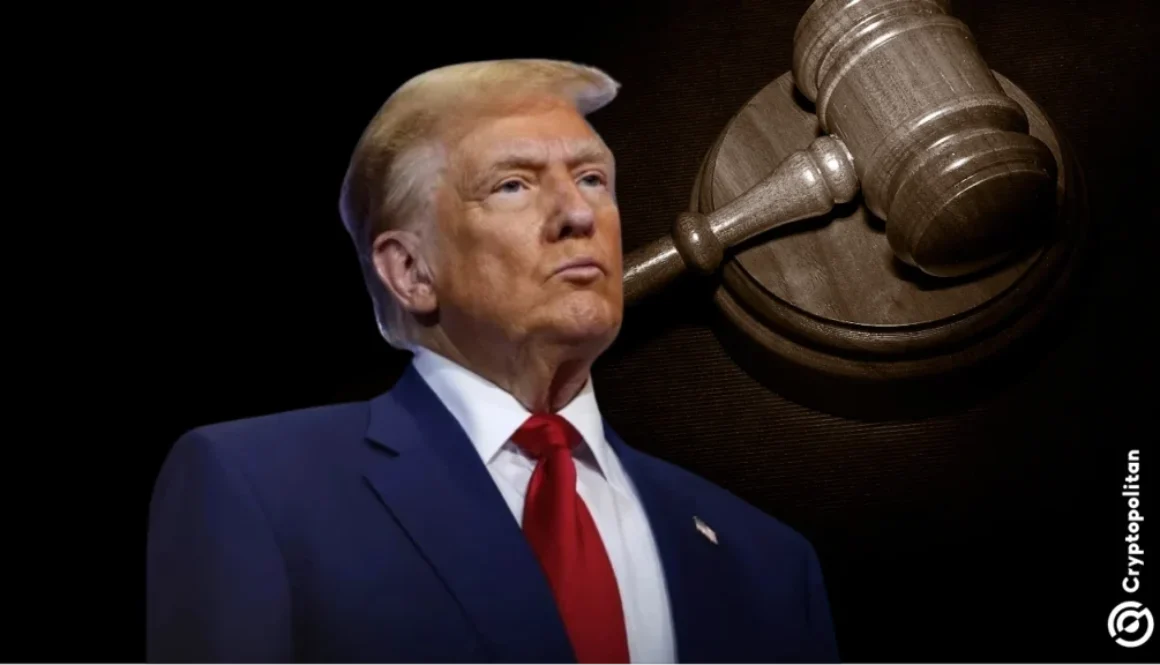
Trump to skip Supreme Court hearing on legality of his global tariffs
The incoming Trump administration’s use of emergency powers to impose sweeping global tariffs faces a pivotal Supreme Court test next week, with the President signaling he will absent himself from the proceedings. The legal challenge centers on whether the President’s invocation of a Cold War-era emergency statute to unilaterally set tariffs on trading partners—both allies and competitors—exceeds constitutional limits on executive authority.
The Constitutional Question at Stake
Two consolidated cases will come before the Supreme Court on November 5, each questioning the legal foundation of the tariff regime. The lawsuits argue that the President overstepped statutory and constitutional boundaries when invoking the International Emergency Economic Powers Act (IEEPA), a 1977 statute designed to address threats posed by hostile foreign powers during genuine national emergencies.
The IEEPA grants the President extraordinary authority to act swiftly without congressional approval when facing immediate threats to national security. However, the administration’s application of this mechanism to routine trade disputes with both friendly and rival nations—framed as matters of economic security—represents an aggressive expansion of the law’s original scope.
The case is one of the most important in U.S. history, yet the President will not attend to avoid distracting from the legal merits of the decision itself.
— White House Statement
Legal observers across the ideological spectrum view this case as consequential for the balance of power between the executive and legislative branches. A ruling upholding the President’s authority would significantly strengthen unilateral presidential control over trade policy. Conversely, a decision limiting such emergency powers could require the administration to seek congressional approval for future tariff actions.
The President’s Economic Rationale
The administration frames tariffs as essential tools for protecting American manufacturing and workers from what it characterizes as decades of unfair trade arrangements. Officials argue that without tariff authority, the United States cannot negotiate effectively with trading partners or respond rapidly to economic threats.
According to administration statements, the tariff regime has already increased domestic production and reduced reliance on foreign imports for critical goods. The argument centers on national resilience: only through tariff leverage, the President contends, can America maintain economic and geopolitical strength in competition with other major powers.
The President stated that losing tariff authority would fundamentally compromise America’s bargaining position and could trigger long-term economic decline. This assertion underpins the administration’s position that emergency economic powers are not merely helpful but existential to national wellbeing.
The President communicated his position to reporters aboard Air Force One on November 2, explaining his decision to skip the hearing. He emphasized that the case transcends his personal interests and should be evaluated on legal grounds alone, free from the distraction of presidential attendance.
Business Impact and the Cases Before the Court
Two American companies have challenged the tariff regime through separate lawsuits now consolidated into a single Supreme Court proceeding. Learning Resources, Inc. filed the first action, asserting that tariffs on imported manufacturing components have made it prohibitively expensive to produce and market affordable educational products domestically.
V.O.S. Selections, Inc. brought the second suit, arguing that tariffs significantly increased the cost of imported spirits and beverages, forcing substantial price increases that harm consumer purchasing power and business competitiveness. Both companies represent sectors where imported raw materials and finished goods figure prominently in production and distribution.
These cases illustrate the tension at the heart of tariff policy: while some domestic producers may benefit from reduced foreign competition, downstream industries that depend on imported inputs face higher costs. This dynamic has generated broad business opposition from retailers, manufacturers, and importers who argue that tariffs function as a tax on consumers and businesses alike.
Industry Context and Market Implications
The tariff regime has already reshaped supply chains across multiple sectors. Manufacturing-dependent industries including apparel, electronics, automotive components, and consumer goods have reported margin compression and inventory challenges. Retailers ranging from large box stores to specialty shops face difficult choices: absorb tariff costs, raise prices and risk sales volume, or relocate production to jurisdictions outside the tariff framework.
The broader macroeconomic implications are substantial. Tariffs function as a regressive tax on consumers, with lower-income households spending a higher percentage of disposable income on tariffed goods. Inflation expectations have shifted upward in markets tracking tariff developments, affecting Federal Reserve policy calculations and Treasury yield curves. Currency markets have also reacted volatilely, with the U.S. dollar strength complicating American export competitiveness—a counterintuitive effect that complicates the administration’s narrative about tariff benefits.
Beyond immediate price impacts, tariff uncertainty has chilled business investment in expansion and modernization. Companies delay capital expenditures pending clarity on long-term tariff policy, creating headwinds for productivity growth. This hesitation extends to international partnerships and joint ventures, as foreign companies reassess their U.S. market commitments under tariff pressure.
The outcome will shape not only this administration’s trade authority but also establish precedent for how future presidents invoke emergency powers. For investors tracking asset valuations and market volatility, tariff policy remains a significant macroeconomic variable affecting everything from inflation expectations to sector rotation.
The International Trade Dimension
America’s trading partners have responded with retaliatory tariffs on American agricultural products, manufactured goods, and intellectual property. This has strained relationships with longstanding allies including Canada, Mexico, and European nations while intensifying competition with China and other strategic rivals. The World Trade Organization faces mounting pressure as members challenge tariff actions through dispute resolution mechanisms, potentially triggering a cascade of legal challenges that could undermine the post-World War II trading system.
The stakes extend beyond trade balances and exchange rates. Retaliatory tariffs threaten American farmers, technology companies, and service providers that depend on export markets. Agricultural communities in particular have voiced concern about losing access to markets developed over decades, potentially causing permanent damage to export relationships.
What Legal Experts Anticipate
The Supreme Court’s decision will likely hinge on how strictly the justices interpret the IEEPA’s language and legislative intent. The statute permits tariffs in response to threats to national security, but courts have historically applied this concept narrowly to military or geopolitical risks rather than economic competition.
A key interpretive question: does “national security” encompass industrial capacity and economic resilience, or does it refer primarily to defense and foreign military threats? The answer will determine whether presidents can routinely invoke emergency powers for trade policy, or whether such actions require explicit congressional authorization in most circumstances.
The decision will likely be narrow and closely divided. Some justices may distinguish between tariffs imposed on genuinely hostile actors versus those applied to trading partners, while others may view all such uses as unlawful overreach of emergency authority. The court’s final ruling could reshape the legal landscape for executive power in trade and economic policy.
For stakeholders in cryptocurrency and blockchain markets, tariff policy carries indirect significance. Tariffs affect inflation, economic growth, and currency strength—factors that influence digital asset valuations and institutional adoption of crypto as a hedge against macroeconomic uncertainty. Bitcoin and other digital assets have historically demonstrated positive correlation with uncertainty around trade policy and currency stability.
Conclusion: A Pivotal Moment for Executive Power
The November 5 hearing will attract intense scrutiny from constitutional scholars, business groups, and international observers watching how America’s courts address the boundaries of presidential emergency power. The outcome will reverberate across trade policy, business strategy, and investment decisions for years to come.
Beyond the immediate tariff question, this case establishes broader precedent for how future presidents may invoke emergency authorities in economic contexts. Whether the Supreme Court constrains or validates expansive executive power will influence policy approaches for generations. A decision upholding the administration’s tariff authority would effectively grant presidents a powerful unilateral tool for economic statecraft, while a ruling against the tariffs would reassert congressional primacy in trade policy and limit emergency executive authority to its original purpose—responding to genuine foreign threats rather than managing commercial relationships.
The business community, international trading partners, and market participants await clarity on whether emergency economic powers represent a sustainable policy tool or an unconstitutional overreach. The answer will shape everything from inflation trajectories to capital allocation strategies in a world where executive authority over economic policy remains undefined.
Get weekly blockchain insights via the CCS Insider newsletter.