
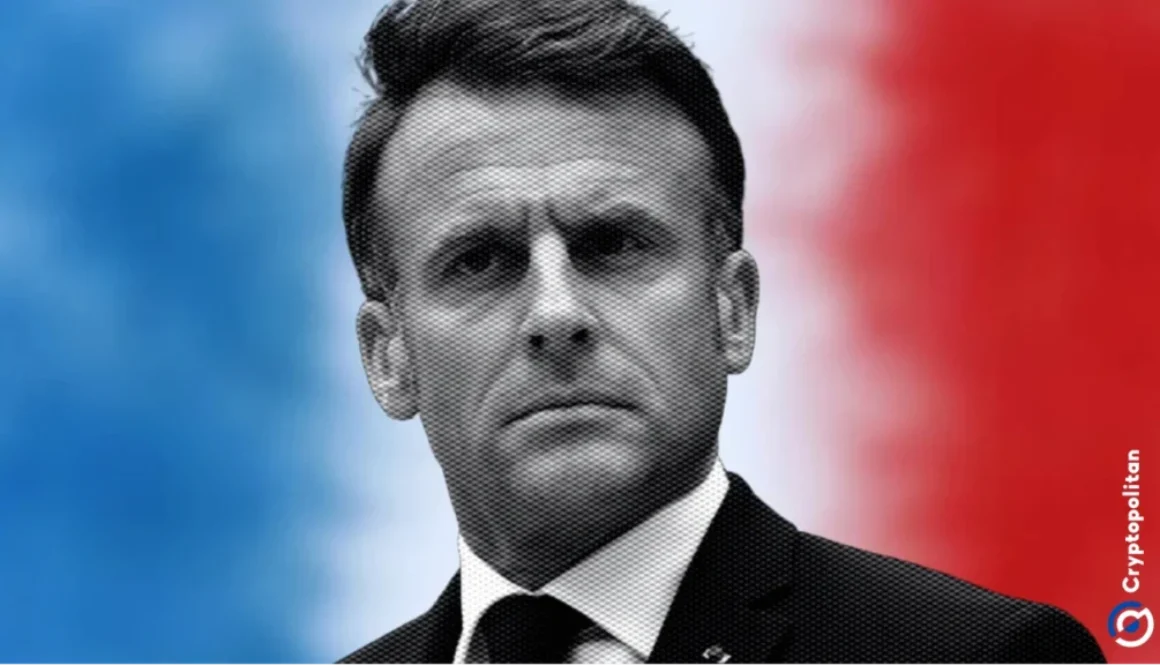
Macron warns China of possible EU tariffs as trade deficit soars
French President Emmanuel Macron has raised the prospect of European Union tariffs on Chinese goods during a state visit to Beijing, signaling that Brussels may escalate trade tensions if economic imbalances continue widening. The warning underscores growing friction between European and Chinese policymakers over trade deficits, industrial competition, and the sustainability of current commercial arrangements—dynamics that parallel broader geopolitical and economic realignment reshaping global markets.
Macron’s Diplomatic Balancing Act
Macron has positioned himself as Europe’s primary voice in negotiations with Beijing, attempting to project resolve while maintaining diplomatic channels. This dual objective creates inherent tension: he must convince Chinese leadership that Europe will respond decisively to economic pressures, while simultaneously avoiding the kind of escalatory spiral that could fracture relations entirely.
Analysts at Rhodium Group have observed this delicate positioning. Macron cannot afford a full trade confrontation with China, yet European constituencies increasingly demand protective action. The French president’s recent statements represent an attempt to calibrate that message—firm enough to satisfy domestic political pressure, measured enough to keep dialogue open.
Europe stands ready to implement tariffs on Chinese goods unless current trade imbalances reverse course, Macron conveyed during his Beijing discussions.
— Emmanuel Macron, President of France
The stakes for European manufacturers continue climbing as bilateral trade dynamics deteriorate. France and the broader EU face mounting pressure to act decisively before competitive disadvantages become structural.
The Trade Deficit Problem
Macron framed the core issue directly to Chinese officials: Europe’s persistent trade deficit with China stems from imbalances that ultimately harm both economies. By reducing imports from Europe and other trading partners, China is effectively narrowing its own customer base—a self-defeating strategy over the long term.
Since 2019, the European Union’s goods trade deficit with China has expanded by nearly 60 percent. France’s bilateral trade imbalance with China has widened substantially during the same period.
The French president has consistently advocated for coordinated European responses to Chinese commercial practices. He has championed protective measures designed to shield European manufacturers from competitive pressures tied to low-cost Chinese imports and state-supported industrial policies.
Without course correction from Beijing, Macron stated clearly that European governments will have no choice but to implement strong countermeasures in coming months. These measures could mirror the protectionist strategies already deployed by the United States through import tariffs and trade restrictions.
Broader Economic and Geopolitical Context
The EU-China trade tensions reflect deeper concerns about industrial competitiveness, supply chain resilience, and strategic autonomy. European policymakers increasingly view unfavorable trade balances not merely as economic indicators, but as symptoms of structural vulnerabilities in European manufacturing and technology sectors.
Chinese export competitiveness has created chronic imbalances across multiple European nations. France, Germany, and other major economies face mounting deficits that constrain domestic investment in competing industries and workforce development.
Macron’s tariff warnings align with broader EU efforts to reassess trade relationships following geopolitical disruptions, supply chain fragmentation, and concerns over industrial security. Recent years have accelerated European interest in reducing dependence on Chinese manufacturing across critical sectors.
For investors and market participants tracking global economic trends and asset valuations, these trade tensions carry implications beyond traditional goods commerce. Currency markets, commodity prices, and equity valuations all respond to shifts in major bilateral trade relationships and tariff policy uncertainty.
The semiconductor industry exemplifies the stakes involved. European nations depend heavily on imported components while simultaneously attempting to build domestic manufacturing capacity. Chinese competition in this sector directly affects European companies’ profitability and strategic positioning.
Industry Restructuring and European Competitiveness
The tariff threat reflects a fundamental reassessment of Europe’s industrial strategy. For decades, European policymakers pursued relatively open trade policies grounded in the assumption that comparative advantage would generate mutually beneficial outcomes. That consensus has fractured as Chinese state-directed industrial policy, subsidized production capacity, and coordinated export strategies have overwhelmed European competitors in sector after sector.
Green technology manufacturing illustrates this dynamic acutely. Europe invested heavily in renewable energy, battery technology, and electric vehicle components, expecting to capture premium markets through superior technology and quality. Instead, Chinese manufacturers have captured dominant market share through aggressive cost competition, government subsidies, and rapid scaling. European solar panel manufacturers have nearly disappeared from global markets, while battery and EV component producers face existential pressures.
Macron’s tariff rhetoric responds to this industrial erosion. French companies across manufacturing, automotive, chemical, and advanced technology sectors face margin compression from Chinese competition that extends beyond normal competitive dynamics. The imbalance reflects structural asymmetries: Chinese state support for selected champions, non-tariff barriers against European goods, and industrial policies explicitly designed to achieve technology transfer and market dominance.
These conditions explain why Macron frames tariffs not as protectionism but as necessary correctives to unfair competition. European manufacturers increasingly advocate for reciprocal market access, arguing that Europe has opened its markets extensively while China maintains substantial barriers to European goods and services.
Financial and Market Implications
The credibility of Macron’s tariff warnings has already begun influencing investor behavior and market valuations. Companies with substantial exposure to China-EU trade flows have experienced increased volatility as traders assess the probability and magnitude of potential tariff implementation.
Should the EU implement comprehensive tariffs on Chinese goods, the consequences would extend far beyond bilateral trade. Global supply chains dependent on Chinese intermediate inputs would face cost shocks. European manufacturers using Chinese components would experience input cost inflation, compressing margins even as they face tariff barriers in other markets. Currency fluctuations would follow, as tariff expectations alter expectations for EU-China trade flows and broader economic growth.
Insurance costs for cross-border supply chains would likely increase as companies price in heightened policy uncertainty. Financial institutions providing trade finance would adjust terms and risk premiums. Equity markets would reprice companies based on revised estimates of tariff exposure and competitive positioning in protected versus open markets.
Chinese companies with significant European revenue face particular uncertainty. Tariffs would reduce the competitiveness of Chinese exports while potentially triggering retaliatory measures against European companies operating in China. This dynamic creates pressure for negotiated settlements rather than extended trade wars—both sides recognize that escalation imposes substantial costs.
Path Forward and Strategic Imperatives
Macron’s Beijing visit signals that Europe intends to move beyond diplomatic language toward concrete policy action. The timing matters: European leadership must demonstrate responsiveness to constituent concerns while market participants assess the credibility of potential tariff implementation.
If the EU follows through on tariff threats, consequences would ripple across global supply chains and trading arrangements. Companies with significant exposure to EU-China trade flows face potential margin compression, supply disruption, and strategic repositioning costs.
Without Chinese course correction, European governments will have no choice but to implement strong countermeasures in coming months, potentially mirroring United States protectionist strategies.
— Emmanuel Macron, President of France
For observers of international trade dynamics and their impact on global markets and financial news, the EU-China standoff represents a critical test case. How European leadership navigates these tensions will influence broader trade policy trajectories and shape competitive environments for years ahead.
The unfolding situation also reflects long-standing debates about the relationship between trade openness, national security, and economic resilience. European policymakers increasingly question whether unlimited trade access to Chinese markets—particularly in sensitive industrial sectors—aligns with long-term European interests. This reassessment extends beyond economics to encompass strategic autonomy, technological sovereignty, and the viability of Europe’s industrial base across critical sectors.
Market participants should monitor both formal tariff announcements and softer signals regarding trade negotiations. Policy uncertainty typically creates volatility in affected sectors, while clarity regarding tariff rates and implementation timelines allows for more orderly market adjustment. The European Commission’s next moves, statements from other EU member states, and formal negotiations with Beijing will provide essential indicators of whether Macron’s warnings represent genuine policy direction or negotiating leverage.
Macron’s warnings represent a pressure point in the evolving global trade landscape. Whether these statements catalyze genuine Chinese policy shifts or merely serve as rhetorical positioning remains unclear—but the economic stakes justify serious attention from investors and industry participants exposed to EU-China trade flows. The broader question underlying these negotiations concerns whether twenty-first century global trade arrangements can accommodate fundamentally asymmetric economic systems and divergent policy approaches, or whether trade fragmentation along geopolitical lines represents the emerging order.
Get weekly blockchain insights via the CCS Insider newsletter.