
Mid-year reset: what crypto should prioritize in H2 2025
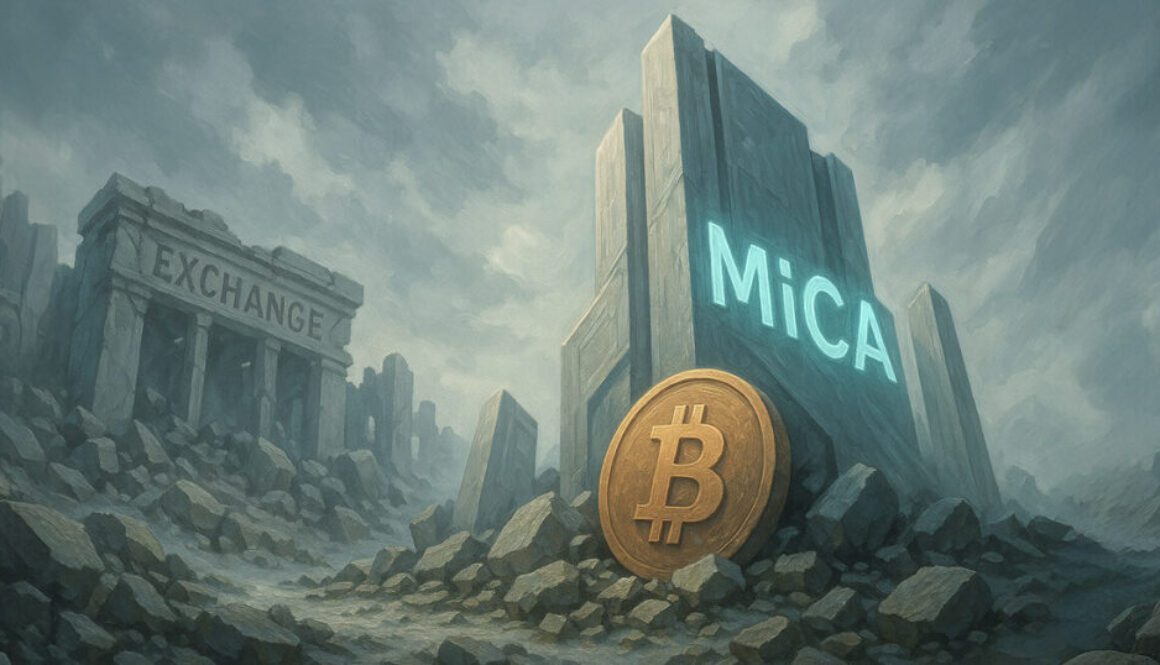
The second half of 2025 marks a pivotal moment for cryptocurrency—a period when regulatory compliance and institutional infrastructure will determine which platforms and projects survive the transition from a speculative market to a mature financial ecosystem. As frameworks like the Markets in Crypto-Assets Regulation (MiCA) reshape how digital asset exchanges operate across the European Union, the competitive advantage no longer belongs to those chasing hypergrowth, but rather to those building transparent, auditable systems connected to traditional banking rails.
From Growth-at-All-Costs to Regulated Infrastructure
For years, the crypto industry operated in a regulatory gray zone where innovation often outpaced oversight. That era is ending. The shift toward mature, institutional-grade operations represents a fundamental recalibration of industry priorities—one that favors platforms demonstrating consistent compliance, measurable trust, and transparent operations.
This transformation reflects a broader reality: institutional capital—whether from traditional finance, pension funds, or corporate treasuries—will only allocate significant resources to markets they understand and can audit. Opacity, which once offered competitive advantage in a nascent sector, now signals risk.
The winners will be those making compliance invisible, settlement programmable, and trust measurable.
The market consolidation underway tells the story. In 2022, over 500 active cryptocurrency exchanges operated globally. By 2024, that number had contracted significantly as regulatory enforcement accelerated and institutional investors began demanding compliance standards. Going forward, the landscape will increasingly belong to licensed, regulated entities capable of meeting institutional-grade standards. This consolidation trend reflects not market failure, but rather healthy maturation—similar to how equity markets consolidated around regulated exchanges in the 20th century.
The regulatory environment driving this shift encompasses more than just MiCA. The U.S. Securities and Exchange Commission’s guidance on digital asset securities, the Commodity Futures Trading Commission’s oversight of derivatives, and parallel frameworks across Asia-Pacific jurisdictions all converge on a single principle: transparent, auditable, institutionally-connected operations represent the future of crypto market infrastructure.
Licensing: From Differentiator to Baseline Requirement
Obtaining proper licensing under frameworks like MiCA or equivalent jurisdictional standards is no longer a competitive advantage—it is now the minimum requirement for operating at scale. Securing designation as a Crypto-Asset Service Provider (CASP) under MiCA, or equivalent credentials like Malta’s Class 4 Virtual Financial Assets (VFA) license, has shifted from being a strategic differentiator to an absolute necessity for institutional credibility.
This transition runs deeper than regulatory compliance or penalty avoidance. Licensed operations signal to institutional investors that a platform operates within a defined legal framework, subject to regular examination and capital requirements. This foundational layer of regulatory accountability creates the trust necessary to attract serious institutional capital. Globally, major institutional players—from BlackRock to Fidelity—have explicitly stated they require licensed exchange partnerships before committing significant capital to digital assets.
Platforms operating under rigorous regulatory frameworks must commit to regular proof-of-reserves publications and independent third-party security audits. These transparent verification mechanisms are becoming the market’s most reliable trust mechanism.
For projects and traders, this means working with platforms that can demonstrate not just technical capability, but regulatory standing. The complexity of maintaining compliance infrastructure creates natural barriers to entry—barriers that ultimately protect user assets and market integrity. Token projects evaluating which exchanges to list on now prioritize regulatory licensing as a primary criterion, understanding that listed tokens benefit from association with compliant platforms.
As enforcement of MiCA strengthens across EU member states throughout 2025 and beyond, licensed platforms will increasingly operate as part of the broader regulatory trust infrastructure. Non-compliant competitors will face either shutdown orders or relegation to unregulated markets with limited institutional participation. This enforcement wave has already begun, with several major exchanges adjusting their European operations or withdrawing entirely to avoid compliance costs.
Building Compliance Into Platform Architecture
Having a license is the foundation. Executing that mandate requires integrating compliance mechanisms directly into platform infrastructure rather than bolting them on as afterthoughts. This architectural approach means moving beyond manual Know Your Customer (KYC) and Anti-Money Laundering (AML) checks to fully automated, real-time systems.
Modern licensed exchanges now embed reporting APIs, transaction monitoring systems, and automated compliance workflows into their core operations. When done well, this integration creates a paradoxical outcome: stronger compliance produces frictionless user experience. Onboarding becomes streamlined, token projects can list more efficiently, and traders encounter fewer delays. This represents a meaningful competitive advantage—platforms that have made these infrastructure investments can scale user acquisition without proportionally scaling compliance costs.
This represents a meaningful shift in platform strategy. Rather than compliance serving as a friction point between users and the platform, it becomes an invisible layer enhancing operational reliability. Token projects benefit from clearer listing criteria and faster approval processes. Users benefit from faster account verification without sacrificing security oversight.
When compliance functions as an integrated system element rather than a separate department, platforms can offer truly frictionless operations while maintaining institutional-grade standards.
Platforms licensed under Malta’s Class 4 VFA framework exemplify this model—they operate not merely as trading venues, but as participants in the regulatory trust infrastructure supporting the entire digital asset ecosystem. This expanded role creates operational complexity but generates significant competitive moats. The cost of building and maintaining these systems represents substantial upfront investment, but creates defensible market positions that are difficult for new entrants to replicate.
For traders and token projects evaluating exchange partners, this architectural approach matters considerably. It signals that the platform has invested in compliance as a core competency rather than a compliance box to check. This distinction becomes critical as market volumes increase and regulatory scrutiny intensifies.
Connecting to Traditional Financial Rails
Regulatory licensing and compliance infrastructure gain their full value when connected to traditional banking systems. This integration represents the final critical layer for H2 2025 and beyond: connecting crypto platforms to enterprise-grade payment systems and banking rails.
A licensed exchange operating in isolation—even with perfect compliance and transparent reserves—still faces limitations in institutional adoption. The true competitive advantage emerges when these regulated platforms can facilitate settlement through traditional banking channels, offer fiat on-ramps and off-ramps with bank-grade speed and reliability, and provide institutional investors seamless movement between crypto and traditional asset classes. Banking relationships remain the most significant barrier to entry for new exchange entrants, as major financial institutions have developed risk management protocols governing crypto partnerships.
This bank-connected model is already emerging in markets with mature regulatory frameworks. Platforms offering both digital asset trading and direct banking integration create network effects that become difficult for competitors to replicate. Institutional clients gain the ability to manage crypto exposure within existing treasury workflows, using familiar settlement processes and banking relationships. These operational efficiencies translate directly to competitive advantage in capturing institutional capital flows.
Platforms prioritizing bank integration in H2 2025 position themselves to capture institutional capital as it increasingly allocates to digital assets. This integration transforms crypto exchanges from standalone venues into extensions of traditional financial infrastructure.
For the broader crypto ecosystem, this development carries significant implications. As crypto market evolution accelerates, platforms bridging digital and traditional finance will attract disproportionate institutional capital and trading volume. This concentration may seem unfavorable to decentralization advocates, but it reflects market maturation—institutions require the regulatory clarity and banking integration that only licensed, connected platforms can provide. Historical precedent from equity markets demonstrates that this concentration phase ultimately precedes widespread adoption, as institutional infrastructure improvements expand access for retail participants.
Looking at Bitcoin and major digital assets, institutional adoption correlates directly with exchange infrastructure quality and regulatory standing. Spot Bitcoin ETF approvals, for instance, required custodians meeting institutional banking standards. This pattern will extend across the broader crypto market in the coming months. Ethereum staking products, tokenized securities platforms, and institutional-grade derivatives exchanges will all follow similar trajectories toward banking-integrated, regulated models.
The Path Forward: Measurable Trust
H2 2025 represents crypto’s transition from a market built on technological promises to one built on measurable trust infrastructure. The priority list becomes clear: obtain and maintain regulatory licensing, embed compliance into platform architecture, and integrate with banking systems.
This evolution may appear as a loss of the industry’s anarchic, innovation-first ethos. In reality, it reflects maturation. Mature financial systems still innovate extensively—they do so within frameworks that protect participants and allow institutions to participate confidently. The financial innovation emerging from regulated, institutionally-integrated platforms will likely exceed innovation from unregulated venues, as institutional capital funds infrastructure and product development at scales unavailable to purely speculative platforms.
For traders, investors, and projects evaluating where to conduct business, the metric that matters most in H2 2025 is straightforward: Does this platform operate under clear regulatory authority? Can it demonstrate transparent reserves and independent audits? Can it connect to banking infrastructure? Platforms answering yes to all three questions represent where institutional capital will flow. This alignment of incentives—between regulators seeking market safety, institutions seeking operational clarity, and platforms seeking scale—creates a virtuous cycle accelerating the transition to regulated, professionally-managed infrastructure.
The winners of this cycle will be those making regulation and compliance invisible to users while making trust measurable and verifiable. This represents not a step backward for crypto, but rather its graduation into the legitimate financial infrastructure supporting the global economy. As this transition completes, the crypto market’s relationship with traditional finance will fundamentally transform—from suspicious parallel system to integrated component of global financial markets. Check current cryptocurrency price trends and market data to track how this institutional adoption is reflected in market valuations.
Get weekly blockchain insights via the CCS Insider newsletter.