
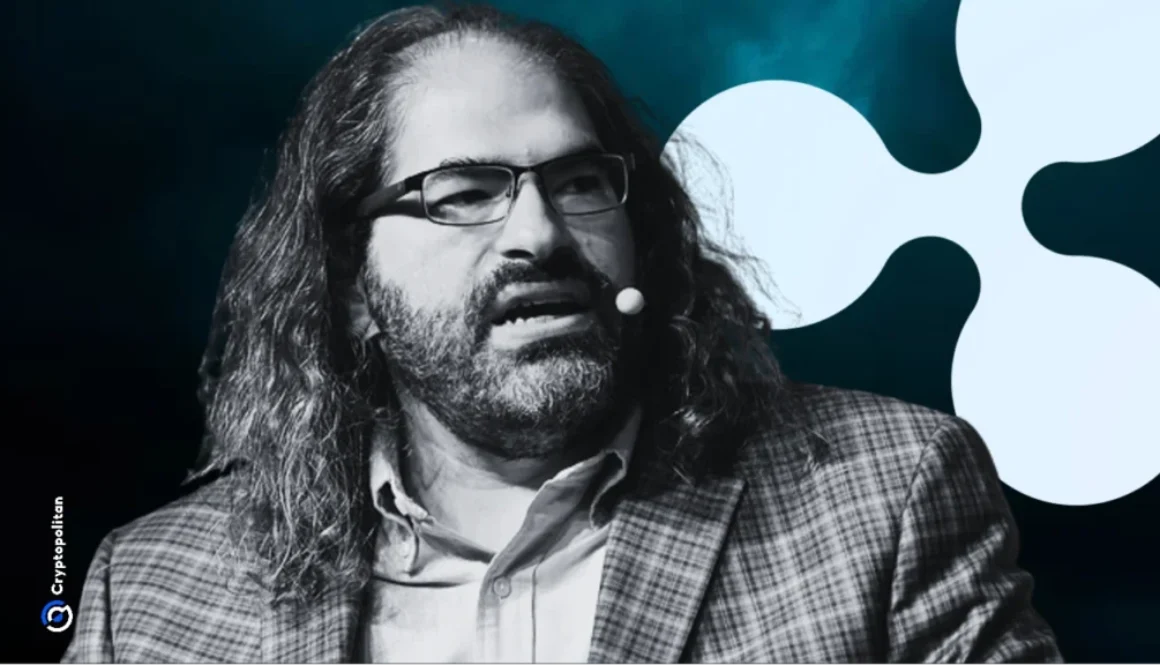
Ripple CTO Schwartz sets record straight on Caitlin Long’s ‘XRP ICO’ claim
Ripple’s Chief Technology Officer David Schwartz has entered a public discussion with Custodia Bank CEO Caitlin Long over fundamental claims about the company’s history, technology, and strategic direction. Long recently raised questions about whether Ripple and its XRP token represent the company’s original mission, and suggested the project’s origins resembled an initial coin offering—a characterization that Schwartz and other industry observers have moved quickly to challenge.
The ICO Claim Under Scrutiny
Long’s assertion that Ripple’s past carried “all the makings” of an ICO has become the focal point of the dispute. An independent XRPL validator identified as Vet (@Vet_X0) pushed back directly against this framing, noting that it misrepresents both the technical and historical record of how the network launched.
When the XRP Ledger went live in 2012, the entire supply of 100 billion XRP tokens was created in a genesis account. At launch, these tokens carried no monetary value and no public sale or fundraising took place. This stands in sharp contrast to Ethereum’s 2014 ICO, where the project explicitly conducted a public token sale denominated in Bitcoin to fund development and distribute ETH to early supporters.
XRP Ledger is open-source and decentralized, and that anyone could run a validator or fork the code. Currently, the XRPL hosts over 1,000 nodes and over 100 active validators.
— Vet, XRPL Validator
Vet characterized Long’s comments as either misinformed or technically imprecise, particularly given her public platform and influence. Schwartz himself responded on social media, stating he was available to discuss the facts about Ripple, its stablecoin RLUSD, and the XRP Ledger infrastructure directly with Long.
An ICO involves a public sale of newly created tokens to raise capital. The XRP Ledger’s launch involved no such sale, no capital raise, and no public token distribution event. All 100 billion XRP were created at genesis with zero market value.
Decentralization and Network Control
Long also claimed that Ripple essentially controls the XRP Ledger, implying the network is centralized around the company. Vet rejected this characterization as fundamentally inaccurate. The XRP Ledger is open-source software, meaning anyone can audit the code, propose changes, and deploy their own instance of the network.
The validator network itself demonstrates this independence. The XRPL currently operates with more than 1,000 nodes, of which over 100 are active validators. These nodes are run by a diverse set of stakeholders including independent operators, universities, cryptocurrency exchanges, and financial institutions. Ripple does not own or operate the majority of these validators.
The network’s consensus mechanism requires broad agreement across validators to implement changes. Ripple cannot unilaterally update the ledger or alter its rules. This architectural design was intentional—to prevent any single entity from controlling the system.
The XRPL validator set includes independent operators, academic institutions, fintech companies, and established financial firms. No single entity controls the network, and consensus rules require distributed agreement to implement protocol upgrades.
Industry Context and Regulatory Landscape
The debate between Long and Schwartz emerges at a critical juncture for the cryptocurrency industry. Regulatory clarity around token classification remains contested globally, with the U.S. Securities and Exchange Commission maintaining scrutiny over projects that may fall under securities laws. The distinction between an ICO and a genesis distribution is not merely academic—it carries significant legal and compliance implications.
Ripple has faced extended litigation with the SEC, which alleges that XRP was sold as an unregistered security. The company’s defense hinges partly on distinguishing XRP’s launch from traditional ICO structures. Long’s renewed claims about ICO-like characteristics could inflame existing regulatory debates, making Schwartz’s public response strategically important beyond simple fact-checking.
The stablecoin market, into which Ripple is entering with RLUSD, faces its own regulatory pressures. The Basel Committee on Banking Supervision and various central banks have proposed frameworks for stablecoin oversight. Ripple’s credibility regarding its technology infrastructure and governance directly impacts how regulators and institutional partners assess the company’s ability to manage RLUSD safely.
The Multi-Chain Strategy Behind RLUSD
One of Long’s specific concerns involves Ripple’s decision to issue its new RLUSD stablecoin on Ethereum rather than exclusively on the XRP Ledger. She suggested this choice indicates a lack of confidence in Ripple’s own infrastructure and a departure from the company’s stated mission to use the XRPL as a foundation for global finance.
Vet explained that deploying RLUSD across multiple blockchain networks represents a deliberate strategic choice, not a vote of no confidence in the XRP Ledger. Different blockchains serve different use cases and reach different user bases and liquidity pools. Launching on both Ethereum and the XRPL allows RLUSD to access Ethereum’s larger DeFi ecosystem while simultaneously strengthening the utility of the XRP Ledger.
This multi-chain approach is increasingly standard across stablecoin issuers. USDC, USDT, and other major stablecoins operate across numerous blockchains. The strategy reflects market realities rather than strategic doubts. From a competitive perspective, concentration on a single blockchain would limit RLUSD’s utility and reduce potential adoption rates. Institutions and traders expect stablecoins to function seamlessly across multiple settlement layers, making platform diversity essential for market success.
I’m available whenever you want to chat about the facts about Ripple, our stablecoin RLUSD, the XRP Ledger, and its native token XRP.
— David Schwartz, Ripple CTO
Ripple’s Market Position and Corporate Background
Ripple Labs was founded in 2012 by Jed McCaleb and Chris Larsen as a payments technology company. The firm raised venture capital funding from prominent investors including Andreessen Horowitz, Google Ventures, and SBI Group. This corporate structure distinguishes Ripple from purely decentralized projects, and legitimately invites scrutiny about corporate incentives versus network interests.
The company employs hundreds of engineers and maintains active business development initiatives with financial institutions worldwide. Ripple has positioned itself not as a cryptocurrency company but as an enterprise blockchain solution provider. This positioning creates natural tension with the decentralization ethos of many cryptocurrency advocates, including Long, who values projects aligned more closely with libertarian principles.
Understanding this context helps explain why Long’s criticisms resonate with certain segments of the crypto community, despite their factual inaccuracies. The perception that corporate entities could influence or control a blockchain network remains a legitimate concern in the industry, even when technical architecture proves such control impossible.
Broader Context and Next Steps
The exchange between Long and Ripple’s leadership reflects ongoing scrutiny of cryptocurrency projects with complex histories and corporate backing. Long is a respected figure in the digital asset space and has previously raised legitimate questions about various crypto projects. However, the specific claims about XRP’s origins and Ripple’s control over the network appear to rest on incomplete information.
Schwartz’s public invitation to discuss the facts, and Vet’s detailed technical rebuttal, signal a willingness to engage with criticism directly. Transparency around a project’s history and technical architecture is essential in an industry still building trust with institutional investors and regulators. As the stablecoin market expands and regulatory frameworks solidify, credibility regarding governance and control mechanisms will become increasingly valuable.
For those seeking detailed information about these disputes, Schwartz directed readers to Vet’s comprehensive post, which attempts to separate documented facts from speculation on each point raised by Long. Industry observers expect additional public exchanges as the broader debate about decentralization, corporate involvement, and regulatory compliance continues to evolve.
The Schwartz-Long exchange underscores how easily historical and technical facts about blockchain networks can become muddled in public discourse. Whether one holds XRP or follows the broader crypto sector, understanding the actual technical and historical record—rather than narratives shaped by selective details—remains critical for informed decision-making. As cryptocurrency infrastructure matures and institutional adoption accelerates, the ability to distinguish between legitimate governance concerns and factual inaccuracies will only grow more important for all participants in the digital asset ecosystem.
Get weekly blockchain insights via the CCS Insider newsletter.