
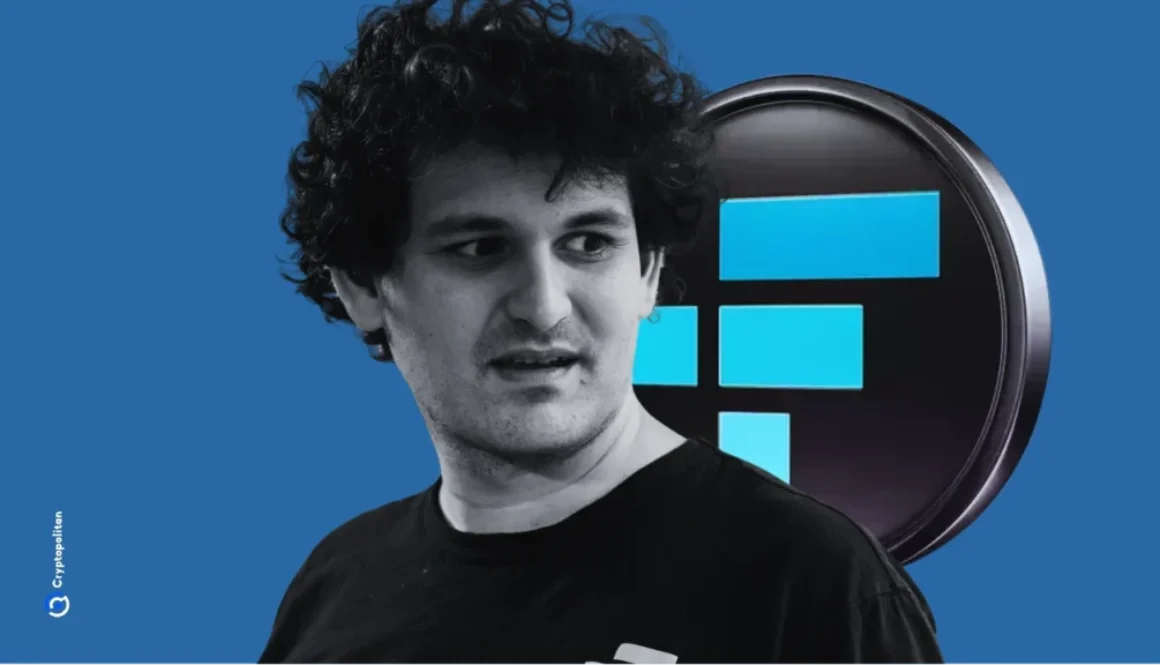
Sam Bankman-Fried formally requests Trump pardon after months of public lobbying from prison
Sam Bankman-Fried has formally submitted a clemency petition to the White House after months of publicly courting the Trump administration from prison, but the request faces near-certain rejection after Trump explicitly stated in January he would not pardon the convicted FTX founder. For institutional investors, the pardon bid underscores the political dimension now shaping high-profile crypto prosecutions and signals that even with recent presidential pardons granted to other crypto executives, the bar for clemency remains unpredictable and case-specific.
- Bankman-Fried filed a formal clemency application through the Justice Department’s Pardon Attorney’s Office after sustained public lobbying from his federal prison cell.
- Trump explicitly told The New York Times in January 2025 he would not pardon Bankman-Fried, grouping him with musician Sean Combs and former Senator Robert Menendez.
- Bankman-Fried maintains his innocence on wire fraud and conspiracy charges despite a federal jury conviction on seven felony counts in November 2023 and a 25-year sentence.
- 25 years Prison sentence imposed by Judge Lewis Kaplan in March 2024
- $8 billion Total customer losses at FTX relative to $1.7 billion equity investor losses
- 7 felony counts Convictions delivered by federal jury in November 2023, including wire fraud
Sam Bankman-Fried has escalated his clemency campaign by filing a formal pardon application with the White House through the Justice Department’s Pardon Attorney’s Office, marking the culmination of months of deliberate public outreach from his cell at a federal penitentiary.
The move comes despite a stated Trump administration policy explicitly ruling out such relief: the president told The New York Times in January 2025 that he would not pardon Bankman-Fried, and White House officials reiterated that same position on Sunday ahead of the formal submission.
The application arrives in a political environment where Trump has already granted clemency to other crypto-linked figures, including Silk Road founder Ross Ulbricht in January 2025 and former Binance CEO Changpeng Zhao in October 2025, raising questions about the criteria separating successful petitioners from those deemed beyond the scope of presidential forgiveness.
Bankman-Fried’s Public Campaign to Reposition Himself With Trump
Since his conviction in November 2023 on seven felony counts including wire fraud and conspiracy, Bankman-Fried has conducted a methodical effort to align himself with Trump administration priorities.
Through posts on X, the former FTX founder has praised the president’s economic agenda, commended his deregulation stance, and explicitly encouraged offshore cryptocurrency firms to relocate to the United States.
The messaging appears calculated to present Bankman-Fried not as a disgraced operator but as someone whose interests now align with Trump’s policy objectives on crypto market liberalization.
In a prison phone interview with FOX Business correspondent Susan Li, Bankman-Fried directly addressed the pardon question without hesitation. When asked whether he sought clemency, he responded, “Absolutely,” adding that the decision would ultimately rest with the president.
During the same conversation, he refused to clarify whether his parents or other representatives were conducting lobbying efforts on his behalf with the administration, citing his inability to speak for others’ actions.
The sustained visibility of this campaign distinguishes Bankman-Fried’s approach from typical clemency petitions filed quietly through legal channels.
Bankman-Fried Denies Fraud Despite Jury Verdict and Bankruptcy Findings
Throughout his public statements and legal filings, Bankman-Fried has maintained a consistent denial of the charges that led to his conviction. In his interview with Li, he stated flatly, “I didn’t steal user funds either,” positioning himself as a victim of circumstances rather than the architect of fraud.
He pointed to the FTX bankruptcy estate’s repayment trajectory, claiming that customers have recovered approximately 170 percent of their original deposits and characterizing the three-year timeline for those payouts as “a great disservice” to creditors.
This narrative diverges starkly from the facts established during trial and sentencing.
A federal jury convicted Bankman-Fried on all counts in November 2023, and Judge Lewis Kaplan sentenced him to 25 years in March 2024 based on evidence showing FTX customers lost $8 billion in total, equity investors lost $1.7 billion, and lenders to Bankman-Fried’s hedge fund Alameda Research sustained $1.3 billion in losses.
The court’s findings documented systematic misappropriation of customer deposits, loans obtained through false financial representations, and the deliberate commingling of customer and trading firm assets.
Bankman-Fried’s insistence on innocence has not evolved despite the comprehensive nature of the conviction and the scale of documented losses.
Trump Has Already Pardoned Other Crypto Executives but Drew a Line at Bankman-Fried
The Trump administration’s willingness to grant clemency to select crypto industry figures makes the explicit rejection of Bankman-Fried particularly notable.
Ross Ulbricht, the Silk Road marketplace founder who operated in the darknet and faced money laundering and drug trafficking charges alongside his conviction for conspiracy and computer fraud, received a presidential pardon in January 2025 after serving over a decade of his double life sentence.
Changpeng Zhao, the former Binance CEO, was granted clemency in October 2025 following his guilty plea to money laundering charges and a four-year prison sentence, signaling that regulatory violations and compliance failures did not automatically disqualify crypto executives from presidential forgiveness.
Yet Trump explicitly distinguished Bankman-Fried from these cases. When asked about a potential pardon for the FTX founder, Trump told The New York Times in January that he had no intention of granting one, grouping Bankman-Fried with music producer Sean Combs and former Senator Robert Menendez as individuals who would not receive clemency.
The White House reiterated that position on Sunday, stating it has no plans to grant a pardon to Bankman-Fried, effectively closing the door on his clemency application before it was even formally submitted.
The divergence in outcomes raises institutional questions about the criteria separating candidates deemed worthy of relief. Ulbricht’s pardon came after years of advocacy from libertarian figures and conservative activists who framed the case as prosecutorial overreach.
Zhao’s clemency may have reflected calculations about the importance of the cryptocurrency industry to certain segments of the Trump coalition.
Bankman-Fried’s explicit rejection suggests that the scale of his fraud, involving customer deposits rather than regulatory compliance, or the reputational damage associated with his case places him outside the range of acceptable clemency candidates despite his efforts to reposition himself.
Bankman-Fried’s Appeal to the Second Circuit Remains the Remaining Legal Path
While the formal pardon application appears to face insurmountable political opposition, Bankman-Fried has not abandoned his conviction fight through the judicial system. His legal team presented oral arguments before the US Court of Appeals for the Second Circuit in November 2025, seeking to overturn his conviction on unspecified grounds.
If the appeals court upholds the conviction, Bankman-Fried retains the option to petition the U.S. Supreme Court for review, a step that would require the justices to vote to grant certiorari on the case.
The appellate process offers a procedurally distinct but similarly uncertain path to his freedom. Federal appeals courts overturn convictions on the basis of trial error, evidentiary problems, or legal misinterpretation, not on the basis of innocence claims or the defendant’s subsequent conduct.
The strength of Bankman-Fried’s appellate arguments remains unknown publicly, though his legal team selected the Second Circuit, which has jurisdiction over the District Court for the Southern District of New York where he was tried, suggesting they believe grounds for reversal exist in the trial record.
The Second Circuit’s decision timeline has not been announced, and such appeals typically take months or longer to be resolved.
Institutional
