
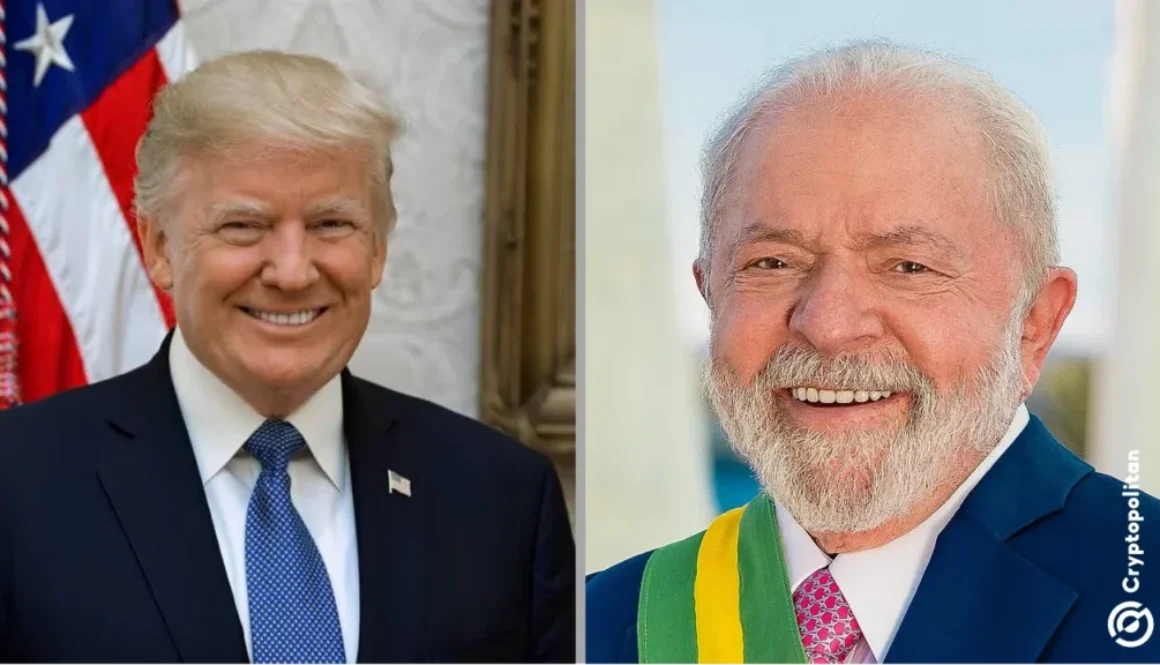
Lula warns Brazil won’t bow to trade threats over Bolsonaro case
Brazil’s president is drawing a line in the sand over U.S. trade negotiations, rejecting what he frames as economic coercion tied to domestic legal proceedings. Luiz Inácio Lula da Silva made clear this week that his government will only engage in trade discussions with Washington on equal footing, signaling a shift in how emerging economies are responding to tariff threats and political pressure from the United States.
Speaking at a Workers’ Party gathering in Brasília, Lula emphasized that Brazil remains open to negotiation but refuses to accept terms dictated by Washington. The statement carries particular weight given recent tensions between the two nations, which have increasingly blurred geopolitical disputes with commercial leverage.
The Tariff Threat and Judicial Independence
The backdrop to Lula’s remarks centers on former President Jair Bolsonaro’s ongoing legal troubles. Bolsonaro currently faces trial on allegations of orchestrating a coup attempt following his electoral defeat in 2022. That case, being adjudicated by Brazil’s Supreme Court, has become entangled in U.S.-Brazil relations in unprecedented ways.
Earlier this year, President Donald Trump publicly threatened Brazil with 50% tariffs on its goods unless the country’s courts dropped proceedings against Bolsonaro. The threat represented an explicit attempt to leverage trade policy to influence domestic judicial outcomes in another sovereign nation.
Brazil will not tolerate threats disguised as trade negotiations, and no country has the right to punish another simply because its courts are fulfilling their responsibilities.
— President Luiz Inácio Lula da Silva
While the proposed tariffs were originally set to take effect in August, they were subsequently delayed. However, the U.S. government did impose sanctions against Justice Alexandre de Moraes, the judge overseeing Bolsonaro’s case—an extraordinary move that underscores the stakes involved.
The Biden administration had largely avoided inserting itself into Bolsonaro’s legal proceedings. Trump’s return to office marked a sharp departure, directly linking commercial policy to judicial outcomes in Brazil.
A New Posture on Global Power Dynamics
Lula’s response goes beyond rejecting immediate trade demands. The Brazilian leader is articulating a broader philosophical shift about how his nation relates to Washington and the broader international order.
He pointedly told supporters that Brazil no longer accepts a subordinate role in global affairs. The country, he argued, has grown sufficiently large and economically diverse that it can no longer be treated as a junior partner dependent on U.S. goodwill.
This reframing carries implications far beyond the immediate tariff dispute. Lula has long advocated for reconstructing global trade architecture away from dollar dominance and U.S.-centric decision-making. His government has been particularly vocal about BRICS initiatives aimed at creating alternatives to Western-dominated financial systems.
Brazil has its own size, its own stance, and its own national interests to defend. America needs to recognize that the world has changed.
— President Luiz Inácio Lula da Silva
The president specifically referenced his vision for trade conducted in local currencies rather than dollars, a concept gaining traction within the BRICS bloc. However, implementation of such arrangements has proceeded slowly, with structural and political obstacles limiting rapid transformation.
Brazil’s Economic Stature and Market Position
Understanding Brazil’s confidence in resisting U.S. pressure requires context about the nation’s current economic standing. With a GDP exceeding $2.1 trillion, Brazil ranks as Latin America’s largest economy and among the world’s top ten. The country is a dominant force in global agriculture, controlling approximately one-third of the world’s coffee supply and serving as a leading exporter of soybeans, orange juice, and beef.
This agricultural dominance provides Brazil with substantial leverage in trade negotiations. Unlike smaller developing nations dependent on manufacturing imports, Brazil exports commodities essential to global food security. Any sustained tariff conflict would raise prices for American consumers while generating retaliatory pressure from agricultural interests within the United States itself.
Brazil’s industrial base has also matured considerably. The nation manufactures automobiles, aircraft components, and renewable energy equipment—sectors where supply chain disruptions carry broader economic consequences. This diversification distinguishes Brazil from earlier periods when its economy relied more heavily on commodity exports alone.
Pivoting Toward China and Alternative Markets
Rather than simply responding defensively, Brazil is actively diversifying its economic partnerships. China has emerged as the primary focus of this strategic reorientation.
Over the same weekend as Lula’s remarks, Beijing approved market access for 183 Brazilian coffee producers—a significant expansion of agricultural trade between the nations. The Chinese Embassy in Brazil highlighted the development through official channels, signaling the symbolic importance attached to the move.
This timing appears deliberate. As Washington weaponizes trade policy against Brazilian interests, Beijing is simultaneously opening doors to Brazilian exporters. The contrast underscores how emerging economies are shopping for alternative partnerships when traditional relationships become conditional on political compliance.
Brazil’s trade relationship with China has grown substantially over the past decade. Agricultural exports, particularly soybeans and now coffee, form the backbone of bilateral commerce. As global economic dynamics shift, such South-South trade relationships are becoming increasingly central to how developing nations manage external pressure.
China’s approval of new Brazilian coffee exporters removes a major trade barrier. For producers, this represents direct market access to the world’s second-largest economy without intermediaries—a transformative advantage in agricultural commerce.
Industry Context and Sectoral Impact
The dispute carries particular significance for Brazil’s agricultural sector, which employs millions directly and indirectly. Coffee producers, soybean farmers, and beef exporters represent powerful domestic constituencies with direct interest in market access negotiations. Their support for Lula’s hardline stance reflects confidence that alternative markets can absorb their output without significant price concessions.
Manufacturing sectors dependent on U.S. supply chains face greater complexity. Brazilian automobile manufacturers, for instance, have integrated North American production networks. Extended tariff conflicts could disrupt these relationships, creating internal pressure for accommodation. However, the broader diversification of Brazil’s economy reduces vulnerability to any single relationship, distinguishing the current moment from earlier periods of asymmetric dependence.
Financial services and technology sectors in Brazil are also expanding, though still heavily influenced by U.S. capital and standards. These segments add layers of interdependence that complicate straightforward confrontation, yet they also provide Brazil with constituencies interested in rules-based international commerce rather than bilateral coercion.
Longer-Term Implications
Lula’s confrontational approach reflects changing power calculations in the global economy. As inflation pressures ease and growth differentials narrow, traditional great powers like the United States face constraints on their ability to dictate terms to rising economies.
Brazil’s willingness to publicly rebuff U.S. pressure signals confidence in alternative pathways. Whether through BRICS coordination, bilateral arrangements with China, or regional trade blocs, emerging markets are constructing options that reduce dependence on any single relationship.
The question remains whether this represents sustainable repositioning or temporary rhetorical flourish. Implementation of de-dollarization initiatives within BRICS has lagged stated ambitions. Structural barriers—including capital markets depth, currency convertibility, and institutional frameworks—persist.
Nevertheless, the fact that such conversations are happening openly, with a major economy’s leader publicly articulating dissatisfaction with U.S. hegemonic practices, marks a genuine shift. The weaponization of tariffs to influence judicial outcomes crosses a threshold that previous administrations had respected, even when disagreeing with particular court decisions.
For those tracking broader economic trends, including alternative currencies and financial infrastructure, these geopolitical shifts carry direct relevance. As nations explore de-dollarization and decentralized payment systems, the underlying demand drivers become clearer.
Brazil’s position will likely influence how other countries respond to similar pressure. If Lula successfully navigates this standoff without capitulating on judicial independence, it may embolden others to resist trade-based coercion tied to domestic political disputes. Conversely, if U.S. pressure ultimately succeeds in constraining Brazilian courts, it would signal diminished room for emerging economies to assert independent foreign policy and judicial authority.
The broader market implications extend beyond bilateral U.S.-Brazil relations. Investors monitoring currency stability, commodity prices, and geopolitical risk will watch this confrontation closely. A successful Brazilian resistance to tariff coercion could accelerate currency diversification efforts globally, while capitulation would reinforce dollar dominance and U.S. leverage over strategic outcomes. Either pathway carries consequences for international finance, trade patterns, and the structure of emerging market investments.
Get weekly blockchain insights via the CCS Insider newsletter.