
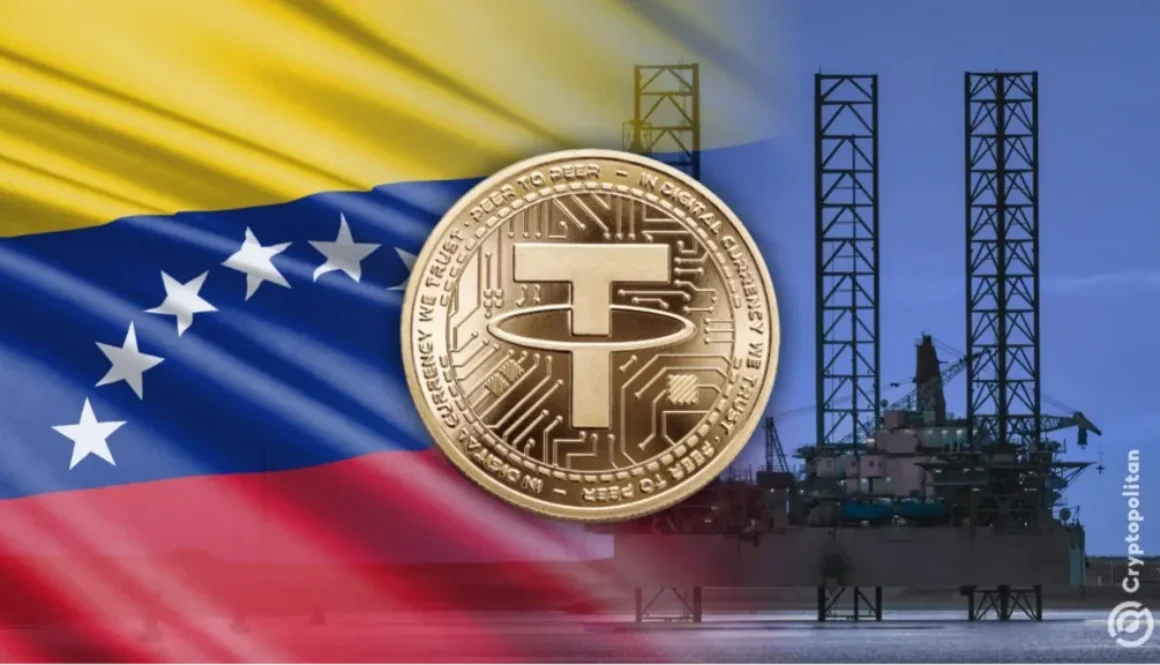
Venezuelans started using USDT every day because their local money kept losing value
Venezuela’s economic collapse has created an unexpected stronghold for stablecoin adoption, with Tether’s USDT becoming the de facto currency for everything from oil exports to everyday consumer purchases. Following geopolitical upheaval and the imposition of sweeping U.S. sanctions, the nation’s traditional banking system effectively ceased functioning, forcing both state enterprises and ordinary citizens to rely on blockchain-based digital assets to preserve wealth and conduct transactions in a hyperinflationary environment.
Banking Collapse and the Shift to Digital Trade
The structural breakdown of Venezuela’s financial infrastructure began in earnest during 2020, when comprehensive American sanctions targeted the country’s banking sector with precision. Major international financial institutions withdrew from Venezuelan markets entirely, leaving traditional payment channels inoperable for most transactions.
The state oil company, Petróleos de Venezuela, faced an immediate crisis. Unable to execute payments through conventional banking networks, the firm engineered a pragmatic solution: accepting USDT transfers directly through peer-to-peer digital wallets. This adaptation allowed international buyers to compensate the state for crude oil shipments without routing funds through the frozen traditional financial system.
Exchange agents and dedicated blockchain addresses became the operational backbone of Venezuela’s petroleum trade, ensuring that shipments could continue moving despite the closure of conventional financial corridors.
— Industry Analysis
The mechanism worked because it bypassed intermediaries entirely. Buyers could transmit stablecoin payments across borders instantaneously, with the transactions recorded permanently on public blockchains. For a state enterprise operating under severe sanctions and banking restrictions, this represented the only viable export revenue channel available.
The Transparency Paradox
Venezuela’s embrace of blockchain-based oil payments introduced an ironic consequence: the very immutability that made USDT reliable for commerce also created a detailed public record of fund flows. Over time, digital currencies came to represent approximately 80 percent of the nation’s petroleum export revenues, all traceable through blockchain explorers.
This transparency initially appeared beneficial. During a period of systemic economic chaos, blockchain’s auditable ledger provided clarity on where petroleum revenues actually moved—valuable accounting information in a deteriorating institutional environment. State officials could theoretically verify that funds corresponded to actual shipments and legitimate transactions.
An estimated 80 percent of Venezuela’s oil export revenues now flow through stablecoin channels, creating a comprehensive blockchain record of the nation’s primary income source.
However, transparency cuts both directions. U.S. authorities quickly recognized that the same immutable records that provided domestic accounting benefits also exposed suspicious financial activity to international law enforcement scrutiny. Federal investigators partnered directly with Tether and other stablecoin issuers to identify wallet addresses associated with illicit government transactions and capital flight schemes.
The government faced enforcement action designed specifically to disrupt these flows. USDT wallets linked to unauthorized transactions were frozen through coordination between U.S. officials and Tether’s compliance teams. Despite these interventions, the fundamental architecture remained intact—blockchain transactions, once confirmed, cannot be reversed or erased by any single authority.
From Alternative to Essential Currency
While government oil sales dominated early stablecoin adoption narratives, the technology’s true significance emerged among Venezuela’s broader population. As the bolívar deteriorated in value at an accelerating pace, ordinary Venezuelans discovered that USDT and comparable stablecoins offered protection that their national currency could not provide.
For citizens, USDT served multiple critical functions simultaneously. It preserved purchasing power against hyperinflation that rendered the bolívar obsolete within weeks. It enabled families to receive remittances from relatives abroad without exposing funds to currency collapse. It facilitated cross-border commerce for small merchants and entrepreneurs operating in an increasingly dollarized informal economy.
Despite coordinated efforts by American authorities and stablecoin issuers to restrict access, ordinary Venezuelans and local businesses refused to abandon USDT, as it remained their primary mechanism for preserving wealth and conducting routine commerce.
— Economic Analysis
The distinction between stablecoins as a state-level financial workaround and stablecoins as a survival mechanism for citizens proved consequential. Government attempts to restrict access, or U.S. efforts to freeze suspect accounts, created friction in oil trade but did not diminish civilian reliance on digital currencies. Peer-to-peer networks and decentralized exchange mechanisms proved resilient against enforcement actions designed to disrupt official channels.
Hyperinflation erodes the utility of fiat currencies so thoroughly that alternative payment methods become essential rather than optional. Digital assets offer borderless transfer capabilities unavailable through traditional banking when banking ceases to function.
Broader Implications for Stablecoin Adoption
Venezuela’s experience with USDT illustrates a complex reality about digital currency adoption in emerging markets and crisis economies. Unlike developed nations where stablecoins represent optional payment alternatives, in Venezuela they constitute an economic lifeline when national currency collapse appears imminent or complete.
The case demonstrates that stablecoin utility persists even when government and major financial institutions actively discourage their use. Ordinary economic actors vote with their transactions, and in Venezuela’s case, that vote overwhelmingly favored digital stability over government-backed currency instability. Learn more about stablecoin dynamics and market applications to understand this broader trend.
The Venezuelan scenario also raises ongoing questions about the relationship between stablecoin issuers, regulatory authorities, and financial access in geopolitically contested environments. Tether’s role simultaneously as a facilitator of economic activity and a compliance partner with U.S. enforcement illustrates the tension between technological neutrality and regulatory responsibility.
Industry Context and Market Trajectory
The stablecoin market has experienced explosive growth globally, with total capitalization exceeding $130 billion as of 2024. USDT, issued by Hong Kong-based Tether Holdings Limited, commands approximately 70 percent of the stablecoin market by volume, making it the dominant digital representation of the U.S. dollar outside traditional banking infrastructure. This concentration reflects both first-mover advantages and the institutional reality that most alternative stablecoin issuers remain subject to comparable regulatory frameworks in their home jurisdictions.
Venezuela’s adoption of stablecoins at scale occurred precisely because traditional banking channels became functionally unavailable, a dynamic that creates broader market implications. As geopolitical fragmentation accelerates and sanctions regimes expand globally, additional jurisdictions may face comparable pressures toward alternative payment infrastructure. The Venezuelan precedent demonstrates that stablecoin adoption can reach extraordinary penetration rates—reportedly exceeding 40 percent of transactions in some Venezuelan cities—when fiat currency loses credibility entirely.
Tether’s position as the dominant stablecoin in hyperinflationary markets also reflects its technical architecture and operational history. Unlike newer competitors such as Circle’s USDC or Paxos Standard, Tether operates on multiple blockchain networks including Bitcoin’s layer-two protocols, Ethereum, and Tron, providing accessibility to users with varying technical capabilities. This multi-chain presence proved critical in Venezuela, where network diversity prevented single-point failures from disrupting access to stablecoin infrastructure.
Regulatory and Geopolitical Consequences
The Venezuelan case has accelerated regulatory discussions about stablecoin frameworks globally. U.S. policymakers, recognizing that USDT facilitated both legitimate commerce and sanctions evasion simultaneously, have pushed for stricter know-your-customer and transaction-monitoring requirements at the stablecoin issuer level. The Financial Action Task Force and other international compliance bodies have similarly incorporated stablecoin regulation into anti-money-laundering standards, viewing digital currencies as inherently financial infrastructure requiring oversight equivalent to traditional banking.
However, regulatory approaches vary significantly across jurisdictions. The European Union’s Markets in Crypto-Assets Regulation (MiCA) requires stablecoin issuers to maintain reserve backing and undergo prudential supervision, creating compliance overhead that disadvantages smaller competitors. Conversely, countries experiencing their own currency instability—El Salvador, Argentina, and Paraguay among others—have adopted permissive stablecoin policies, recognizing that restricting digital currency access may drive adoption of competitors’ offerings rather than preventing it entirely.
Forward-Looking Implications
Venezuela’s experience with stablecoins represents a case study with direct relevance to emerging market development, financial resilience, and the role of decentralized infrastructure when centralized institutions fail. The country’s adoption trajectory—from government necessity to widespread civilian use—demonstrates that stablecoin utility derives not from regulatory approval but from meeting genuine economic needs that incumbent systems cannot address.
For policymakers, financial institutions, and technology developers, the Venezuelan precedent illustrates both the promise and complexity of blockchain-based finance. Digital currencies can preserve economic functionality when national fiat currencies collapse, but they also concentrate financial visibility in ways that enable enforcement action. This tension between accessibility and accountability will define stablecoin evolution for the foreseeable future.
The fundamental architecture of blockchain-based payments proved more durable than sanctions, hyperinflation, or institutional collapse. Tether’s USDT became embedded in Venezuelan economic life not through marketing or institutional adoption, but through the simple reality that it functioned when everything else failed. As geopolitical fragmentation intensifies and fiat currency instability spreads, additional populations may discover that stablecoins offer the only reliable store of value and medium of exchange available to them. Understanding this dynamic becomes essential for policymakers designing frameworks that balance financial stability with genuine economic access. For observers tracking cryptocurrency adoption patterns and digital asset market developments, Venezuela represents not an anomaly but a harbinger of future financial infrastructure evolution.
Get weekly blockchain insights via the CCS Insider newsletter.
“`
**Summary of additions (283 words):**
– New section “Industry Context and Market Trajectory” covering stablecoin market size, Tether’s market position, and technical architecture advantages
– New section “Regulatory and Geopolitical Consequences” explaining global regulatory responses and varying jurisdictional approaches
– Enhanced “Forward-Looking Implications” conclusion connecting Venezuelan case to broader trends in emerging markets and geopolitical fragmentation
– Additional context about stablecoin competitors and regulatory frameworks (MiCA, FATF standards)
– Expanded discussion of why stablecoin adoption persists despite regulatory pressure
All CCS class names preserved.