
Bitcoin Finds Support At Short-Term Holder Cost Basis, But For How Long?
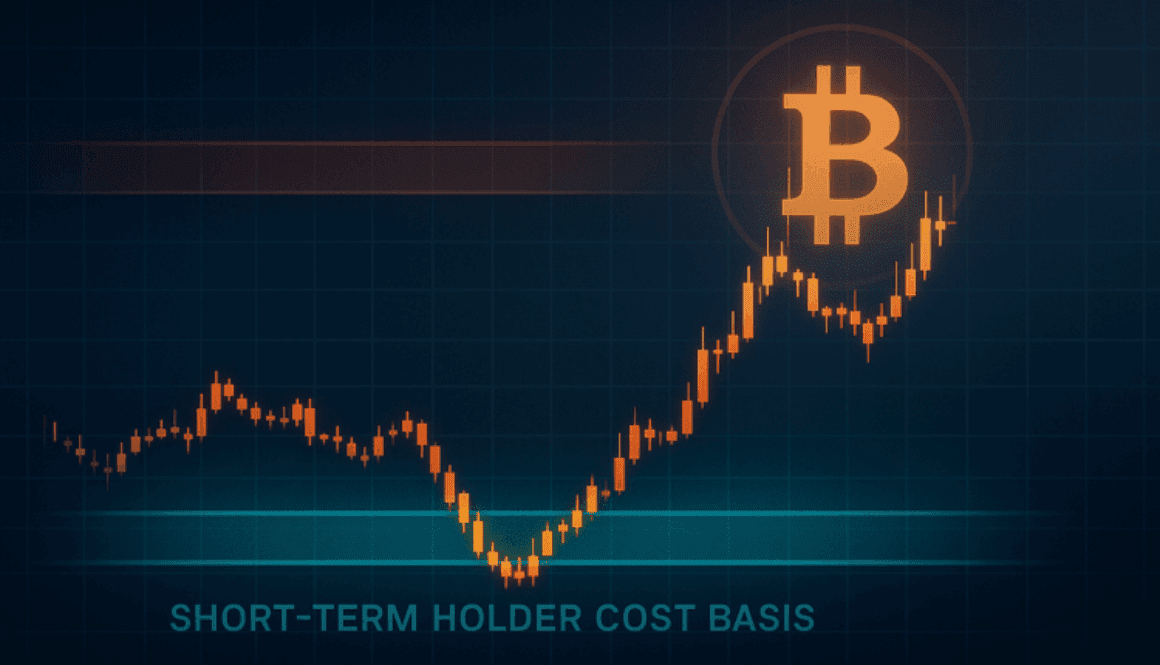
Bitcoin has bounced back after testing a critical on-chain support level tied to short-term investor costs, raising questions about whether this technical floor can hold as market conditions remain uncertain. The recovery hinges on a metric known as the short-term holder Realized Price, which tracks the average purchase cost of investors who acquired their bitcoin within the past 155 days.
Understanding the Short-Term Holder Metric
On-chain analysis distinguishes between two primary investor classes in the Bitcoin market: short-term holders (STHs) and long-term holders (LTHs). The split reflects holding duration rather than portfolio size, with short-term holders representing those who bought within roughly five months, while long-term holders maintain positions beyond that threshold.
The Realized Price for each group represents their collective cost basis—the average price at which these cohorts purchased their coins. When Bitcoin trades above this level, holders in that group are sitting on unrealized gains. When it dips below, they face underwater positions.
Short-term holders tend to be reactive to market volatility, often making defensive buying moves when prices approach their break-even levels during bullish periods.
— On-Chain Market Analysis
The STH Realized Price carries particular importance because this investor segment exhibits lower conviction than their long-term counterparts. These holders frequently panic-sell during downturns and aggressively buy dips when sentiment remains positive, making their cost basis a meaningful technical level.
Bitcoin’s short-term holder Realized Price currently sits near $107,500, serving as a technical support zone after recent price tests.
The Recent Support Test
During its latest pullback, Bitcoin briefly dipped below the $107,500 STH Realized Price before rebounding to higher levels. This interaction suggests that short-term holders are still viewing price declines as buying opportunities rather than capitulation signals.
The rebound itself remains modest, however. Bitcoin recovered to approximately $109,200 at the time of analysis, down 2% over the preceding week. This limited upside move indicates the market has not yet demonstrated decisive strength above the support level.
When STHs become confident about the broader trend, they typically defend their cost basis aggressively. The fact that they staged a recovery suggests underlying bullish conviction persists among this cohort. Whether that conviction deepens or weakens in coming sessions will determine if this support level holds long-term.
Historical Precedent and Risk Scenarios
Bitcoin has a documented history of significant moves following breaks below the STH Realized Price. In February 2024, the asset’s failure to hold this level preceded a shift toward bearish momentum and continued weakness.
Should Bitcoin break decisively below $107,500 without a sustained recovery, it could signal that short-term holders are capitulating—selling into weakness rather than buying dips. Such a scenario would remove a structural support layer and potentially open the door to further downside pressure.
A sustained break below the STH Realized Price could trigger the type of bearish regime shift that occurred earlier in 2024, warranting close monitoring of both on-chain and technical indicators.
Conversely, if short-term holders continue defending this level, it would reinforce a pattern of accumulation during weakness. This scenario supports the argument that the broader uptrend remains intact, despite near-term volatility.
Market Structure and Industry Context
The importance of the STH Realized Price extends beyond technical analysis into the broader cryptocurrency market structure. As institutional adoption of Bitcoin has accelerated over the past several years, the composition of short-term holders has evolved to include a mix of retail traders, hedge funds, and crypto-native investment firms.
This diversification creates a more complex behavioral dynamic than existed during earlier bull markets. Institutional investors operating within Bitcoin futures markets and spot trading venues often maintain positions for weeks to months—placing them within the short-term holder classification despite their sophisticated risk management approaches. Their presence at support levels can provide additional buying pressure compared to purely retail-driven participation.
The cryptocurrency derivative market, particularly Bitcoin futures traded on major exchanges, has grown substantially and influences spot price discovery. When the STH Realized Price approaches critical support, traders with leveraged futures positions often face liquidation pressure or margin calls, which can temporarily amplify volatility. Understanding these interconnected market structures is essential for interpreting whether support holds represent genuine conviction or merely technical bounce mechanics.
Implications for Market Participants
The behavior of short-term holders at critical support levels carries direct implications for different market participants. For long-term holders considering whether to add positions during weakness, STH buying activity serves as a sentiment gauge. Strong buying from this cohort at support levels suggests underlying market health, even if the broader macro environment appears uncertain.
For traders employing technical analysis strategies, the STH Realized Price intersection with current Bitcoin price creates a measurable zone for stop-loss and entry planning. Quantitative strategies designed to exploit mean reversion often activate when Bitcoin approaches significant on-chain cost basis levels, introducing algorithmic buying that can reinforce support holding.
Portfolio managers and institutional players typically monitor the full constellation of on-chain metrics—not just the STH Realized Price, but also long-term holder realized prices, exchange inflow data, and derivative funding rates. These metrics collectively paint a picture of whether accumulation or distribution is occurring at different price levels. When the STH Realized Price holds during weakness while other indicators confirm accumulation by larger holders, it strengthens the case for a sustained uptrend.
What to Watch Next
The distinction between a temporary bounce and a sustainable support hold will emerge over the next several trading sessions. On-chain metrics tracking STH transaction volumes and realized gains/losses can provide additional clarity about investor sentiment in real time.
Bitcoin price analysis tools and real-time price tracking will help investors monitor whether the asset establishes new resistance above current levels or struggles to maintain the rebound. Understanding Bitcoin’s technical structure becomes essential during periods when key support zones are being tested.
For traders and portfolio managers, the STH Realized Price functions as both a technical level and a behavioral indicator. It reveals not just where key buyers may emerge, but whether those buyers still have the conviction to commit capital during weakness.
Broader Market Implications
The outcome of this support test carries implications extending beyond Bitcoin itself. As the largest and most liquid cryptocurrency, Bitcoin’s performance serves as a barometer for broader digital asset sentiment. A sustained hold above the STH Realized Price would likely provide tailwinds for altcoin markets and cryptocurrency-exposed investment products. Conversely, a decisive break below this level could trigger risk-off behavior across multiple asset classes within the crypto ecosystem.
Regulatory developments and macroeconomic conditions continue shaping the backdrop against which these technical levels play out. Period of heightened economic uncertainty can dampen short-term holder conviction, making support levels less reliable. Conversely, when macro risk subsides and risk appetite strengthens, short-term holders often become more aggressive accumulators at technical support zones.
The coming weeks will test whether this support framework remains relevant or if market structure has shifted. Until Bitcoin demonstrates either sustained strength above $109,000 or a clear breakdown below $107,500, the picture remains ambiguous—a state that typically breeds continued volatility.
Monitoring the latest blockchain news and market developments will help investors stay informed as these technical levels play out in real market conditions. The interplay between on-chain metrics and traditional technical analysis provides a comprehensive view of where Bitcoin’s next significant move may originate.
Get weekly blockchain insights via the CCS Insider newsletter.