
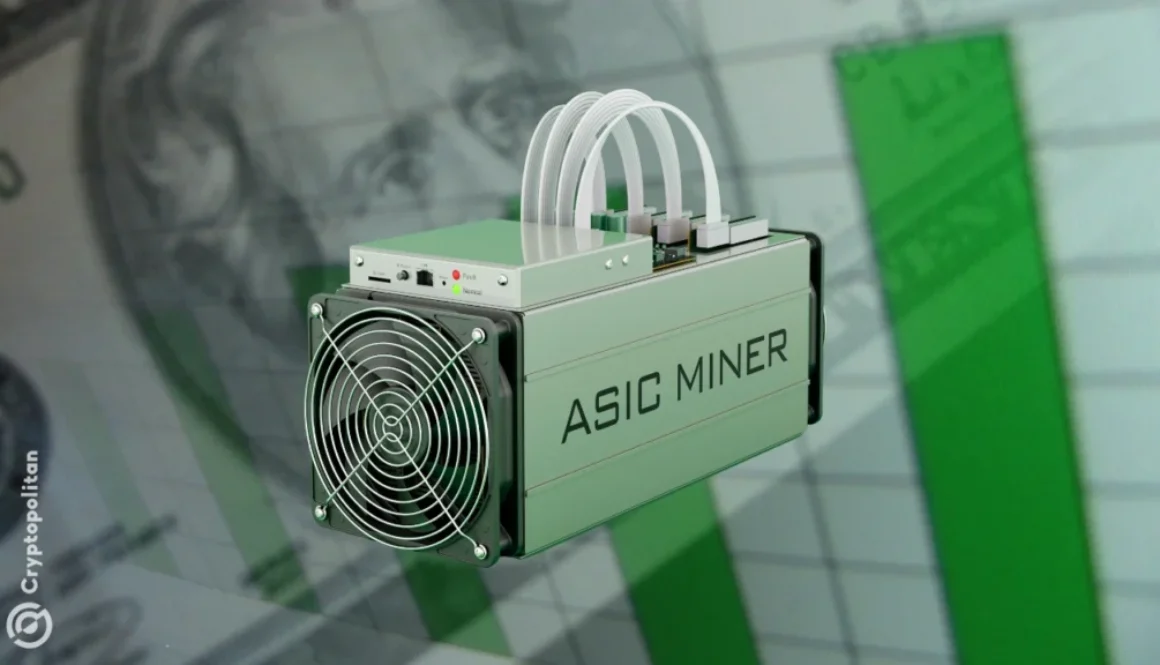
Trump-linked miner buys $314M worth of Bitmain ASICs
American Bitcoin Corp., a mining operation with backing from members of President Donald Trump’s family, has finalized a substantial equipment purchase that underscores the intersection of political support and cryptocurrency mining infrastructure. The company exercised its option to acquire approximately 16,290 Antminer U3S21EXPH units from Chinese manufacturer Bitmain, valued at roughly $314 million according to industry data. This transaction represents one of the largest single hardware orders placed by a North American mining firm in recent months.
Scale and Technical Specifications
The ASIC hardware American Bitcoin secured is purpose-built exclusively for Bitcoin mining operations. These application-specific integrated circuits collectively deliver approximately 14.02 exahashes per second of computational power, a significant addition to the firm’s operational capacity.
Such an acquisition signals confidence in mining economics even as Bitcoin prices experience volatility and competitive pressures intensify throughout the sector. The scale of this deal positions American Bitcoin among the most substantial mining operators across North America, though the company has not disclosed specific deployment strategies for the machines.
The deal solidifies American Bitcoin as one of the largest mining operators in North America while reflecting broader industry uncertainty about future operating margins.
— Industry Analysis
16,290 ASIC units purchased. $314 million total expenditure. 14.02 EH/s combined hashing capacity. Represents approximately one of the largest hardware orders of the year in North America.
Tariff Strategy and Timing
The timing of this purchase carries strategic importance. American Bitcoin locked in the hardware acquisition before the Trump administration’s planned implementation of tariffs on Chinese-manufactured mining equipment, a policy change that would directly increase costs for operators reliant on imported ASICs.
The administration has announced blanket import duties on technology goods, including specialized mining hardware. These tariffs aim to encourage manufacturing relocation to the United States while increasing prices for companies dependent on Chinese suppliers. Industry observers view American Bitcoin’s advance purchase as a calculated move to avoid these cost escalations.
The broader context includes political positioning around domestic manufacturing. The move reflects how trade policy now intersects directly with cryptocurrency infrastructure decisions and capital allocation within the mining sector.
Bitmain’s US Expansion Response
Bitmain has responded to tariff pressures with its own strategic repositioning. The Chinese manufacturer announced plans to establish its first operational ASIC production facility within the United States, with operations scheduled to commence in early 2026. Additionally, the company will open a US headquarters, likely in either Texas or Florida, by year-end.
These moves reflect Bitmain’s effort to maintain price competitiveness for American customers while partially shifting production to domestic operations. By establishing US-based manufacturing, Bitmain aims to circumvent tariff barriers while meeting demand from the world’s largest cryptocurrency market.
Bitmain is moving swiftly to establish US manufacturing capacity, positioning itself to avoid tariff impacts while securing market share in North America.
— Company Announcements
Three primary manufacturers dominate ASIC production: Bitmain, MicroBT, and Canaan. According to Cambridge research, Bitmain controls approximately 82% of the global ASIC market, making tariff policies and manufacturing decisions by this company particularly influential across the entire mining ecosystem.
Broader Industry Implications
This transaction illustrates how macroeconomic pressures and trade policy are reshaping the mining supply chain. Tariffs and rising operational costs are forcing manufacturers and mining operators to recalibrate their strategies around production location, equipment sourcing, and capital deployment.
Several analysts expect that hardware manufacturers may accelerate plans to establish North American production capacity. Such moves would help them maintain market access while reducing exposure to import duties. However, establishing manufacturing operations requires significant capital investment and time—typically measured in years rather than months.
For mining operators like American Bitcoin, the calculus involves balancing equipment costs, electricity expenses, and hashrate competitiveness. Large capital purchases lock in current pricing while telegraphing confidence in long-term mining viability, even amid cryptocurrency market volatility.
The deal also reflects confidence in operational expansion despite competitive pressures from other large-scale mining firms. Industry data shows that major equipment orders of this magnitude remain relatively infrequent, making American Bitcoin’s purchase particularly notable within the year’s transaction landscape.
Market Context and Industry Dynamics
The global Bitcoin mining industry has undergone significant consolidation over the past three years, with large-scale operations increasingly dominating hash rate distribution. The network currently processes approximately 680 exahashes per second, with the top ten mining pools controlling roughly 75% of total computational power. Within this competitive environment, individual operators must continuously upgrade hardware to maintain profitability margins.
American Bitcoin’s equipment acquisition arrives during a period of modest Bitcoin price stabilization following the 2024 halving event, which reduced mining block rewards from 6.25 to 3.125 BTC per block. This structural change fundamentally altered mining economics, requiring operators to either reduce operational costs, increase efficiency, or scale operations significantly to maintain comparable revenue levels.
The U3S21EXPH units represent Bitmain’s latest generation efficiency standard, offering improved performance-per-watt ratios compared to previous models. Industry benchmarks indicate these machines consume approximately 21 joules per terahash, positioning them among the most efficient current-generation ASIC units available. This efficiency advantage becomes critically important when electricity costs—typically representing 50-70% of mining operational expenses—significantly impact profitability calculations.
Electricity availability and cost structure have increasingly determined which mining operations remain viable. Regions with abundant renewable energy sources, including parts of Texas, hydroelectric-rich areas in the Pacific Northwest, and geothermal locations in Iceland, have become epicenters for large-scale mining deployment. American Bitcoin’s expansion strategy likely incorporates access to favorable power arrangements, though the company has not publicly disclosed specific facility locations for the newly acquired equipment.
Competitive Positioning and Market Share
The mining industry currently experiences consolidation pressures that favor well-capitalized operators with access to favorable financing, electricity arrangements, and established infrastructure. Marathon Digital Holdings, Riot Platforms, and Core Scientific represent the largest publicly-traded mining companies by hash rate deployment, collectively controlling roughly 15-18% of global network hash rate.
American Bitcoin’s significant equipment purchase suggests strategic positioning toward competing in this upper-tier operational category. The $314 million capital expenditure indicates access to substantial financing resources, whether through equity backing, debt instruments, or operational cash flow retention. Such capital intensity creates barriers to entry for smaller mining operations, further accelerating industry consolidation.
Whether this approach—advance purchasing to avoid tariffs—becomes a widespread strategy among major miners remains uncertain. The effectiveness depends on final tariff rates, the timing of Bitmain’s US facility launch, and broader economic conditions affecting mining profitability. Competing mining operators now face strategic decisions regarding whether to execute similar advance purchases or adopt alternative approaches involving equipment leasing, hosting arrangements, or geographic diversification.
Long-Term Industry Trajectory
Manufacturing reshoring efforts initiated by equipment suppliers respond to both tariff incentives and broader supply chain considerations. The COVID-19 pandemic and subsequent supply chain disruptions demonstrated vulnerabilities in relying exclusively on distant manufacturing centers. US-based ASIC production could reduce delivery timelines, improve quality control oversight, and provide greater supply security for North American operators.
However, establishing competitive manufacturing at scale requires solving substantial technical and logistical challenges. ASIC design and production involves sophisticated semiconductor engineering, specialized testing equipment, and supply chain coordination with component manufacturers. Building equivalent capacity to Bitmain’s existing Chinese operations would require years of development and billions in capital investment.
The American Bitcoin transaction exemplifies how geopolitical considerations, trade policy, and business strategy increasingly intersect within cryptocurrency infrastructure development. Mining equipment decisions now factor prominently in broader discussions surrounding technology manufacturing, energy consumption, and national competitiveness in critical infrastructure sectors.
What remains clear is that mining infrastructure decisions are increasingly intertwined with geopolitical considerations, trade policy, and domestic manufacturing incentives. The American Bitcoin transaction is emblematic of this evolving landscape, signaling how traditional business operations have become inseparable from policy environments and strategic positioning within emerging technology sectors.
Get weekly blockchain insights via the CCS Insider newsletter.