Ethereum Price Prediction: $5,000 in Sight, But One Crypto Under $1 Could Outshine ETH With 55x Gains
Ethereum is consolidating near $3,660 as institutional capital continues flowing into spot ETH exchange-traded funds, yet emerging decentralized finance protocols are beginning to capture investor attention amid broader market optimism. The shift in focus reflects a widening search for exposure beyond the largest cryptocurrencies, as traders evaluate whether smaller utility tokens might deliver outsized returns in the coming market cycle.
Ethereum’s Path to $5,000
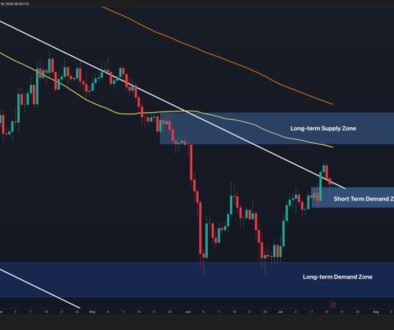
Ethereum has established support between $3,550 and $3,700 following a recent pullback from highs near $3,800. Recent data shows over $150 million in inflows to spot ETH ETFs, signaling renewed institutional confidence despite some caution visible in the futures market.
Market participants have outlined a potential path toward $5,000 in the third quarter of 2025. Supporting this outlook are several structural factors: declining exchange reserves suggest fewer tokens available for sale, rising demand from decentralized finance applications, and anticipated upgrades to the Ethereum protocol itself.
Ethereum remains central to the DeFi ecosystem, though investor attention is increasingly shifting toward smaller utility-based protocols exploring new use cases.
— Market Analysis, CCS Research
The broader Ethereum network continues to process significant transaction volume and developer activity, though valuation pressures have tempered some of the euphoria that characterized earlier bull markets.
Ethereum trading range: $3,550–$3,700 support, with $3,800 as recent resistance. Spot ETF inflows exceeded $150 million in recent period.
The Institutional Capital Influx and Market Structure
The approval and proliferation of spot Ethereum ETFs has fundamentally altered the accessibility landscape for institutional investors. Unlike futures-based products that require active portfolio management and leverage considerations, spot ETFs provide direct exposure through traditional brokerage accounts and retirement investment vehicles. This structural change has reduced friction for large capital allocators, creating a steady bid beneath Ethereum as portfolio managers incorporate cryptocurrency allocations into diversified holdings.
Asset managers overseeing trillions in global capital have increasingly incorporated digital assets into strategic allocation frameworks. Ethereum’s positioning as the primary platform for decentralized finance, tokenized assets, and smart contract applications justifies inclusion in growth-oriented portfolios. The shift from speculative retail positioning to systematic institutional buying has created price support that extends beyond sentiment-driven trading cycles.
Declining exchange reserves—a metric tracking cryptocurrency holdings on trading platforms—indicate that fewer sellers are willing to liquidate positions at current prices. This technical pattern historically precedes accumulation phases where prices stabilize before advancing. Combined with ETF inflows, the combination suggests a transition from distribution to accumulation across multiple investor cohorts.
The Presale Token Dynamic
Mutuum Finance, a decentralized lending protocol, has entered Phase 6 of its presale with tokens priced at $0.035. The project has raised over $14.1 million across its presale stages and attracted approximately 14,900 individual participants to date.
The token structure involves incremental price increases across presale phases. The next scheduled price tier stands at $0.04, representing a 14.29% increase from the current level. According to presale terms, early investors purchasing at the current phase would realize approximately 71.43% gains once tokens begin trading at $0.06 upon public launch.
Presale models generate substantial returns for early participants by design. However, investors should recognize that post-listing price performance depends on market conditions, adoption rates, and competitive dynamics that cannot be guaranteed at presale pricing.
Mutuum Finance (MUTM) Phase 6: $0.035 per token. Projected listing price: $0.06. Current raise: $14.1+ million from 14,900+ holders.
Understanding the DeFi Lending Sector
Decentralized lending protocols represent one of the largest use cases within the cryptocurrency ecosystem, with platforms like Aave, Compound, and Lido collectively managing over $50 billion in total value locked. These protocols enable users to deposit cryptocurrency assets and earn interest while simultaneously allowing borrowers to access leverage against collateral holdings. The economic model reduces reliance on traditional financial intermediaries while creating transparent, auditable transaction records.
Market saturation within lending has intensified as capital allocation efficiency has improved across existing platforms. Newer entrants like Mutuum Finance must differentiate through enhanced user experience, superior interest rates, reduced fees, or novel features addressing gaps in existing protocols. The competitive landscape rewards projects that identify underserved market segments or demonstrate operational superiority over established alternatives.
The total addressable market for DeFi lending extends across multiple blockchain ecosystems and layer-two scaling solutions. Ethereum remains dominant, but Solana, Arbitrum, and Optimism have each captured meaningful protocol activity. Mutuum Finance’s positioning across blockchain ecosystems represents a key competitive consideration as the protocol seeks to justify token value through sustained protocol fees and governance participation.
Security and Community Engagement
Mutuum Finance has partnered with CertiK, a blockchain security firm, to conduct formal audits of the protocol’s smart contracts and fund custody mechanisms. The collaboration includes a $50,000 bug bounty program with four reward tiers—low, minor, major, and critical—designed to identify and remediate security vulnerabilities before mainnet launch.
Third-party audits represent a standard practice among serious DeFi projects seeking to establish operational credibility. However, audits provide assurance regarding code quality at a specific point in time and do not guarantee future protocol safety or protection against economic exploits.
The project has also launched promotional initiatives including a $100,000 token giveaway distributed as $10,000 allocations, alongside a leaderboard rewarding the top 50 token holders. These mechanisms aim to bootstrap community participation and liquidity during the presale phase.
Community-driven security frameworks and transparent audit processes are becoming table stakes for newer DeFi protocols seeking institutional and retail participation.
— Blockchain Development Trends, CCS Analysis
The cryptocurrency market has entered a period of renewed optimism, with major digital assets rebounding from prior consolidation ranges. This environment has historically attracted capital toward both established protocols like Ethereum and emerging projects seeking to differentiate through novel mechanics or use cases.
Presale tokens and early-stage protocols carry substantially elevated risk compared to established cryptocurrencies. Factors including regulatory uncertainty, execution risk on promised features, competitive displacement, and market sentiment reversals can materially impact token valuations regardless of presale pricing dynamics.
Investors evaluating exposure to smaller tokens should maintain strict position sizing discipline. Allocation decisions should reflect individual risk tolerance and be grounded in fundamental assessment of protocol utility, team experience, and market differentiation rather than return projections.
The stated potential for “55x gains” reflects mathematical calculations based on presale-to-listing price ratios and should not be interpreted as a performance forecast or investment recommendation. Secondary market trading can move sharply in either direction based on adoption, competitive pressures, and broader market conditions.
Evaluating DeFi Protocol Opportunities
The DeFi sector continues expanding with new lending, borrowing, and derivative platforms launching regularly. Assessing which protocols gain sustainable adoption requires evaluating several dimensions: whether the protocol solves a material problem, competitive positioning relative to existing solutions, quality of the development team, clarity of tokenomics, and realistic paths to revenue generation.
Ethereum’s dominance in DeFi remains substantial, but alternative blockchain ecosystems and layer-two scaling solutions have captured meaningful market share. Newer protocols must justify their existence through genuine innovation or superior user experience to achieve long-term relevance.
The broader context remains one of macro-driven asset appreciation attracting speculative capital toward risk assets. Participants should distinguish between shorter-term momentum dynamics and fundamental value creation when making allocation decisions.
Market Implications and Forward Outlook
The divergence between institutional interest in blue-chip cryptocurrencies like Ethereum and speculative activity surrounding presale tokens reflects a maturing market where different investor cohorts operate with distinct strategies and risk parameters. Institutional capital provides stability and establishes valuation floors, while retail speculation drives discovery of emerging opportunities and allocates capital toward projects with differentiated positioning.
Regulatory clarity emerging in major jurisdictions may further accelerate institutional adoption of established protocols while simultaneously creating compliance requirements that raise barriers to entry for newer projects. This dynamic could ultimately benefit protocols demonstrating regulatory compliance and operational maturity while challenging purely speculative ventures.
As market cycles progress and capital deployment accelerates, the competition for user adoption and protocol revenue will intensify across DeFi. Projects that successfully balance innovation with operational discipline will attract sustained capital flows, while those relying primarily on presale enthusiasm may face difficulty justifying valuations once token unlock events occur and selling pressure emerges.
As Ethereum approaches potential resistance at $5,000 and emerging tokens generate attention through presale mechanics and incentive programs, the market continues rewarding thorough due diligence and disciplined risk management. Neither large established protocols nor smaller emerging projects are immune to market downturns or competitive displacement.
Get weekly blockchain insights via the CCS Insider newsletter.