Ethereum Price Jumps To $4,400 – Can Bulls Extend Rally Even Higher?
Ethereum has climbed to $4,400 in recent trading, marking a notable advance as the second-largest cryptocurrency by market capitalization works to extend its current rally. The move represents a 5% gain from support levels established earlier, and traders are now watching whether the digital asset can break through immediate resistance to unlock further upside potential.
Current Price Action and Technical Setup
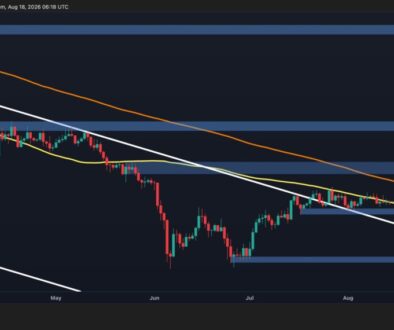
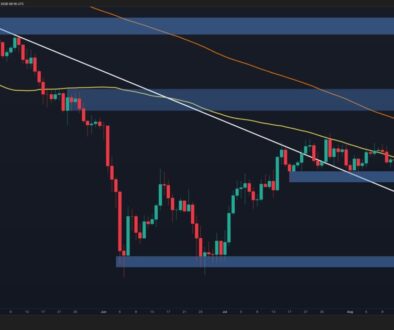
ETH has stabilized above the $4,320 mark following a break above a key contracting triangle pattern on the hourly timeframe. The price recently tested the $4,400 level, a significant resistance zone that could determine whether momentum continues or consolidates in the near term.
The recovery has been supported by the 100-hourly simple moving average, which continues to underpin price action. Ethereum is currently trading above the 23.6% Fibonacci retracement level of the recent advance from the $4,093 swing low, suggesting buyers maintain control of the technical setup.
A clear move above the $4,400 resistance might send the price toward the $4,420 level and unlock further gains toward $4,500.
— Technical Analysis, CCS
Bullish Scenario and Resistance Targets
If Ethereum successfully clears the $4,400 resistance, the next meaningful hurdle sits at $4,420. Should buyers breach this level decisively, the $4,500 zone emerges as the primary target for the current advance.
An upside break beyond $4,500 would position Ether for another leg higher toward $4,550. More significantly, if the price can extend above the $4,650 region, the technical picture suggests potential movement toward $4,720 or even $4,800 in the coming sessions. This scenario would require sustained buying pressure and confirmation through higher volumes.
$4,400 (immediate), $4,420 (secondary), $4,500 (major), $4,650 (extended), with potential targets at $4,720–$4,800 if the breakout holds.
Downside Risks and Support Zones
Despite the bullish technical setup, Ethereum faces meaningful risk if it cannot sustain prices above $4,400. A failure to break this resistance could trigger a fresh decline that first tests support at $4,320.
If selling pressure intensifies, the $4,250 zone represents the first major support level where buyers might reassert control. A breakdown below this level could push the price toward $4,200, with extended weakness potentially reaching the $4,120 region in the near term.
Further losses would threaten the $4,050 support level, which marks a critical floor for the current recovery phase. Traders monitoring cryptocurrency price movements should remain alert to volume patterns around these levels, as they often signal whether selling is temporary or represents a change in trend direction.
$4,320 (immediate), $4,250 (major), $4,200 (intermediate), $4,120 (secondary), and $4,050 (critical floor).
Technical Indicators and Market Momentum
The hourly MACD indicator for ETH/USD shows momentum building in bullish territory, suggesting that the recent rally retains underlying strength. This technical signal aligns with the price action breaking above resistance and establishing higher lows.
The Relative Strength Index for Ethereum on the hourly chart has moved above the 50 midpoint, confirming that buying pressure is outweighing selling at current levels. However, RSI readings above 50 do not guarantee continued gains—they simply reflect that momentum favors the upside in the immediate term.
Traders should watch for potential overbought conditions as the RSI approaches 70, which could signal a pause or consolidation before the next advance. Conversely, a drop back below 50 on the RSI would suggest momentum is fading, even if price remains elevated.
Understanding these technical dynamics is essential for anyone tracking cryptocurrency market trends in real time. The interaction between price, moving averages, and oscillators provides a fuller picture than any single indicator alone.
Ethereum’s Role in the Broader Crypto Market
Ethereum’s performance carries outsized importance within the cryptocurrency ecosystem. As the leading smart contract platform, ETH’s price action influences investor sentiment across the entire digital asset space, particularly affecting layer-two scaling solutions, decentralized finance protocols, and non-fungible token markets that depend on Ethereum’s infrastructure.
The current rally arrives amid growing institutional adoption of Ethereum-based investment products and renewed interest in decentralized finance applications following periods of regulatory clarity in major markets. Spot Ethereum ETFs, approved in recent years, have expanded access for traditional investors, adding a new layer of demand dynamics that weren’t present during previous market cycles.
Market participants should recognize that Ethereum operates within a competitive landscape where alternative layer-one blockchains continue to develop competing ecosystems. The network’s ability to implement scaling solutions like layer-two protocols remains central to its long-term value proposition and competitive positioning against rivals such as Solana, Polygon, and emerging alternatives.
Industry Context and Market Implications
The cryptocurrency market has experienced notable volatility throughout 2024, with macroeconomic factors—particularly central bank policy shifts and inflation expectations—driving broader sentiment across risk assets. Ethereum’s advance to $4,400 reflects a broader recovery phase after periods of consolidation, suggesting renewed risk appetite among cryptocurrency traders and investors.
This recovery phase has coincided with increased activity in Ethereum-based applications, particularly in decentralized finance where total value locked continues to grow. Enterprise adoption of blockchain technology has also accelerated, with major corporations exploring Ethereum-based solutions for supply chain management, digital identity, and cross-border payments.
The implications of Ethereum reaching higher price levels extend beyond simple wealth accumulation for token holders. Network security improves as validator stakes grow, transaction throughput on scaling solutions becomes more economically viable, and developers gain greater incentive to build on the platform. These fundamental dynamics can create positive feedback loops that reinforce price momentum during bull phases.
However, regulatory developments present an ongoing variable that could materially impact Ethereum’s trajectory. Clarity around crypto taxation, institutional participation requirements, and staking rewards treatment across major jurisdictions will likely influence both the technical setup and fundamental value proposition as markets evolve.
What Traders Should Watch
The $4,400 level represents the immediate decision point for Ethereum’s next move. A clear close above this resistance, ideally on higher volumes, would suggest the rally has legs and could extend toward $4,500 and beyond.
Conversely, rejection at $4,400 would indicate consolidation is necessary before further gains materialize. Such a scenario would likely see price trade sideways between $4,320 and $4,400 until technical conditions reset.
Monitoring support at $4,250 is critical. If this level breaks on a decisive close, the technical picture shifts notably, and traders would need to reassess their outlook for the coming sessions. The relationship between price and the 100-hourly moving average remains important as well—a breakdown below this indicator would suggest a shift in shorter-term momentum.
Correlation with Bitcoin movements deserves attention as well. During periods of broad crypto market stress, Ethereum often follows Bitcoin’s direction, whereas in times of risk-on sentiment, Ethereum may outperform if its specific use cases gain traction. Monitoring Bitcoin’s technical position at key levels can provide context for Ethereum’s likely range.
For longer-term perspective on Ethereum’s technical and fundamental standing, readers may want to review broader bitcoin and ethereum correlation patterns, as they often move in tandem during broader market cycles.
Institutional and Retail Participation Dynamics
The composition of market participants has shifted materially following approval of spot Ethereum ETFs. Institutional capital flows now represent a meaningful portion of price discovery, introducing different dynamics than pure retail trading environments. Large institutional orders can move prices more efficiently, but also introduce periods of consolidation as position-sizing and risk management protocols activate around technical levels.
Understanding whether momentum is driven by retail enthusiasm or institutional accumulation provides valuable context for assessing sustainability of rallies. Ethereum’s current advance appears to feature healthy volume patterns, suggesting participation extends beyond marginal retail interest into more substantial capital allocation decisions.
Ethereum’s advance to $4,400 represents a meaningful technical development that could pave the way for further gains if resistance is broken decisively. The move reflects renewed confidence in cryptocurrency markets and Ethereum’s specific utility as a smart contract platform amid growing institutional participation and improving market infrastructure. However, traders should maintain discipline around the identified support levels and avoid overcommitting to the upside without clear confirmation through price action and volume. The coming sessions will likely provide clarity on whether this rally has further room to run or requires consolidation before the next leg higher. Success at $4,400 resistance, combined with sustained institutional interest and positive developments in the Ethereum ecosystem, could establish conditions for a meaningful extended rally in the quarters ahead.
Get weekly blockchain insights via the CCS Insider newsletter.