Ethereum Price Gathers Strength – Will a Fresh Increase Come Next?
Ethereum has staged a notable recovery from support levels near $4,240, with the cryptocurrency now consolidating as traders assess whether further upside momentum can develop. The second-largest blockchain asset by market capitalization is testing key resistance barriers that will determine if the current rally extends or if a pullback materializes in the coming sessions.
Current Price Action and Technical Setup
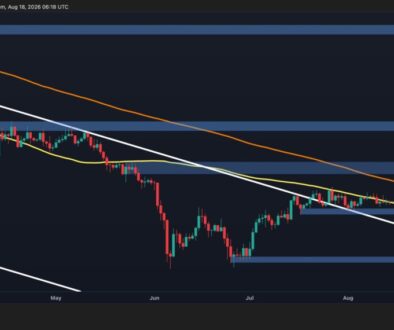
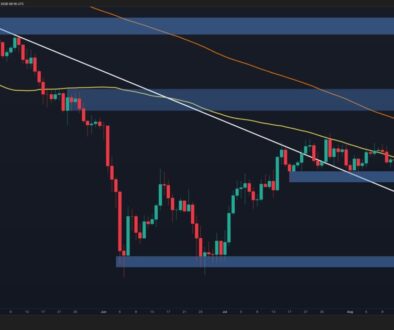
ETH has climbed above several intermediate resistance zones, including the $4,320 and $4,350 levels, signaling renewed buyer interest after the recent weakness. The price action has also broken above a significant bearish trend line that had capped gains on shorter timeframes, removing one technical headwind from the chart.
Currently trading above the 100-hour Simple Moving Average, Ethereum is positioned to test the $4,375 to $4,415 zone where meaningful resistance emerges. This range corresponds with the 76.4% Fibonacci retracement level of the recent pullback, a level that often attracts profit-taking activity from swing traders.
The pair even climbed above $4,400 before there was a pullback, with the recent low formed at $4,300 testing the 50% Fib retracement level of the recent decline.
— Technical Analysis Data
Major resistance: $4,415 and $4,450. Major support: $4,335 and $4,280. The $4,450 level represents a critical threshold; a sustained break above it could unlock further upside toward $4,550 and beyond.
Bullish Scenario: Path to Higher Prices
If Ethereum successfully consolidates above $4,415 and clears the $4,450 resistance, technical analysts see potential for a more substantial advance. A decisive move beyond $4,450 could attract institutional buying and technical breakout traders, opening a path toward the $4,550 zone.
From that level, further momentum could carry ETH toward $4,650 and potentially $4,800 in the near to intermediate term. Such a move would require sustained buying pressure and positive catalyst developments across the broader Ethereum ecosystem.
The hourly Relative Strength Index, currently positioned above the 50 midpoint, supports the notion that upward momentum remains intact. However, the MACD indicator is showing signs of weakening in the bearish zone, suggesting that buying enthusiasm may not yet be at extreme levels—which could either allow for a more sustainable rally or warn of potential exhaustion ahead.
Downside Risk and Support Zones
Should Ethereum fail to overcome resistance near $4,415, the momentum could stall and reverse into a fresh decline. Initial support lies at $4,335, followed by the more significant $4,280 level that previous market structure suggests is important for maintaining the broader recovery narrative.
A break below $4,280 would shift the technical picture back toward weakness, with the next support zones materializing near $4,240 and $4,220—levels that acted as a foundation for the recent bounce. Further deterioration could extend losses toward $4,160, where a more substantial floor might establish itself on the daily timeframe.
If buying pressure fades: $4,335 (initial), $4,280 (major), $4,240 (former base), $4,220 (near-term floor), $4,160 (extended support). Holding above $4,280 remains critical for the bullish case.
Ethereum’s Role in the Broader Blockchain Ecosystem
Ethereum’s significance extends far beyond its price action as a standalone asset. As the leading smart contract platform and host to thousands of decentralized applications, its valuation directly reflects investor sentiment toward blockchain infrastructure and the broader Web3 ecosystem. The network’s utility in powering decentralized finance (DeFi) protocols, non-fungible token (NFT) marketplaces, and emerging applications makes Ethereum price movements particularly important for understanding market confidence in blockchain technology adoption.
The cryptocurrency serves as a benchmark for altcoin strength, often leading broader market cycles in digital assets. Institutional investors and fund managers increasingly monitor Ethereum’s performance as a barometer for technology sector sentiment, given its similarities to traditional tech valuations and growth narratives. The network’s transition to proof-of-stake consensus and ongoing scaling upgrades have positioned Ethereum as a testbed for blockchain innovation, with successful execution directly impacting its long-term value proposition.
Industry Context and Market Dynamics
The current consolidation phase in Ethereum occurs within a cryptocurrency market navigating multiple crosscurrents. Regulatory clarity in major jurisdictions continues to evolve, with approaches in the United States, European Union, and Asia-Pacific regions shaping institutional participation levels. Central bank monetary policy decisions remain a significant driver of risk asset valuations, including cryptocurrencies, as traders balance inflation concerns against economic growth prospects.
The decentralized finance sector, which relies heavily on Ethereum infrastructure, has experienced maturation in recent years with total value locked in DeFi protocols fluctuating based on yield opportunities and risk appetite. Market dynamics show institutional investors increasingly allocating capital to cryptocurrency exposure through regulated products, reducing dependence on retail-driven sentiment that characterized earlier market cycles. This institutional participation trend suggests that Ethereum’s price movements may become less volatile and more aligned with traditional financial market drivers over extended timeframes.
Layer 2 scaling solutions built on Ethereum—including Arbitrum, Optimism, and Polygon—have grown substantially, partially relieving congestion and transaction costs on the main network. The success or failure of these complementary ecosystems influences perception of Ethereum’s competitiveness relative to alternative smart contract platforms like Solana, Avalanche, and others vying for market share in decentralized application hosting.
Market Implications of Current Price Action
The current technical consolidation phase carries significant implications for market participants at multiple levels. For retail traders, the defined resistance and support zones provide clear parameters for position management and risk control. The mixed signal between price structure and momentum indicators—bullish price action coupled with weakening MACD confirmation—mirrors uncertainty pervading the broader cryptocurrency market regarding near-term direction.
For institutional investors, Ethereum’s breakthrough or failure at the $4,450 resistance level may influence allocation decisions and portfolio rebalancing activity. A sustained move above this threshold could trigger algorithmic buying from quantitative funds that track technical breakout patterns, potentially accelerating upside momentum. Conversely, repeated failure to breach resistance might prompt portfolio repositioning away from Ethereum toward perceived higher-conviction opportunities.
Broader cryptocurrency context and market implications remain tied to macroeconomic developments. Inflation data, interest rate expectations, and employment reports will continue shaping risk sentiment in financial markets, with spillover effects impacting digital asset valuations. The correlation between Ethereum and traditional risk assets like technology stocks has increased during certain market cycles, suggesting that macro headwinds affecting equities may pressure cryptocurrency prices regardless of blockchain-specific positive developments.
Entity Background and Market Positioning
Ethereum, launched in 2015 by Vitalik Buterin and a team of developers, has evolved into the dominant decentralized computing platform with billions of dollars in total value locked across its ecosystem. The network’s transition from proof-of-work to proof-of-stake consensus in September 2022—known as “The Merge”—represented a watershed moment reducing energy consumption by 99.95% and aligning the platform with environmental concerns raised by institutional investors and regulators. This upgrade enhanced Ethereum’s credibility as a responsible technology platform capable of scaling sustainably.
The platform’s market position remains strengthened by first-mover advantages in the smart contract space, network effects from existing developer communities, and entrenchment of major applications. Total value locked in Ethereum-based protocols consistently exceeds competing platforms, though the margin has narrowed as alternative ecosystems mature. Ethereum’s governance through a distributed community of developers and stakeholders contrasts with centralized alternatives, reinforcing its narrative as a credibly decentralized infrastructure platform.
Broader Context and Market Implications
Ethereum’s price action mirrors broader recovery attempts seen across major digital assets, including Bitcoin. The cryptocurrency market remains sensitive to macroeconomic factors, regulatory developments, and sentiment shifts in traditional finance markets.
For traders and investors monitoring cryptocurrency price movements, Ethereum’s ability to clear resistance in the $4,400-$4,450 band will serve as a barometer for near-term momentum. Conversely, any failure to hold support near $4,280 would warrant a reassessment of the recovery’s durability.
The technical indicators present a mixed picture: while the RSI supports continued upside potential, the fading MACD momentum suggests caution. This dynamic—bullish price structure paired with weakening momentum confirmation—is typical during consolidation phases when the market gathers strength before the next directional move.
Conclusion and Trading Considerations
Ethereum’s consolidation near multi-week highs presents a critical juncture for the near-term technical outlook. The $4,450 resistance level serves as a crucial decision point: a break above it would validate the recovery narrative and potentially unlock substantial upside toward $4,650 and beyond, while failure to clear this zone could initiate a pullback testing lower support levels. The mixed momentum indicators suggest that patience may be rewarded as the market clarifies direction.
Traders seeking exposure to blockchain market developments should monitor whether Ethereum can establish a clean break above resistance or if consolidation extends, as both scenarios carry different risk-reward implications for positions initiated at current levels. Position sizing and risk management remain paramount given the binary outcomes possible at major technical junctures. The broader blockchain ecosystem’s health and regulatory environment will ultimately determine whether technical resistance levels become launching points for sustained rallies or inflection points for renewed weakness.
As Ethereum continues its evolution as blockchain infrastructure with increasingly mainstream adoption potential, price action at critical technical levels carries significance beyond pure technical trading. Market participants should remain cognizant of both technical indicators and fundamental developments shaping the long-term narrative around Ethereum’s value proposition and competitive positioning within the digital asset landscape.
Get weekly blockchain insights via the CCS Insider newsletter.