Ethereum Price Forming Base – Key Levels That Could Trigger a Breakout
Ethereum has retreated into a consolidation phase near $4,300, creating a critical technical setup that traders are watching closely. The second-largest cryptocurrency by market cap is currently testing whether it can establish a sustainable base or continue lower, with several key price levels determining the next directional move.
Current Market Context and Industry Background
Ethereum’s current consolidation occurs against a backdrop of evolving market conditions in the broader cryptocurrency sector. As the leading smart contract platform, Ethereum processes billions of dollars in daily transaction volume and hosts the majority of decentralized finance (DeFi) applications, making its price action particularly significant for the entire ecosystem.
The Ethereum network has undergone substantial upgrades in recent years, including the transition to proof-of-stake consensus through the Merge in September 2022 and subsequent Shanghai and Dencun upgrades that introduced EIP-4844 blob transactions. These technical improvements have reduced transaction costs and improved network efficiency, yet price discovery continues to be driven primarily by macroeconomic factors and broader cryptocurrency market sentiment.
Institutional adoption of Ethereum has accelerated through spot exchange-traded funds and increased integration into traditional finance infrastructure. This institutional participation has fundamentally altered Ethereum’s market structure, introducing new dynamics that distinguish price action in major cryptocurrencies from traditional assets and smaller-cap digital tokens.
Current Price Structure and Resistance Zones
ETH/USD has declined below the $4,450 level after failing to maintain gains above $4,385. The digital asset briefly climbed past $4,320 and $4,350 resistance points before encountering selling pressure that forced a pullback. This rejection suggests institutional resistance in the upper range of the current consolidation band.
The most recent swing low formed at $4,268, with the price now hovering above the 23.6% Fibonacci retracement level of the recent decline. Ethereum is currently trading beneath both the $4,350 level and the 100-hourly simple moving average, a bearish alignment that suggests near-term sellers remain in control.
The first major resistance is near the $4,385 level. A clear move above $4,385 resistance might send the price toward the $4,420 resistance.
— Technical Analysis, CCS Research
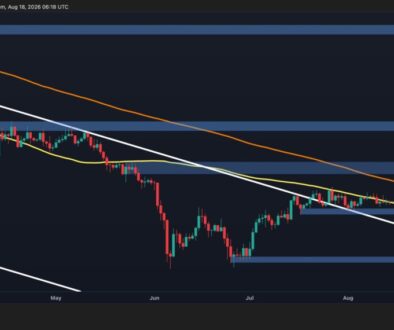
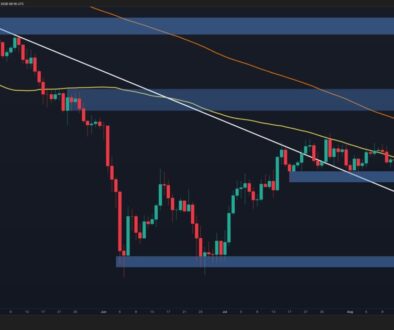
On the technical chart, a bearish trend line has formed with its resistance point positioned near $4,340. This trend line acts as a dynamic ceiling that bulls must overcome to signal a meaningful recovery. Traders should monitor this level closely, as a break above it could confirm the early stages of a reversal.
Upside Breakout Scenario
If Ethereum successfully clears the $4,350 and $4,380 resistance levels, a recovery wave could materialize. The next objective would be the $4,385 level, which represents the recent swing high. Breaking this resistance on volume would likely attract additional buying interest.
Beyond $4,385, the 76.4% Fibonacci retracement level sits near $4,360, followed by secondary resistance at $4,420. An upside break above $4,420 would open the door to a rally toward the $4,500 zone, with the $4,550 level representing extended upside potential in the near term.
$4,385 (recent swing high), $4,420 (secondary resistance), $4,500 (intermediate target), $4,550 (extended target)
This upside scenario would require sustained buying pressure and a break above multiple technical hurdles. Each resistance level overcome would increase the probability of the next leg higher, though traders should verify these moves on elevated volume to confirm conviction.
Downside Risk and Support Zones
The bearish case gains traction if Ethereum fails to clear $4,340. A breakdown below this level could trigger a fresh decline that tests several support layers on the downside.
Initial support appears near $4,265, just above the recent low. If sellers breach this area, the first major support zone sits at $4,220. A decisive close below $4,220 would open the path toward $4,200, with the $4,160 level representing the next key support in a continued decline scenario.
The final major support lies at $4,120. This level represents the outer edge of downside risk in the near term, though a capitulation move below it would signal a more severe correction in progress.
$4,265 (initial), $4,220 (first major), $4,200 (secondary), $4,160 (tertiary), $4,120 (final major)
Technical Indicators and Momentum
The hourly MACD for ETH/USD is losing momentum within the bearish zone, suggesting that selling pressure is beginning to wane. This could precede a reversal, though it does not yet confirm one. Momentum indicators often roll over before price action follows, creating early warning signals for traders.
The hourly relative strength index is trading near the 50 midpoint, indicating neither overbought nor oversold conditions. This neutral positioning leaves room for movement in either direction and means that neither bulls nor bears currently have a clear technical advantage.
The overall technical setup presents a balanced picture. Ethereum is consolidating at a critical juncture, with the next substantial move likely to be determined by how the asset interacts with the $4,340 trend line resistance and the $4,350 zone above it.
Market Implications and Broader Ecosystem Impact
Ethereum’s current price consolidation carries significant implications beyond individual traders. The cryptocurrency’s market capitalization, which fluctuates with price action around current levels, represents a substantial portion of the total cryptocurrency market value. Major moves in Ethereum often precede broader cryptocurrency market shifts, as ETH is frequently used as a leading indicator by institutional investors and fund managers.
DeFi applications built on the Ethereum network process collateral values that move in tandem with ETH pricing. A significant decline from current levels could trigger liquidation cascades in leveraged DeFi positions, potentially amplifying downside pressure. Conversely, a decisive breakout above resistance could trigger risk-on sentiment across the cryptocurrency sector and encourage renewed capital allocation toward Ethereum-based projects.
The consolidation pattern currently observed suggests market participants are reassessing valuations before committing to directional positions. This indecision phase typically precedes volatile moves, making it crucial for traders to position defensively and wait for clear confirmation signals.
Trading Implications and Strategic Considerations
For bullish traders, a confirmed break above $4,385 would represent a high-probability setup for a continuation trade. Position entries could be considered on a close above the trend line, with stops placed beneath $4,320 to manage risk appropriately. Volume confirmation becomes essential, as breakouts without supporting buying interest often fail and reverse sharply.
Bearish traders should watch for a failure at $4,340, which could signal weakness. A breakdown below $4,265 would provide additional confirmation for short positions, with the $4,220 level offering an initial profit target. Risk management remains paramount, as false breakdowns in either direction can generate significant losses.
The current consolidation pattern suggests that Ethereum price action is forming a base before a significant move. Traders should avoid forcing positions in either direction during this indecision phase and instead wait for a clear breakout with supporting volume. The technical levels outlined above will serve as critical decision points for determining whether the next major move is higher or lower.
Conclusion and Forward Outlook
Ethereum’s consolidation near $4,300 represents a pivotal moment for the cryptocurrency’s near-term trajectory. The technical setup clearly defines both upside and downside objectives, providing traders with quantifiable levels for position management. Success at the $4,340 trend line resistance would likely catalyze a recovery toward the $4,500-$4,550 zone, while breakdown below $4,265 would confirm continuation toward lower support levels.
As the leading smart contract platform and host to substantial DeFi value, Ethereum’s price action directly impacts the broader cryptocurrency ecosystem. Traders monitoring this consolidation should prioritize risk management and wait for clear breakout signals before committing capital. The convergence of technical resistance levels, moderate momentum indicators, and institutional participation creates an environment where measured trading discipline will likely determine success over the coming weeks.
Get weekly blockchain insights via the CCS Insider newsletter.