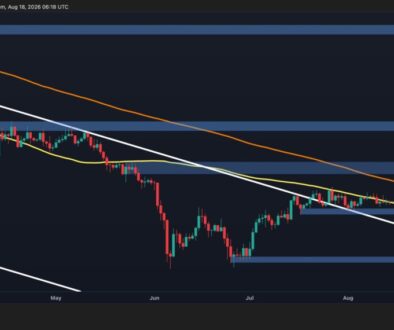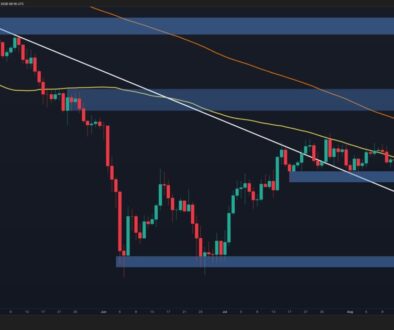
Ethereum Coils For A Breakout As IH&S + Heavy Accumulation Emerges
Ethereum is displaying a confluence of technical signals that analysts interpret as potential precursors to a sustained rally, combining classical reversal formations with evidence of significant accumulation by institutional-scale buyers. The setup involves an inverse head and shoulders pattern materializing on weekly timeframes alongside support holding at key Fibonacci levels, creating what some market observers view as a bottoming formation that could trigger meaningful upside movement.
The Technical Setup Takes Shape
An inverse head and shoulders pattern has developed on Ethereum’s weekly chart, according to analysis from crypto strategist Donald Dean. This reversal structure typically emerges following extended downside pressure and historically precedes periods of strengthening momentum.
The formation’s mechanics work as follows: after prolonged weakness, buyers gradually absorb selling pressure at successively higher lows, creating the characteristic three-valley pattern. When price breaks above the neckline—the resistance line connecting the two shoulder peaks—it signals a potential shift from distribution to accumulation.
The pattern shows textbook characteristics of a bottoming process, with solid support materializing near critical Fibonacci retracement levels.
— Donald Dean, Crypto Strategist
Dean noted that recent price action has reinforced this narrative. A hammer candle formation on the weekly timeframe—where buyers pushed price higher after initial selling—suggests active demand has returned following declines. This candlestick pattern typically indicates that buyers are absorbing weakness rather than capitulating to it.
The 50% Fibonacci retracement around $2,750 has provided critical support, maintaining the bullish technical framework and preventing confirmation of a deeper downtrend.
Targets and Mathematical Confluence
The technical analysis framework projects multiple upside targets derived from the inverse head and shoulders formation combined with Fibonacci-based calculations. These levels represent zones where historical resistance or mathematical extensions converge.
Ethereum’s first major technical objective sits at $4,109, a level that would allow the asset to reclaim previous support and resistance zones. Achieving this target would represent material confirmation that the reversal pattern is functioning as intended and that momentum has genuinely shifted to the upside.
The analysis extends further to $5,766, where a particularly significant mathematical alignment emerges. Dean identified the 1.618 Golden Ratio extension—a Fibonacci-derived level—clustered near $5,793.51 in this vicinity. When multiple technical and mathematical methodologies converge at similar price levels, analysts argue such zones tend to attract larger institutional orders and serve as areas where price either finds resistance or reverses sharply.
- $4,109 — First major objective from inverse head and shoulders formation
- $5,766–$5,793 — Golden Ratio extension and significant confluence zone
Accumulation Patterns and Institutional Flow
Beyond the chart patterns themselves, onchain and market microstructure data are signaling heavy accumulation activity. Large buyers have been steadily acquiring Ethereum at current price levels, consistent with behavior typically attributed to institutional market participants.
This institutional positioning becomes significant when examined alongside the technical setup. When sophisticated traders identify reversal formations on publicly available charts, they often frontrun those formations by accumulating in advance. The convergence of visible technical signals with measurable buying pressure suggests that smart money may already be positioning for the move that technical analysts are identifying.
Accumulation metrics show sophisticated market participants are positioning aggressively ahead of any potential breakout, complementing the chart-based narrative.
— Market Analysis Data
This dynamic creates a self-reinforcing scenario: institutional accumulation provides liquidity that can fuel breakouts, while the technical patterns that institutions recognize validate their positioning decisions. Whether causality flows from technical recognition to accumulation or vice versa remains debated, but the correlation between the two supports the broader bullish thesis.
Market Implications and Industry Context
Ethereum’s potential breakout occurs within a broader cryptocurrency market environment characterized by increasing institutional adoption and regulatory clarity in major jurisdictions. The second-largest blockchain platform by market capitalization serves as infrastructure for decentralized finance, non-fungible token markets, and enterprise applications, making its price action particularly influential across the digital asset ecosystem.
A sustained rally in Ethereum would likely trigger capital rotation from Bitcoin and smaller-cap altcoins, intensifying competition for limited investment dollars within cryptocurrency portfolios. Institutional investors increasingly allocate Ethereum exposure as part of diversified digital asset strategies, meaning meaningful price appreciation could attract fresh capital flows from traditional finance.
The implications extend beyond pure price speculation. Ethereum’s layer-2 scaling solutions and competing blockchains depend partly on Ethereum’s relative strength to maintain ecosystem confidence. A successful breakout would validate the technical infrastructure investments made by network participants and could accelerate adoption of decentralized applications dependent on Ethereum’s network effects.
Context and Broader Considerations
Technical analysis relies on the premise that historical price patterns tend to repeat, as human psychology and market dynamics remain relatively constant across market cycles. Inverse head and shoulders formations have preceded significant rallies in numerous asset classes and timeframes throughout financial history.
However, cryptocurrency price action can diverge sharply from traditional technical expectations, particularly during periods of regulatory uncertainty, macroeconomic stress, or shifts in capital flows. The crypto market remains substantially smaller and less mature than traditional equity or commodity markets, creating conditions where patterns may break or resolve differently than historical precedent suggests.
Additionally, mathematical confluences—while analytically compelling—do not guarantee price interaction at projected levels. Many technical traders focus on these zones, which can create self-fulfilling dynamics, but market price ultimately reflects the aggregate supply and demand created by all market participants, not purely geometric calculations.
Macroeconomic factors warrant particular attention. Federal Reserve monetary policy, inflation dynamics, and broader risk sentiment among institutional investors significantly influence whether capital rotates into risk assets like cryptocurrency. A deterioration in macroeconomic conditions could overwhelm technical bullish setups regardless of chart pattern quality.
For traders and investors monitoring Ethereum developments, the near-term focus would logically center on whether price can sustain above the inverse head and shoulders neckline and whether accumulation patterns persist. A failure to hold support at the $2,750 Fibonacci level would suggest the bullish thesis requires reassessment.
Entity Background and Market Position
Ethereum’s significance within the cryptocurrency landscape stems from its role as the leading smart contract platform, enabling developers to build and deploy decentralized applications without relying on centralized intermediaries. The network’s transition to proof-of-stake consensus in 2022 reduced energy consumption significantly while enhancing transaction throughput, addressing previous criticisms and improving appeal to institutional investors concerned with environmental impact.
Current market conditions show Ethereum trading substantially below its previous all-time highs, creating psychological and technical opportunities for mean reversion trades. The distance between current prices and previous peaks provides ample room for significant percentage gains while still requiring massive capital inflows to exceed historical price records.
Ethereum’s current setup presents multiple technical signals—an inverse head and shoulders pattern, Fibonacci support holding, hammer candle confirmation, and measurable accumulation activity—that align with bullish market positioning. Near-term targets at $4,109 and longer-term confluence zones near $5,766–$5,793 represent zones where price may encounter resistance or catalyze further institutional participation.
The convergence of technical factors, institutional positioning, favorable industry developments, and macroeconomic considerations creates conditions where Ethereum could experience material appreciation. However, technical formations remain probabilistic rather than deterministic. Market conditions evolve, regulatory environments shift, and price discovery ultimately reflects real-world supply, demand, and capital flows rather than historical patterns alone. Investors should monitor support levels closely and remain cognizant of broader market conditions that could invalidate even well-structured technical theses.
Get weekly blockchain insights via the CCS Insider newsletter.