Dogecoin Price Prediction: $0.40 In The Next 2 Weeks, But It’s Another Penny Crypto That Will Dominate 2025 Gains
Dogecoin continues to attract near-term trader attention with predictions of a move toward $0.40 in coming weeks, yet the broader cryptocurrency market is increasingly focused on emerging decentralized finance projects positioning themselves for substantial 2025 gains. While DOGE remains in the spotlight, market dynamics reveal a shift in investor focus toward newer platforms building DeFi infrastructure.
Dogecoin’s Current Position and Near-Term Outlook
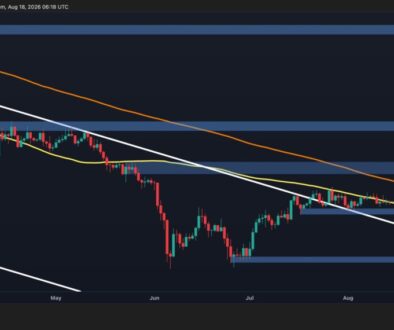
Dogecoin traded near $0.2305 as of mid-August, consolidating within a narrow $0.22–$0.23 range over recent sessions. Technical formations, including golden-cross patterns, have encouraged some bullish positioning among retail traders eager for directional movement.
Whale accumulation activity has provided modest support for price stability. However, meaningful upside momentum has remained elusive, with traders watching resistance near $0.24 as a potential catalyst for broader strength. The predicted move to $0.40 would represent a significant breakout requiring sustained buying pressure and a fundamental shift in market sentiment.
Limited price action prevails despite technical setups suggesting bullish configurations, with traders awaiting a decisive break above key resistance levels.
— Market Analysis
Dogecoin’s volatility stems partly from its cultural meme-coin status, which continues to drive speculation cycles. Institutional adoption remains minimal compared to Bitcoin and Ethereum, keeping DOGE susceptible to retail trading patterns and social media sentiment shifts.
Dogecoin consolidated near $0.23 with resistance identified around $0.24, requiring substantial buying volume to reach predicted $0.40 targets within two weeks.
The Historical Context of Meme Coins
Since its 2013 inception as a joke by software engineers Billy Markus and Jackson Palmer, Dogecoin has defied conventional valuation models. Traditional financial frameworks struggle to price assets driven primarily by community sentiment and internet culture. The 2021 bull market demonstrated this phenomenon vividly, when Dogecoin reached $0.73 driven largely by social media campaigns and celebrity endorsements rather than fundamental network developments.
This historical pattern reveals an important market truth: while individual traders may capture gains during sentiment-driven rallies, sustained wealth creation rarely emerges from tokens lacking operational utility. Dogecoin’s transaction volume remains modest compared to its market capitalization, suggesting limited real-world adoption for payments—the original intended use case.
The cryptocurrency market has matured significantly since Dogecoin’s creation. Institutional investors now demand audited financials, security protocols, and governance structures before committing capital. This evolution creates genuine opportunities in projects meeting these criteria, while leaving speculative tokens increasingly vulnerable to sentiment reversals.
DeFi Projects Gaining Institutional Interest
While Dogecoin captures headlines through price speculation, the decentralized finance sector is experiencing genuine infrastructure development. Projects focused on lending protocols, stablecoin innovations, and security auditing are attracting capital from investors seeking longer-term value creation rather than short-term volatility trades.
These emerging platforms address real problems within DeFi: counterparty risk, liquidity fragmentation, and ecosystem trust. Unlike meme coins, which rely heavily on community sentiment, DeFi lending protocols generate value through transaction fees, collateral efficiency, and user adoption of financial services.
The distinction matters for investors evaluating 2025 opportunities. Speculative coins may deliver sharp percentage gains over days or weeks, but structural growth comes from projects solving genuine market inefficiencies in decentralized finance.
Industry Structure and Market Implications
The DeFi sector has evolved into distinct verticals, each addressing specific financial services gaps. Decentralized exchanges (DEXs) now handle billions in daily trading volume, demonstrating that users actively prefer non-custodial trading mechanisms. Lending protocols like Aave and Compound have established sustainable fee models generating billions in cumulative value to token holders. Stablecoin platforms have become critical infrastructure, with protocols managing hundreds of billions in user deposits.
This structural development creates a competitive moat around established players while opening opportunities for emerging projects targeting underserved niches. Cross-chain interoperability projects, for instance, address the fragmentation problem created by multiple competing blockchains. Yield optimization platforms solve the complexity problem for retail users seeking efficient capital deployment across multiple DeFi venues.
The market implication is clear: projects with genuine utility and defensible competitive advantages will attract sustained institutional capital throughout 2025. This contrasts sharply with sentiment-driven tokens that experience cyclical volatility unmoored from underlying fundamentals.
Security and Audit Standards in DeFi
Professional audit firms have become essential gatekeepers for DeFi credibility. Projects submitting to third-party security reviews signal commitment to user protection and risk management. These audits examine smart contract code, economic models, and operational procedures.
The $50,000 bug bounty trend reflects industry maturation. Rather than relying solely on internal testing, leading projects incentivize external security researchers to identify vulnerabilities before mainnet deployment. This crowdsourced approach has proven more effective than traditional software development cycles.
Professional security audits and bug bounty programs have become baseline requirements for investor confidence in DeFi protocols entering 2025.
— Security Industry Standards
Third-party audits, bug bounties, and transparent governance structures now differentiate legitimate DeFi projects from speculative tokens lacking operational substance.
Presale Dynamics and Early-Stage Investment
Early-stage DeFi projects use presale rounds to raise capital while offering price appreciation potential to initial backers. Projects that successfully raise capital across multiple presale phases demonstrate market demand and execution credibility. Completion of presale stages, price increases between rounds, and growing investor participation suggest sustained interest.
However, presale investments carry substantial risk. Early-stage protocols are unproven at scale, regulatory treatment remains uncertain, and token lock-up periods create liquidity constraints. Investors in presale stages must evaluate the team’s track record, technical specifications, and realistic roadmap execution timelines.
Successful presale projects typically feature experienced teams with previous blockchain ventures, detailed tokenomics addressing inflation and incentive alignment, and clear use-case definitions explaining how the protocol generates value. Projects lacking these attributes face higher failure rates and greater downside risk during market downturns.
The contrast between speculative coins and infrastructure projects centers on this fundamental point: presale participation in legitimate DeFi protocols offers exposure to real revenue generation, while meme coin speculation relies on secondary market price movements detached from underlying utility.
Regulatory Environment and 2025 Expectations
Regulatory clarity has become a decisive factor differentiating winning projects from struggling ones. The SEC’s framework for token classification and the emergence of stablecoin regulations provide more certainty around which projects face regulatory headwinds. Projects proactively addressing compliance requirements position themselves to capture institutional capital fleeing jurisdictional uncertainty.
Major economies including the European Union, Singapore, and the United States have established regulatory pathways for DeFi platforms. Projects operating within these frameworks gain institutional access, while those operating in regulatory gray areas face potential service restrictions. This dynamic will accelerate throughout 2025 as banking partners require legal certainty before processing DeFi-related transactions.
Tokens like Dogecoin, lacking any regulatory framework or operational governance, become increasingly peripheral to institutional capital flows. Meanwhile, compliant DeFi protocols with clear utility and transparent operations attract hedge funds, asset managers, and corporate treasuries.
Looking Forward: 2025 Landscape
The cryptocurrency market in 2025 will likely bifurcate further between narrative-driven tokens and functional protocols. Regulatory clarity in major jurisdictions will accelerate this separation, as projects with genuine compliance frameworks attract institutional capital.
Bitcoin and Ethereum will remain market anchors, but secondary opportunities will emerge in verticals solving specific problems: stablecoin infrastructure, cross-chain interoperability, regulatory-compliant lending, and tokenized traditional assets.
Dogecoin may experience trading rallies, but sustained value creation requires moving beyond meme status toward actual use cases. For most investors, 2025 gains will come from projects building operational infrastructure rather than tokens riding sentiment waves.
The presale model will continue attracting retail participation, but successful projects will distinguish themselves through transparent governance, professional security practices, and demonstrated progress toward mainnet functionality. Investors capable of distinguishing between speculative rallies and structural value creation will position themselves advantageously for the next market cycle.
Get weekly blockchain insights via the CCS Insider newsletter.