Bank of America CEO says Trump will ease trade tensions in 2026
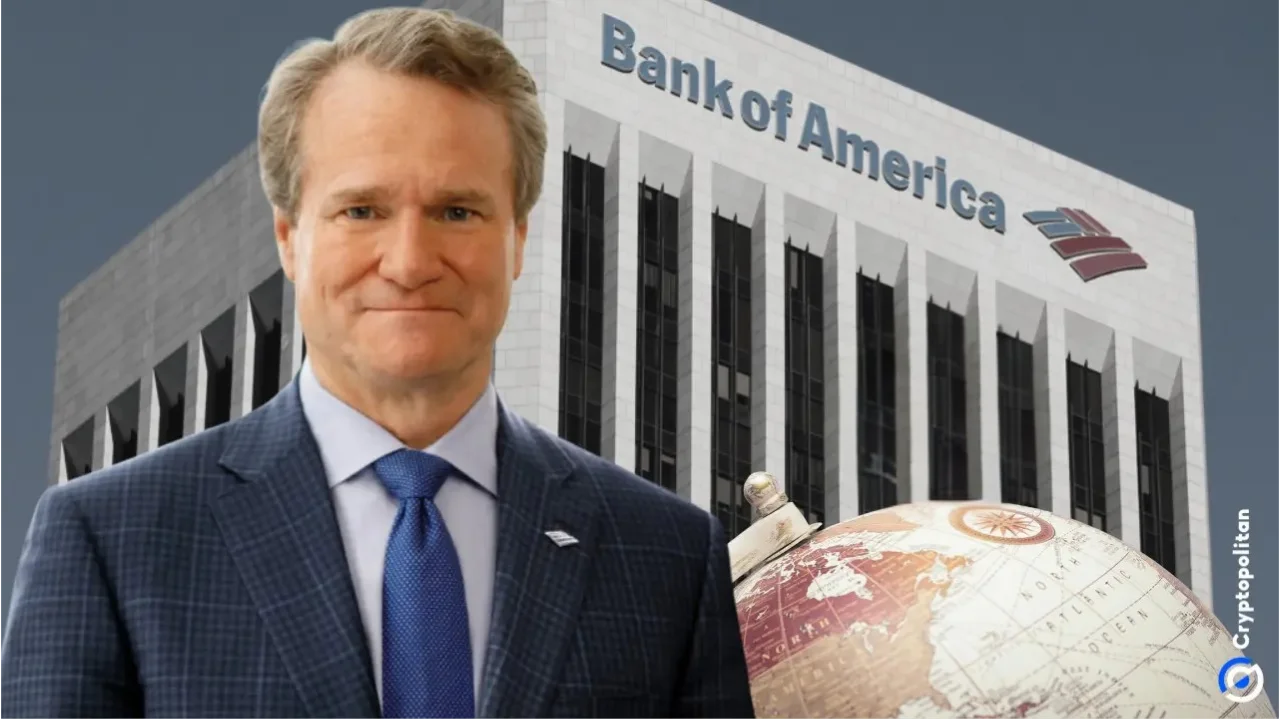
Bank of America’s chief executive believes the Trump administration will pivot toward easing trade tensions in 2026, even as tariff policies continue to reshape economic conditions across the United States. During an appearance on CBS News’ Face the Nation, Brian Moynihan outlined expectations for a period of de-escalation rather than further trade friction, suggesting that average tariff rates could stabilize around 15% rather than climb higher.
Tariff Trajectory and Market Outlook
The remarks from Moynihan arrive as markets grapple with the effects of successive rounds of import duties. Since taking office, the Trump administration has implemented tariffs in phases, beginning with an approximate 10% baseline across most imported goods in April.
By July, new tariffs were introduced targeting key trading partners, pushing average rates to approximately 15.2%. According to recent data, the overall US tariff rate has climbed from roughly 2% before Trump’s return to office to approximately 14% currently.
Going from a 10% rate across the board to 15% for most countries is not a huge change.
— Brian Moynihan, Chairman and CEO, Bank of America
Moynihan’s characterization of the rate adjustment as modest signals confidence that market volatility tied to tariff uncertainty may ease. His framing suggests the financial sector views the current trajectory as more measured than the initial shock to markets earlier in the year.
US average tariff rates have increased from 2% to 14% since Trump took office, with new policies pushing select trading partners to 15.2% under current proposals.
Bank of America’s Position in the Financial Sector
As one of the largest financial institutions in the United States, Bank of America maintains significant exposure to both domestic and international markets. The bank’s operations span consumer banking, wealth management, and corporate and investment banking divisions, making it highly sensitive to macroeconomic conditions shaped by trade policy.
Moynihan’s optimistic stance on tariff stabilization reflects Bank of America’s strategic interest in reducing uncertainty that constrains lending, investment, and consumer spending. Financial institutions benefit from stable policy environments where they can more accurately model risk and price financial products.
The bank’s quarterly earnings reports have consistently noted trade policy as a variable affecting client sentiment and capital allocation decisions. By publicly endorsing a de-escalation narrative, Moynihan seeks to influence market psychology and reduce the volatility that creates headwinds for financial performance across the sector.
China and Regional Trade Agreements
The Bank of America executive acknowledged that China presents a distinct challenge within the broader tariff framework. Beijing’s status as the world’s second-largest economy and a major US trading partner creates different dynamics than relationships with other nations.
US-China trade tensions represent the most significant variable in the tariff equation. China accounts for approximately 20% of US imports and receives roughly 7% of US exports, making bilateral negotiations critical to overall trade policy outcomes. The two nations remain in active dispute over intellectual property, manufacturing practices, and market access—issues that transcend simple tariff negotiations.
Additionally, Moynihan noted that a scheduled review of the US-Mexico-Canada Agreement in 2026 will test whether trade tensions can genuinely ease. These negotiations could determine the trajectory of North American commerce over the coming years. The USMCA, which replaced NAFTA in 2020, serves as the framework for approximately $1.3 trillion in annual trilateral trade and involves complex provisions on labor standards, environmental compliance, and digital commerce.
Despite these complex negotiations ahead, Moynihan maintained that visible progress is already apparent. His message attempted to reassure stakeholders that the administration has a coherent strategy rather than pursuing indefinite escalation.
Sectoral Impact and Supply Chain Realignment
Tariff policies have prompted significant realignment across multiple industries. Manufacturing sectors dependent on imported components—including automotive, electronics, and industrial equipment—face margin compression as production costs rise. Some companies have begun reshoring operations or diversifying sourcing away from tariffed nations, representing long-term structural shifts in global supply chains.
Consumer goods companies face different pressures, as tariffs on finished products imported from Asia and elsewhere flow through to retail prices. Early data suggests consumers have absorbed some price increases, though demand elasticity varies significantly by product category and income level.
The financial sector’s concern centers on whether tariff-driven uncertainty suppresses business investment and consumer confidence sufficiently to trigger economic contraction. Bank lending standards typically tighten during periods of heightened uncertainty, reducing credit availability precisely when some businesses need financing to absorb higher input costs.
Small Business Headwinds and Labor Market Shifts
According to Moynihan’s assessment, small businesses faced genuine pressure during the second quarter due to tariff increases and policy uncertainty. However, the pressure appears to have eased as the year progressed and rate increases moderated.
Interestingly, Moynihan shifted focus to what he characterized as a more pressing challenge for small enterprises: workforce recruitment. Rather than tariffs, he argued that finding and retaining employees now represents the primary constraint on business growth.
What small businesses find challenging at the moment is not tariffs, but rather locating employees.
— Brian Moynihan, Chairman and CEO, Bank of America
This assessment reflects broader labor market dynamics, with Moynihan noting that employment challenges persist despite immigration policies adopted by the Trump administration. Those policies had not yet fully taken effect at the time of his remarks, suggesting that workforce pressures could intensify or ease depending on implementation details.
The labor shortage narrative carries particular significance because it suggests potential inflationary pressure independent of tariff effects. If businesses cannot find workers to expand operations, wage pressures may emerge even as tariffs stabilize. This dynamic complicates the Federal Reserve’s monetary policy decisions, which must balance inflation concerns against growth considerations.
Small business sentiment shifted from tariff concerns in Q2 to labor market challenges by the time of Moynihan’s remarks, indicating evolving economic headwinds throughout the year.
Legal and Administrative Perspectives
Within the Trump administration, officials have expressed confidence in the legal foundation for tariff policies. Kevin Hassett, director of the National Economic Council, stated that the administration expects the US Supreme Court to rule favorably on the constitutional authority to impose tariffs.
This legal confidence underpins the administration’s willingness to maintain and adjust tariff policies without significant concern about court challenges overturning the entire framework. However, ongoing debates among economists and trade analysts continue regarding whether tariff escalation ultimately benefits the broader economy.
Constitutional scholars have noted that presidential authority under Section 301 of the Trade Act and other statutory provisions grants substantial discretion in trade matters. Legal challenges would face high barriers in establishing that tariff implementation violated constitutional constraints.
Economic Modeling and Market Implications
Moynihan’s perspective as a major financial institution leader carries weight in policy circles. His statement that de-escalation rather than escalation is anticipated represents a significant signal to markets that trade tensions may not persist indefinitely.
The Bank of America CEO’s comments suggest the financial sector is positioning for a scenario where tariff rates stabilize rather than climb further. This outlook, if accurate, could provide some relief to corporate earnings forecasts and investment planning assumptions across sectors dependent on international supply chains.
Financial modeling by major institutions increasingly incorporates tariff stabilization assumptions rather than continued escalation scenarios. This shift in baseline forecasts affects equity valuations, credit spreads, and currency movements. Sectors most sensitive to tariff levels—including industrials, consumer discretionary, and technology—have shown increased correlation with tariff policy announcements.
Path Forward and Conclusion
As 2026 approaches, the actual outcome of trade policy will depend on negotiating outcomes with major partners, court decisions, and political calculations within the Trump administration. Moynihan’s remarks represent an educated assessment from someone monitoring economic data continuously, but they remain a forecast rather than a guarantee of policy direction.
The Bank of America CEO’s public stance serves multiple purposes simultaneously: it reassures market participants that tariff uncertainty may be waning, it signals to the administration that financial sector support hinges on eventual de-escalation, and it positions Bank of America as a credible voice in policy debates surrounding economic conditions.
If tariff rates do stabilize near 15% and remain there through 2026, businesses would gain the certainty necessary to make long-term investment decisions. This outcome would likely prove supportive for economic growth and financial sector profitability. Conversely, if tariff rates continue climbing or renewed negotiations trigger fresh uncertainty, the positive sentiment Moynihan expressed could prove premature.
The tariff policy environment remains fluid, with multiple decision points and negotiation opportunities ahead. Moynihan’s optimistic framing reflects hope that pragmatic economic considerations will eventually constrain escalation dynamics, but the path from current conditions to that stabilized state remains uncertain and contested across political and economic spheres.
Original reporting: cryptopolitan.com
Get weekly blockchain insights via the CCS Insider newsletter.