Anthropic CEO refutes ‘inaccurate claims’ from Trump’s AI czar David Sacks
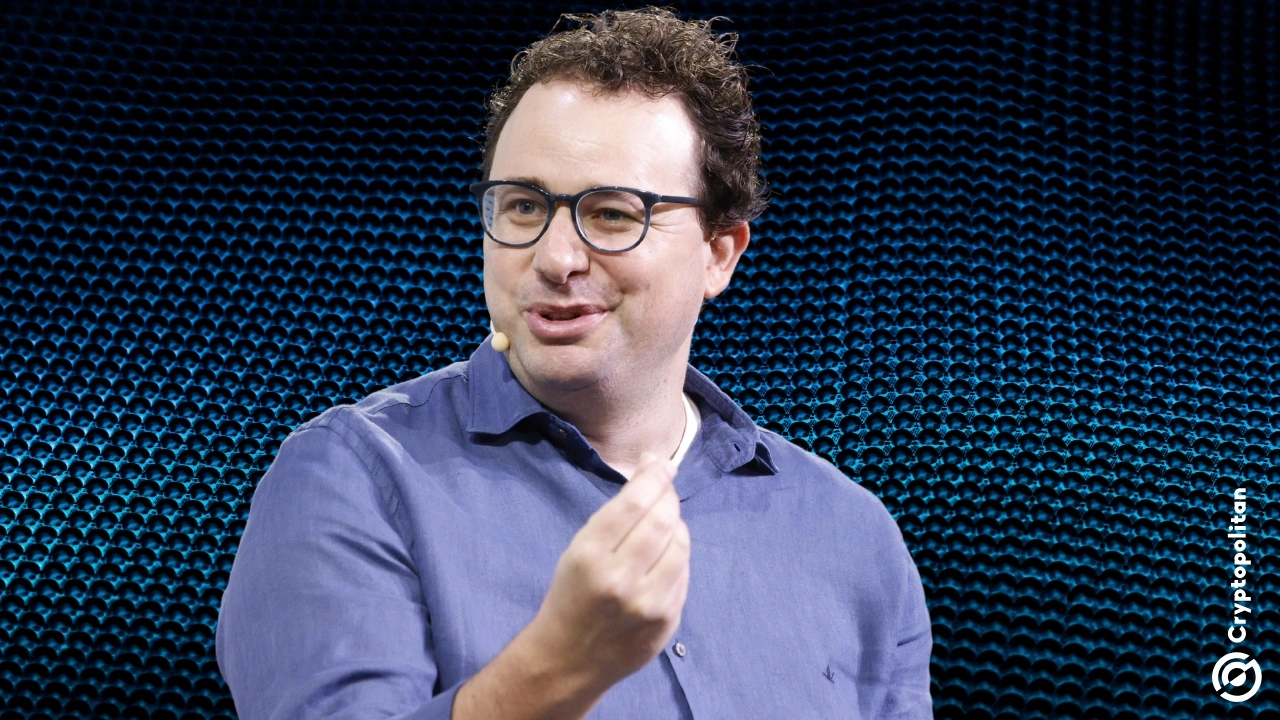
The leadership of Anthropic has publicly disputed characterizations of the company’s artificial intelligence regulatory approach, following recent criticism from a Trump administration official overseeing both AI and crypto policy. The dispute centers on fundamental disagreements about how emerging AI technologies should be governed and whether safety-focused positions constitute genuine concern or regulatory overreach.
Dario Amodei, chief executive of the AI startup valued at $183 billion, issued a statement addressing what he described as mischaracterizations of his company’s policy positions. His remarks come in response to David Sacks, who serves as the current AI and crypto czar in the Trump administration, and who had accused Anthropic of advancing a progressive agenda while deliberately inflaming regulatory concerns to influence government oversight.
The exchange reflects a broader ideological tension within technology circles regarding the proper balance between innovation velocity and risk mitigation in artificial intelligence development.
The Core Disagreement Over Regulatory Strategy
Sacks had criticized Anthropic after Jack Clark, the company’s co-founder and head of policy, published an essay titled “Technological Optimism and Appropriate Fear.” The piece prompted online debate about the appropriate regulatory framework for advanced AI systems. Sacks responded forcefully, characterizing the company’s approach as a “sophisticated regulatory capture strategy based on fear-mongering” designed to damage the broader startup ecosystem.
In his rebuttal, Amodei directly addressed the assertion that Anthropic benefits from state-level regulatory fragmentation. He emphasized that the company maintains deep relationships throughout the startup world. “We work with tens of thousands of startups and partner with hundreds of accelerators and venture capital firms,” Amodei wrote in his statement, noting that his company’s foundational AI model powers numerous newly formed AI-native businesses.
Damaging that ecosystem makes no sense for us. Claude is powering an entirely new generation of AI-native companies.
— Dario Amodei, CEO, Anthropic
Amodei’s position on regulatory architecture remains consistent with Anthropic’s longstanding advocacy for federal uniformity rather than patchwork state regulations. He characterized the company’s approach as principled engagement: proposing alternatives when disagreements emerge while supporting aligned positions.
Strategic Alignment and Industry Support
Beyond Amodei’s direct response, prominent figures within the technology investment community have publicly supported Anthropic’s approach. Reid Hoffman, a billionaire investor and LinkedIn co-founder whose venture capital firm Greylock has invested in Anthropic, published statements characterizing the startup as “one of the good guys” within the artificial intelligence sector.
Hoffman’s backing carries particular weight given his stature in technology circles and his own track record in identifying consequential companies. His support signals that concerns about Anthropic’s regulatory positioning may not reflect widespread skepticism among technology leaders focused on long-term innovation.
Anthropic achieved its $183 billion valuation in just four years, making it one of the fastest-valued startups in history. The company competes directly with OpenAI and other artificial intelligence firms in developing large language models and related technologies.
Market Implications and Competitive Positioning
The regulatory tension surrounding Anthropic carries substantial implications for the broader artificial intelligence market. Anthropic operates within a highly competitive landscape where regulatory clarity—or uncertainty—directly impacts business development timelines and investment decisions. Competitors including OpenAI, Google DeepMind, and emerging Chinese AI firms face similar questions about regulatory alignment, but Anthropic’s elevated public profile in this dispute places it at the center of policy attention.
The market has demonstrated significant appetite for AI capabilities that can be deployed safely and responsibly. Enterprise customers evaluating large language models frequently cite governance frameworks and safety commitments as decisive factors in vendor selection. Anthropic’s public commitment to these considerations, while drawing criticism from some administration officials, has resonated with corporate procurement teams focused on managing reputational and operational risks.
This dynamic creates an interesting market segmentation where different customer constituencies prioritize different vendor attributes. Financial services institutions, healthcare organizations, and government agencies often explicitly require vendors with demonstrated safety governance practices. This demand validates Anthropic’s strategic positioning even when that positioning generates controversy among some policymakers.
The Intersection of AI and Crypto Policy
Sacks’ dual authority over both artificial intelligence and cryptocurrency policy reflects the Trump administration’s consolidation of oversight for emerging digital technologies. This positioning gives him influence over regulatory questions affecting both sectors simultaneously, creating potential for connected policymaking—or conflicting priorities.
The debate between Sacks and Anthropic touches on broader questions about how the United States should position itself competitively in artificial intelligence development while managing genuine safety and governance concerns. These questions have moved beyond academic discussion into direct policy disagreements with real consequences for company operations.
For investors and observers monitoring cryptocurrency and blockchain developments, the regulatory posturing around AI represents another dimension of how government approaches emerging technology sectors. The same officials making decisions about artificial intelligence governance also shape policy for digital assets.
The intersection of these policy domains suggests that the administration’s overall philosophy regarding innovation and regulation will likely apply consistently across artificial intelligence, cryptocurrency, and other emerging technologies. Sacks’ criticism of Anthropic’s regulatory engagement strategy may foreshadow a broader preference for minimal government involvement in technological development, which would influence policy across multiple sectors simultaneously.
Anthropic’s Corporate Background and Mission
Founded in 2021 by former OpenAI researchers including Dario and Daniela Amodei, Anthropic was explicitly established to develop AI systems that are safer, more interpretable, and more reliable than existing alternatives. The company’s founding mission centered on building AI that could be confidently deployed in high-stakes applications without creating unintended harms or failures.
This foundational commitment to safety-focused development distinguishes Anthropic’s approach from purely commercial competitors. The company has published extensive technical research on AI interpretability, alignment, and constitutional AI methods—approaches designed to make AI systems behave according to specified values and principles. This technical work forms the foundation for the company’s policy advocacy positions.
Anthropic’s structure as a public benefit corporation further reflects its commitment to stakeholder governance beyond pure shareholder maximization. This legal framework, while not unique, remains relatively uncommon among venture-backed AI companies and signals institutional commitment to the safety and societal considerations that Sacks dismisses as progressive activism.
Positioning for the Regulatory Landscape Ahead
Amodei’s statement attempts to reposition Anthropic as a constructive partner to the administration rather than an antagonistic force. He emphasized alignment on “key areas of AI policy” and expressed willingness to collaborate with policymakers “serious about getting this right,” potentially offering an olive branch to skeptical officials.
I fully believe that Anthropic, the administration, and leaders across the political spectrum want the same thing: to ensure that powerful AI technology benefits the American people and that America advances and secures its lead in AI development.
— Dario Amodei, CEO, Anthropic
This framing attempts to recast the disagreement as tactical rather than ideological—a difference in preferred approach rather than fundamental opposition. Whether this rhetorical repositioning succeeds depends partly on future policy actions and whether Anthropic’s actual positions align with administration priorities as they crystallize.
Anthropic’s position advocates for federal regulatory uniformity over state-by-state approaches, arguing this benefits both innovation and coherent safety standards. This stance directly opposes Sacks’ characterization of the company as prioritizing regulatory complexity.
The dispute between Anthropic’s leadership and Trump’s AI czar will likely shape how the administration approaches artificial intelligence governance over the coming years. Both sides are attempting to define the narrative around what constitutes responsible AI development and appropriate regulatory oversight.
For the broader technology ecosystem, the outcome of this positioning contest carries significance. It will influence how far the administration leans toward innovation-first approaches versus precautionary governance frameworks in its actual policy outputs. The administration’s decisions on AI regulation may establish precedents affecting how it addresses other emerging technology sectors, including blockchain and digital assets.
Recent months have seen accelerating debate within government and industry about how to balance artificial intelligence progress with appropriate safeguards. This particular clash between Amodei and Sacks represents one visible manifestation of that larger debate, with implications extending across multiple technology sectors and policy domains.
Looking Forward: Expected Developments
The trajectory of this dispute will depend substantially on concrete regulatory actions the administration takes regarding artificial intelligence development and deployment. Anthropic and other AI companies operate under increasing scrutiny regarding their actual governance practices, not merely their public statements about governance philosophy.
Federal policy decisions on AI safety standards, export controls, compute allocation, and research licensing will test whether the administration’s approach prioritizes rapid capability development above all other considerations, or whether it maintains space for diverse viewpoints on responsible development practices. These decisions will significantly impact which companies thrive in the emerging regulatory environment.
Observers should monitor whether Anthropic receives regulatory treatment that reflects Amodei’s claims of alignment with administration priorities, or whether the disagreement with Sacks produces regulatory friction. The company’s willingness to work constructively with officials will be tested through concrete policy interactions in the coming months. Additionally, watch for whether other AI companies and industry associations adopt positions more aligned with Sacks’ innovation-first philosophy, or whether Anthropic’s approach gains broader adoption among enterprise-focused AI vendors.
Original reporting: cryptopolitan.com
Get weekly blockchain insights via the CCS Insider newsletter.