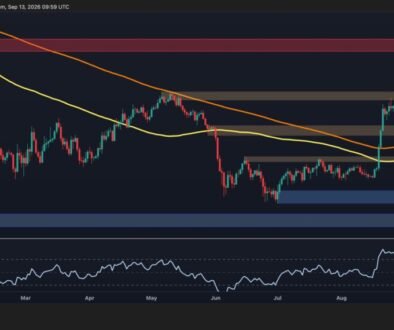
Bitcoin Price Sinks to New Weekly Low, Bulls Lose Key Support

Bitcoin has broken below a critical support zone, falling to fresh weekly lows as technical momentum shifts decisively in favor of sellers. The cryptocurrency’s inability to hold the $66,000 level signals weakening conviction among buyers, with multiple technical indicators now pointing toward sustained downside pressure in the near term.
As of recent trading sessions, Bitcoin has slipped beneath the 100-hour moving average and tested lows near $63,351. While the asset briefly recovered above $64,000, it remains significantly detached from the 23.6% Fibonacci retracement level derived from the recent $68,652 to $63,351 range. This positioning suggests bulls lack the strength to establish and maintain higher price zones at present.
Market Context and Industry Backdrop
Bitcoin’s recent weakness occurs against a backdrop of evolving macroeconomic conditions and shifting investor sentiment across digital asset markets. The broader cryptocurrency industry has experienced considerable volatility in recent quarters, with institutional adoption metrics competing against concerns regarding regulatory clarity and monetary policy trajectories. Major exchanges have reported fluctuating volumes during recent price swings, reflecting the tension between long-term conviction holders and tactical traders responding to short-term technical deterioration.
The digital asset market capitalization has contracted meaningfully from its peak levels, with Bitcoin’s dominance metrics showing both consolidation and occasional weakness as altcoins capture rotational flows. Trading volume patterns across major venue operators—including spot and derivatives markets—suggest that recent sell-offs reflect a genuine shift in positioning rather than superficial algorithmic trading. Institutional clients have reportedly trimmed exposure amid the technical deterioration, while retail participation has shown cyclical patterns consistent with fear-driven liquidations.
Technical Breakdown and Price Scenarios
The current technical setup presents two distinct pathways for near-term price movement. In a bullish scenario, if Bitcoin can stabilize and consolidate above $64,000, traders may see renewed attempts to recapture the $65,250 resistance zone. A sustained close above that level would theoretically clear the path toward $66,000 and potentially the 50% Fibonacci retracement around $66,800.
However, a breakdown below $65,250 would likely accelerate selling pressure. The immediate support floor sits at $64,000, with secondary support at $63,500. Further down, the $63,200 and $62,650 levels represent additional backstops for downside movement.
A breakdown below $62,000 would represent a critical capitulation point where recovery momentum becomes substantially constrained.
— Technical Analysis Framework
$65,250 (first resistance), $64,000 (immediate support), $63,500, $63,200, and $62,650 (secondary supports). A break below $62,000 signals potential capitulation.
Momentum Indicators Paint a Bearish Picture
Multiple technical indicators align with the bearish narrative now playing out in Bitcoin price action. The hourly MACD has gathered negative momentum, signaling sustained selling pressure at shorter timeframes. The relative strength index for BTC/USD currently trades below 50, a level that traditionally separates bullish from bearish territory.
Importantly, the RSI is not yet in deeply oversold conditions—a reading that would typically suggest a reversal. This means the technical setup allows for further downside without immediately triggering mean-reversion buying.
A bearish trend line continues to form resistance in the $66,800 region on the hourly chart. For a sustained recovery to take root, buyers would need to overcome this trend line and extend toward $67,500 to $67,700—levels that represent meaningful rejuvenation for the bulls.
Institutional and Market Implications
The current price action carries significant implications for market participants across the cryptocurrency ecosystem. For institutional investors managing substantial digital asset allocations, the technical deterioration creates portfolio management challenges, particularly regarding rebalancing strategies and risk control frameworks. Major asset managers have historically used technical support breaks as signals for tactical position reductions, amplifying cascading selling when key levels fail.
Market makers and high-frequency trading operations have responded to the deteriorating momentum by widening bid-ask spreads and reducing liquidity provision at key support zones. This dynamic exacerbates downside moves during panic-driven selling, creating self-reinforcing feedback loops that extend declines beyond what fundamental factors alone would justify. The phenomenon has been documented extensively in cryptocurrency market microstructure studies, where sudden liquidity withdrawal accelerates capitulation phases.
For derivative markets, the technical weakness has triggered cascading liquidations in leveraged long positions, particularly affecting retail traders utilizing margin accounts. Liquidation volumes during recent sell-offs have reached substantial levels, with on-chain data providers noting concentrated liquidation events at key support breaks. This liquidation cascade creates additional selling pressure, compounding the technical deterioration narrative.
For institutional and retail traders alike, several price zones warrant close attention. The $65,000 to $66,000 resistance cluster remains the first meaningful barrier for any recovery attempt. A hold above $64,000 would suggest some underlying bid, while a loss of that level accelerates downside momentum toward the $63,500 zone.
The broader context matters as well. Bitcoin’s performance relative to macro conditions, regulatory developments, and macro fund positioning continues to influence directional bias. Traders monitoring crypto price movements should consider whether recent weakness reflects genuine selling or consolidation ahead of fresh buying. Additionally, monitoring on-chain metrics—including exchange inflows, whale transaction activity, and long/short positioning ratios—provides complementary signals to technical analysis frameworks.
The cryptocurrency briefly recovered above $64,000 but remains significantly below key Fibonacci levels, indicating that bulls lack the conviction to establish sustained higher levels.
— Technical Assessment
Industry Challenges and Regulatory Environment
Bitcoin’s recent weakness cannot be fully divorced from the regulatory environment facing cryptocurrency markets globally. Recent regulatory announcements from major jurisdictions have created uncertainty regarding institutional participation frameworks. Simultaneously, ongoing discussions regarding central bank digital currencies and their potential competitive dynamics with decentralized cryptocurrencies have introduced structural headwinds for sentiment.
Energy consumption narratives, mining concentration concerns, and environmental policy developments have periodically influenced institutional investor participation decisions. These macro factors combine with technical weakness to create a challenging environment for recovery attempts. Industry participants have worked toward greater sustainability standards and transparency regarding operational practices, yet regulatory clarity remains elusive in many markets.
Implications for Near-Term Trading
The current technical setup favors patience for buyers. Attempting to catch falling knives near resistance zones carries elevated risk given the momentum disadvantage. More prudent entries would likely emerge if Bitcoin can stabilize and show a material reversal pattern at lower support levels.
For those already holding positions, the $63,500 to $64,000 band represents a logical area to reassess conviction. A hold at these levels suggests underlying support; a failure triggers the next cascade toward $62,650 and eventually the critical $62,000 threshold.
The hourly MACD shows deteriorating momentum, RSI sits below 50, and a bearish trend line forms resistance overhead. The technical environment favors caution until clearer reversal signals emerge at lower price zones. Position management and risk controls should prioritize capital preservation during periods of momentum deterioration.
The past several sessions have clearly demonstrated that buyers lack the firepower to sustain pushes above $65,250. This repeated failure suggests sellers remain in control and will test lower levels with conviction. For blockchain market updates and deeper analysis, monitoring technical developments remains essential as the situation evolves.
Conclusion: The Path Forward
Bitcoin’s current technical posture presents a defining moment for market participants. The cryptocurrency stands at a critical juncture where sustained support at current levels could establish a foundation for recovery, or capitulation below key thresholds could trigger extended consolidation toward the $62,000 zone. For institutional investors managing substantial allocations, the technical deterioration demands careful position reassessment and risk management execution.
The broader cryptocurrency industry watches Bitcoin’s price action with acute attention, as Bitcoin remains the market’s primary valuation anchor and sentiment barometer. A successful stabilization and recovery from current levels would likely reignite institutional participation and generate renewed momentum across digital asset markets. Conversely, a test of deeper support zones would reinforce caution and potentially attract defensive positioning from larger market participants.
Bitcoin’s path forward hinges on whether support can be established at current levels or if accelerated selling forces a test of the $62,000 capitulation zone. Until the technical indicators show material reversal—such as an RSI break above 50 combined with positive MACD divergence—the bearish bias remains the operative framework for near-term traders. Market participants should remain cognizant that technical reversals often require volume confirmation and momentum alignment across multiple timeframe indicators before sustainable recoveries emerge. The next several trading sessions will likely prove pivotal in determining whether Bitcoin establishes a durable bottom or extends weakness toward strategic support zones that would carry broader industry implications.
Original reporting: newsbtc.com
Get weekly blockchain insights via the CCS Insider newsletter.