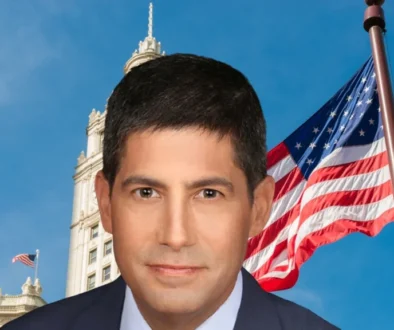
Trump fired Federal Reserve Governor Lisa Cook
President Donald Trump has taken the unprecedented step of firing Federal Reserve Governor Lisa Cook, marking the first time a sitting U.S. president has removed a Fed governor through direct action. Trump announced the termination on Monday via Truth Social, citing constitutional authority and claims that Cook committed mortgage fraud by listing two properties as her primary residence within the same timeframe.
The removal, effective immediately, escalates Trump’s ongoing campaign to reshape the Federal Reserve’s leadership and direction. Cook, who was nominated to the Board of Governors by President Joe Biden in 2022, denied the fraud allegations and stated she would not resign under pressure.
The Allegations and Timeline
The controversy surrounding Cook’s tenure began on August 20 when Bill Pulte, the director of the Federal Housing Finance Agency and a vocal critic of Federal Reserve Chair Jerome Powell, publicly accused her of mortgage fraud. Pulte alleged that Cook had signed mortgage documents claiming two different properties—one in Michigan and another in Georgia—as her primary residence within a two-week period.
Pulte subsequently filed a criminal referral with the Department of Justice. In his removal letter, Trump cited this referral and quoted specific language from Cook’s mortgage agreements. “There is sufficient reason to believe you have made false statements on one or more mortgage agreements,” Trump wrote, detailing how she had attested to a Michigan property being her primary residence, then signed similar documentation for a Georgia property two weeks later.
I have no intention of being bullied to step down from my position because of some questions raised in a tweet.
— Lisa Cook, Federal Reserve Governor, in response to resignation demands
Cook firmly rejected the allegations in a public statement, refusing to voluntarily leave her position. Despite her denial, Trump moved swiftly, calling for her resignation on Truth Social with the message “Cook must resign, now!!!” Two days later, he followed through with the firing.
This marks the first removal of a sitting Federal Reserve governor by a president in U.S. history. Cook was the first Black woman to serve on the Fed’s Board of Governors. Governors serve 14-year terms, meaning her removal creates a significant opening for presidential influence over the central bank’s long-term direction.
Constitutional and Legal Questions
The legality of Trump’s action remains contested. The Federal Reserve Act of 1913 permits a president to remove a governor “for cause,” but the statute does not define what constitutes “cause.” Traditionally, legal scholars have interpreted this language to mean criminal conviction or gross dereliction of duty.
Legal experts anticipate the firing could trigger constitutional litigation that reaches the Supreme Court. If a lower court allows Cook to continue working during the legal proceedings, the case would likely involve fundamental questions about presidential power over independent agencies and the boundaries of the “for cause” removal standard established in prior case law.
Cook has not yet announced whether she intends to challenge the termination in court. However, her strong public denial of the fraud allegations suggests a legal response is probable. The outcome could establish important precedent regarding a president’s authority to remove Federal Reserve officials.
Trump’s Expanding Influence Over the Fed
If Trump prevails in any legal dispute, the Cook seat would give him another opportunity to appoint a governor aligned with his policy preferences. This would expand his already substantial influence over the central bank’s composition and direction.
Two current Federal Reserve Board members—Christopher Waller and Michelle Bowman—were appointed by Trump during his first term. Trump also appointed Jerome Powell as Federal Reserve Chair in 2017, though Powell has resisted Trump’s pressure to cut interest rates and has maintained the Fed’s operational independence.
What she did was bad.
— President Donald Trump, commenting on the Cook allegations on August 22
The Cook removal represents Trump’s most aggressive move yet to reshape the institution. With three of seven board positions potentially under his influence, Trump would have significant sway over monetary policy decisions and the Fed’s regulatory approach. This represents a substantial concentration of power over an institution historically insulated from direct presidential control.
For broader context on how central bank leadership affects markets, see our latest crypto market analysis. Understanding Fed policy remains essential for Bitcoin investors and those tracking digital asset valuations.
Industry Context and Market Implications
The Federal Reserve’s monetary policy decisions directly impact financial markets across all asset classes, including cryptocurrencies, equities, bonds, and commodities. Changes in interest rates and regulatory approach influence capital flows, inflation expectations, and risk appetite among institutional and retail investors. A Federal Reserve Board more aligned with Trump’s preferences could signal a shift toward looser monetary policy, which has historically supported risk assets including digital currencies.
Lisa Cook, before her removal, had been considered among the more dovish members of the Fed’s Board of Governors, occasionally dissenting on interest rate decisions to advocate for lower rates. Her academic background in economic history and development economics provided a unique perspective on labor market dynamics and inflation’s societal impacts. Her departure removes one voice from internal Fed deliberations, potentially shifting the board’s composition toward different policy priorities.
Financial markets have demonstrated sensitivity to changes in Federal Reserve leadership composition. Bond yields, equity valuations, and cryptocurrency prices often react sharply to announcements regarding Fed personnel changes, as investors reassess the likely trajectory of monetary policy. The immediate question for market participants is whether Trump’s replacement nominee will exhibit similar dovish tendencies or adopt a more hawkish stance on inflation control.
Lisa Cook’s Background and Fed Record
Cook brought substantial academic credentials to the Federal Reserve Board. As an economist specializing in economic history, innovation, and African American economic advancement, she held faculty positions at major universities and published extensively on historical episodes of financial instability and their consequences for vulnerable populations. Her nomination to the Fed in 2022 was intended to bring diverse perspectives to monetary policy deliberations, particularly regarding employment and inequality considerations.
During her tenure, Cook participated in the Fed’s pivotal interest rate decisions following the 2022 inflation surge. She had advocated for considering the employment mandate more heavily in policy calculations, reflecting her research background. Her removal eliminates this particular analytical viewpoint from future Fed discussions at a time when debates over the appropriate balance between inflation control and employment support remain contentious.
What Comes Next
The immediate question is whether Cook will accept the termination or mount a legal challenge. Legal experts suggest that if she pursues the matter in federal court, discovery could involve examining the mortgage documents in question and potentially investigating Pulte’s motivations in raising the allegations.
Meanwhile, Trump may move to nominate a replacement governor who shares his views on monetary policy and interest rates. The Senate would need to confirm any new nominee, introducing another layer of political consideration into the process.
The firing also raises questions about the independence of federal agencies more broadly. The Federal Reserve’s insulation from direct political pressure has been considered essential to sound monetary policy. How courts and Congress respond to this removal will shape the boundaries of presidential authority over independent agencies for years to come.
Beyond the immediate legal and political dimensions, this action carries profound implications for the Federal Reserve’s institutional culture. The central bank has traditionally operated with substantial autonomy regarding personnel decisions and policy direction. A successful precedent for presidential removal of sitting governors based on contested factual allegations could fundamentally alter how future administrations approach Fed leadership.
For market participants and policymakers, the Cook removal represents a critical inflection point in the relationship between executive power and institutional independence. Whether courts ultimately uphold this removal will determine whether presidents can unilaterally reshape Fed leadership composition during their terms, thereby potentially shortening the effective independence that governors have historically enjoyed.
Original reporting: cryptopolitan.com
Get weekly blockchain insights via the CCS Insider newsletter.