
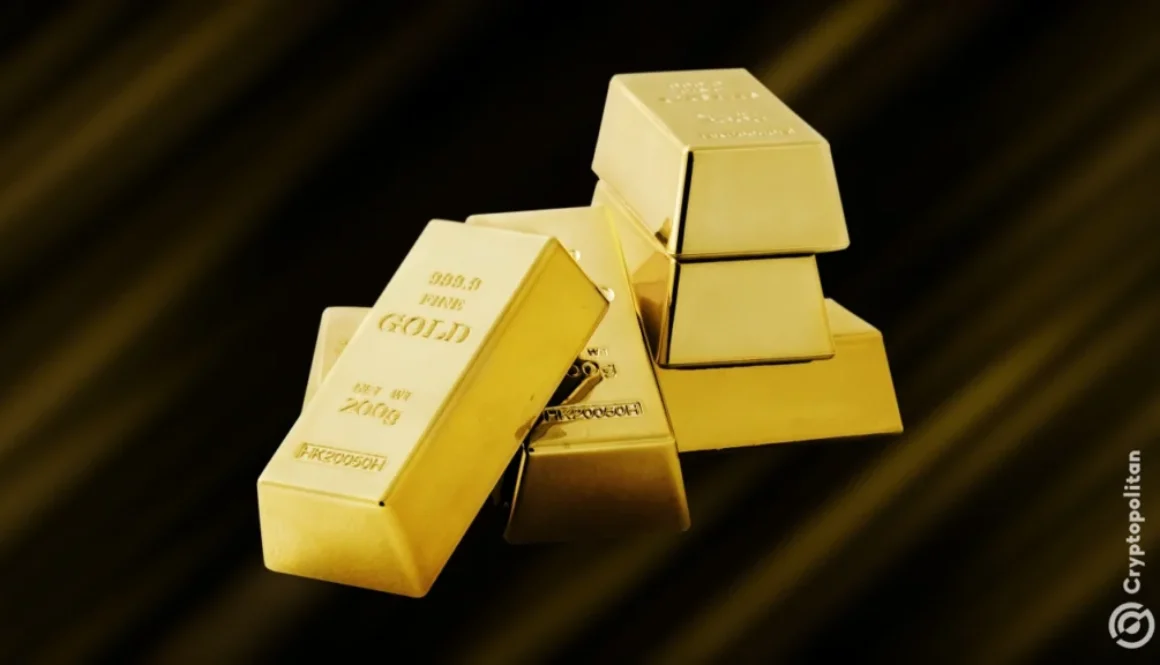
It now takes 116 hours of minimum wage work to buy an ounce of gold, highest in more than 100 years
Gold’s extraordinary run this year has created a striking economic metric: it now requires 116 hours of federal minimum wage work to purchase a single ounce of the precious metal—a ratio unseen in more than a century. This benchmark underscores how dramatically gold has outpaced wage growth, leaving workers further behind despite decades of nominal income increases.
At current prices near $4,225 per ounce and an average hourly wage of $36.50, a minimum wage earner would need to work nearly three consecutive weeks to afford just one ounce. The gap has widened dramatically in recent months, with this ratio doubling in only 18 months.
A Ratio Breaking Historical Records
The 116-hour threshold shatters all previous benchmarks. During the Great Depression in the 1930s, at the peak of inflation in 1980, and even during the last major bull market in 2011, the ratio topped out at roughly 80 hours—still significantly below today’s level.
Two decades ago, at the start of this millennium, an ounce of gold required less than 20 hours of minimum wage labor. This comparison illustrates not just gold’s appreciation, but the persistent stagnation in wage growth relative to asset inflation.
The metal has doubled its labor-hours requirement in just 18 months, a remarkable acceleration that highlights the disconnect between commodity valuations and real worker compensation.
— Bloomberg Data Analysis
Gold’s 2024 surge of 64% so far this year dwarfs typical wage increases. Federal minimum wage remains $7.25 per hour—unchanged since 2009—while gold has climbed relentlessly.
What’s Driving Gold Higher
Several converging factors have propelled gold to record levels. Investor expectations of Federal Reserve rate cuts have strengthened the appeal of non-yielding assets. Markets are pricing in a 25-basis-point reduction at the October meeting, with additional cuts anticipated before year-end.
Central banks worldwide continue aggressive accumulation strategies. Simultaneous dollar weakness has made gold cheaper for international buyers, while exchange-traded funds tracking the metal have attracted substantial inflows from retail and institutional portfolios seeking safety.
Geopolitical uncertainty has also played a role. Trade tensions, regional conflicts, and broader macroeconomic concerns have pushed investors toward traditional havens. These structural supports suggest gold’s strength may extend well beyond short-term speculation.
Volatility Emerges on Tariff Comments
Gold’s relentless advance paused abruptly on Friday following comments from President Trump regarding trade negotiations with China. After touching an all-time intraday high of $4,378.69 earlier in the session, prices retreated 2.6% to close near $4,211.48 per ounce.
Trump’s suggestion that “full-scale” tariffs on China would prove unsustainable appeared to cool some of the risk-off sentiment that had driven the week’s gains. His confirmation of planned discussions with Chinese leadership further eased immediate tensions in financial markets.
“Trump’s more conciliatory tone since the initial announcement of 100% tariffs has taken a little heat out of the precious trade,” noted Tai Wong, an independent metals trader based in New York. Despite the pullback, gold was still tracking for its best weekly performance since September 2008, when the Lehman Brothers collapse triggered a broad flight to safety.
Even with Friday’s retreat, gold’s 4.8% weekly gain marks its strongest performance since the depths of the 2008 financial crisis.
— Market Data
Industry Structural Demand Remains Robust
Beyond investment positioning, the physical gold industry continues to demonstrate fundamental strength across multiple sectors. Jewelry manufacturing, particularly concentrated in India, Thailand, and China, accounts for approximately 50% of annual gold demand globally. Despite elevated prices, production volume has remained surprisingly steady as manufacturers pass costs to consumers through retail pricing strategies.
Industrial applications for gold—including electronics manufacturing, dentistry, and medical devices—generate relatively inelastic demand that persists regardless of spot price fluctuations. Technology companies reliant on gold’s superior conductivity and corrosion resistance maintain consistent sourcing despite the elevated cost environment. Central bank reserve accumulation has accelerated dramatically, with some nations acquiring gold as insurance against currency devaluation and geopolitical sanctions.
Mining companies have expanded production capacity to capitalize on elevated prices. However, the industry faces constraints from declining ore grades, increasing extraction costs, and lengthy project development timelines. New discoveries remain relatively scarce, suggesting supply growth will struggle to match demand expansion driven by central banks and ETF accumulation.
Longer-Term Outlooks Remain Bullish
Major financial institutions have substantially raised their gold price targets for coming years. Standard Chartered Bank’s commodities research team expects gold to average $4,488 in 2026, citing “broader structural factors” that could push valuations even higher still.
HSBC increased its 2025 forecast by $100 to $3,455 per ounce, with projections suggesting a potential climb toward $5,000 by 2026. These forecasts reflect confidence in continued central bank purchases, ongoing currency concerns, and persistent demand from both investors and industrial users.
Multiple major banks expect gold to remain in the $4,400+ range through 2025-2026, supported by rate cuts, dollar weakness, and central bank demand. Few institutions are calling for significant reversals from current elevated levels.
Physical demand in Asia has remained resilient despite record spot prices. Indian gold premiums recently climbed to decade-high levels ahead of seasonal festival demand, suggesting retail buyers in major markets view current valuations as acceptable for their long-term holdings.
Market Implications and Economic Inequality
The widening wage-to-gold ratio carries profound implications for wealth distribution and economic inequality. Assets owned disproportionately by affluent households appreciate while wage-dependent workers see purchasing power erode. This dynamic has accelerated over the past two decades as monetary policy has consistently favored asset owners through low interest rates and quantitative easing programs.
Globally, the gold price surge affects inflation dynamics differently across nations. Countries with significant gold reserves, including the United States, Germany, and France, experience wealth appreciation through their central bank holdings. Conversely, gold-importing nations face higher costs for reserves and jewelry production, creating capital outflows that pressure their currencies.
The 116-hour benchmark represents more than a mathematical curiosity—it quantifies the divergence between traditional wealth preservation assets and real wage compensation. As this ratio continues expanding, policymakers face increasing pressure to address wage growth through fiscal and monetary measures capable of narrowing the gap.
Broader Market Context
Gold’s outperformance has come at the expense of other precious metals and commodities. Silver declined 5.6% to $51.20 after touching $54.47, while platinum fell 6.1% to $1,607.85 on the same day gold retreated.
This divergence highlights gold’s status as the preferred safe-haven asset during periods of economic uncertainty. Cryptocurrency markets, which often compete for investor capital during risk-off periods, have shown correlations with broader equity and commodity moves but lack gold’s institutional credibility as a historical store of value.
The stark wage-to-gold ratio serves as a reminder that asset inflation affects ordinary workers differently than those with existing portfolios. While gold buyers benefit from appreciation, those dependent on wages face erosion of purchasing power without proportional income increases.
Forward-Looking Considerations
Gold’s trajectory will largely depend on Federal Reserve policy decisions in the coming quarters. Rate cuts typically support gold by reducing the opportunity cost of holding non-yielding precious metals. However, if economic data deteriorates significantly, the Fed may pause or reverse cuts, creating volatility around policy meetings.
Trade policy developments will continue influencing safe-haven flows. Escalating tariffs or trade war dynamics could sustain gold’s bid through increased macroeconomic uncertainty. Conversely, successful trade negotiations and improved geopolitical relations could reduce flight-to-safety positioning, potentially pressuring prices despite fundamental structural support.
For investors monitoring market developments, gold’s behavior offers important context for understanding monetary policy expectations and risk sentiment. The metal’s next significant test will likely come from either concrete Federal Reserve actions or evolving geopolitical developments that alter the calculus of safety-seeking positioning. The sustainability of gold’s record valuations ultimately depends on whether the conditions driving investment demand—currency concerns, rate cut expectations, and geopolitical tensions—persist or resolve over the medium term.
Get weekly blockchain insights via the CCS Insider newsletter.