
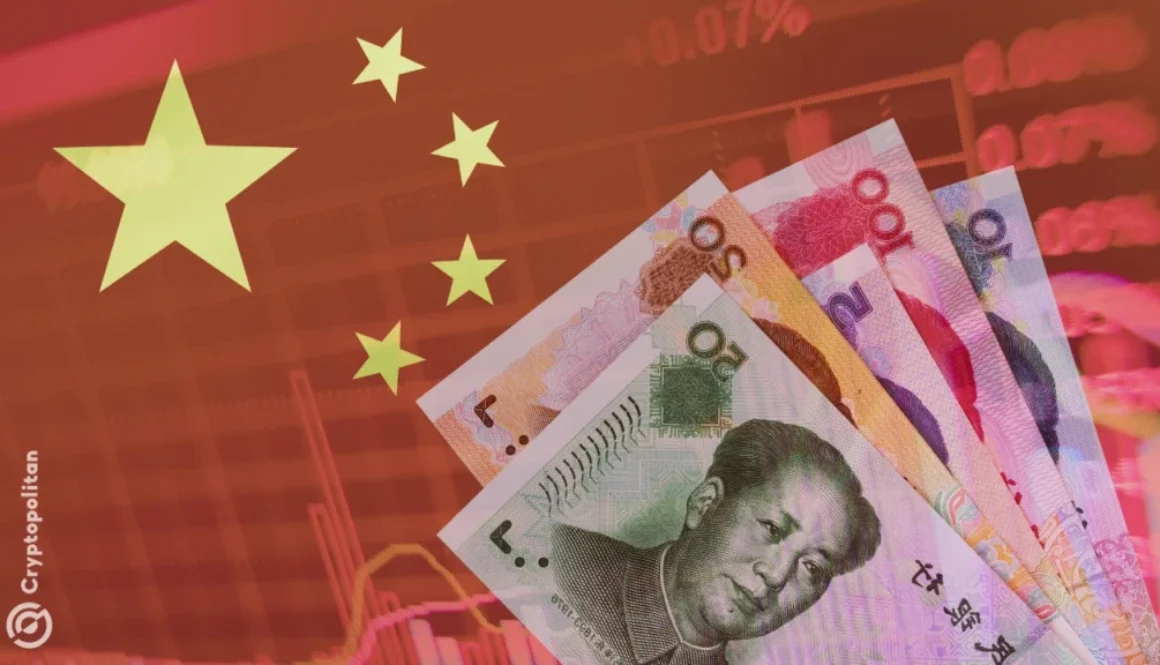
China’s offshore yuan bond issuance hit a record 870 billion yuan
China’s offshore yuan bond market has reached a historic milestone, with issuance hitting 870 billion yuan this year as international investors and borrowers reassess their currency exposure amid geopolitical tensions. The surge marks eight consecutive years of expansion and signals a structural shift in how global capital allocates across currencies, moving away from traditional dollar-denominated assets toward alternative reserves.
The 870 billion yuan figure—equivalent to approximately 123 billion US dollars—has already surpassed the entire volume recorded in 2023, demonstrating the accelerating pace of activity in what was once a niche market. This growth trajectory reflects a fundamental reappraisal of the yuan’s role in international finance.
Market Evolution and Historical Context
The offshore yuan bond market, commonly referred to as the “dim sum bond” market due to its Hong Kong origins, emerged as a specialized financial instrument in the early 2000s. What began as a curiosity for a handful of multinational corporations has transformed into a critical mechanism for international capital formation and currency diversification.
When the People’s Bank of China first permitted offshore yuan issuance, skeptics questioned whether international investors would embrace a currency perceived as tightly controlled and subject to capital restrictions. Over two decades, however, the market has systematically addressed these concerns through regulatory reforms, expanded trading infrastructure, and demonstrated currency stability.
The consistent eight-year growth pattern distinguishes this expansion from temporary financial cycles. Unlike equity or commodity markets prone to sharp reversals, the offshore yuan bond market has shown resilient, methodical expansion. This consistency suggests structural factors driving growth rather than speculative excesses.
Cost Advantage Drives Issuer Activity
China’s persistently low interest rates have become the primary engine propelling bond issuance. Borrowers across sectors have discovered that accessing capital through offshore yuan instruments carries substantially lower costs than equivalent financing in major global currencies like the dollar, euro, or sterling.
This pricing advantage has expanded the issuer base considerably. Organizations that previously relied on traditional currency financing now view yuan bonds as an efficient mechanism for long-term funding. The diversified borrower pool underscores the market’s maturation beyond its early years.
Corporate treasurers managing multinational operations have strategically embraced yuan financing as part of broader treasury optimization. When a multinational corporation with significant Chinese operations can borrow in yuan at materially lower rates than dollar alternatives, the financial incentive becomes overwhelming. This creates a natural feedback loop: as more issuers tap the market, liquidity deepens, which reduces borrowing costs further, attracting additional issuers.
The offshore yuan bond market is experiencing its strongest year on record as international borrowers and investors capitalize on a convergence of favorable conditions.
— Market Analysis
Long-dated bond issuance has nearly doubled year-over-year, with 152 dim sum bonds carrying 10-year or longer maturities issued in 2024—compared to roughly 75 in the prior year period.
Long-Term Bonds Signal Confidence
Perhaps the most telling indicator of market sentiment is the composition of newly issued bonds. Long-dated instruments—those with 10-year or longer maturities—have dominated growth patterns, with 152 such bonds issued this year alone. This nearly doubles the equivalent figure from the previous year.
The surge in extended-maturity issuance reflects investor conviction regarding the yuan’s trajectory as a reserve currency. Institutions committing capital for decades signal fundamental confidence in China’s financial stability and the currency’s long-term purchasing power.
The emergence of 30-year yuan bonds represents an unprecedented development. Marquee names have participated in this extended-duration market, including Temasek Holdings, Singapore’s sovereign wealth fund, insurance giant Chubb Ltd., and Chinese technology leader Tencent Holdings. Such participation from globally recognized institutions validates the yuan’s credibility in international capital markets.
These institutional commitments carry particular weight because long-duration bonds expose investors to significant interest rate and currency risk. Only institutions with genuine conviction in yuan stability would lock in returns for three decades. The willingness of sophisticated global investors to make such commitments suggests the offshore yuan bond market has crossed a psychological threshold from experimental to mainstream.
Diversification Against Dollar Concentration
Beyond yield considerations, geopolitical uncertainty is reshaping capital allocation strategies worldwide. International investors increasingly view yuan-denominated assets as a mechanism for reducing exposure to dollar concentration amid persistent trade tensions and currency volatility.
The shift reflects mounting recognition among institutional investors that over-reliance on any single currency—particularly the dollar—carries structural risk. A diversified reserve currency approach provides insulation against unexpected policy shifts or geopolitical escalation.
Central banks across multiple continents have explicitly stated objectives to increase reserve currency diversification. The International Monetary Fund’s recent surveys indicate that central banks view currency reserve composition as a critical strategic decision, not merely a technocratic choice. This elevated attention from monetary authorities legitimizes and accelerates private sector movement toward alternatives.
International investors increasingly view yuan assets as a hedge against dollar concentration as trade tensions ripple through the global economy and currency fluctuations reshape investment calculus.
— Investment Strategy Analysis
This reallocation accelerated notably during recent periods of heightened US-China tensions and broader global economic uncertainty. Central banks, sovereign wealth funds, and institutional asset managers have systematized their approach to currency diversification.
This represents the eighth consecutive year of growth for the offshore yuan bond market, indicating sustained institutional appetite rather than cyclical fluctuations. The consistent expansion demonstrates the yuan’s gradual but persistent advancement as an alternative reserve currency. Current market size exceeds one trillion yuan in outstanding issuance, establishing it as a material component of global capital markets.
Industry Transformation and Ecosystem Development
The growth of the offshore yuan bond market has catalyzed ecosystem development across multiple financial sectors. Major investment banks now maintain dedicated offshore yuan trading desks. Settlement infrastructure has been systematized through multiple regional hubs, reducing transaction costs and increasing accessibility for smaller institutions.
Rating agencies have expanded coverage of yuan-denominated issuances, enabling better price discovery and risk assessment. Trading volumes on offshore yuan bond exchanges have surged, with secondary market liquidity now approaching that of comparable euro or sterling instruments. This liquidity enhancement creates virtuous cycles where market participants face lower transaction costs and wider participation opportunities.
Technology infrastructure supporting offshore yuan transactions has evolved substantially. Blockchain-based settlement systems are now being piloted by major financial institutions, potentially reducing settlement times and costs further. These technological improvements position the offshore yuan market to capture increasing share of global bond issuance.
Structural Implications for Global Finance
The offshore yuan bond market’s expansion extends beyond individual transactions or issuer decisions. The trajectory reflects structural reordering of how international capital flows operate and which currencies serve as anchors for global commerce.
For investors tracking cryptocurrency and blockchain assets, these developments matter directly. The shift toward yuan-denominated alternatives and away from dollar-centric frameworks mirrors broader conversations about cryptocurrency’s role in currency diversification. Digital assets and traditional offshore bond markets are competing mechanisms for the same underlying thesis: reducing single-currency dependency.
The success of the offshore yuan bond market may also influence how central banks and institutions approach digital currency initiatives. If traditional bond markets can shift capital flows effectively, similar patterns could accelerate adoption of central bank digital currencies and blockchain-based settlement systems. China’s own digital yuan development gains momentum as international acceptance of yuan-denominated assets expands.
The 870 billion yuan issuance milestone represents more than a statistical achievement. It signals that the international financial system is gradually restructuring around multiple reserve currencies and settlement mechanisms. Investors and policymakers must recognize that this represents a multi-year, potentially multi-decade transition that will reshape capital flows, currency valuations, and geopolitical influence.
International investors should monitor continued maturation of China’s offshore bond markets alongside broader developments in crypto and financial infrastructure. The two ecosystems increasingly influence each other as global finance restructures around emerging reserve currency alternatives.
Get weekly blockchain insights via the CCS Insider newsletter.