
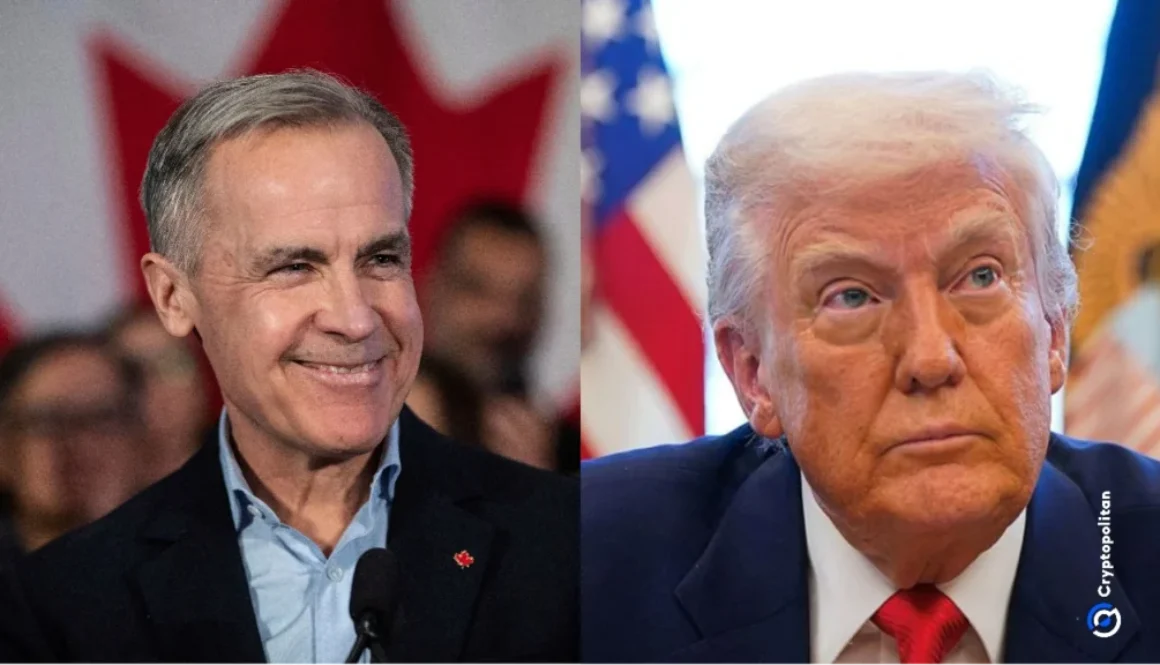
Canada’s trade minister says the U.S. is still negotiating “in good faith” despite new tariffs
Canada’s trade minister says negotiations with the United States remain constructive despite fresh tariffs on Canadian exports, signaling that both nations continue pursuing a bilateral trade agreement even as economic tensions mount. Dominic LeBlanc told CBS that President Donald Trump is still operating “in good faith” at the negotiating table, and he expects direct discussions between Trump and Canadian Prime Minister Mark Carney to occur within days.
Tariffs Target Non-USMCA Products
The U.S. imposed new tariffs last Thursday on Canadian goods not covered under the United States-Mexico-Canada Agreement, the trade framework Trump negotiated during his first term. While that 2020 deal continues to shield a significant portion of Canada’s exports, the fresh levies have created immediate pressure on specific sectors.
Steel and aluminum industries in Canada face the most direct impact as the Trump administration pushes to strengthen domestic manufacturing capacity. The tariffs underscore a broader protectionist strategy focused on reshoring production and reducing dependence on foreign suppliers.
The USMCA, which replaced NAFTA, still protects major segments of Canada’s trade with the U.S., but expanding tariffs are now targeting products and sectors left outside that agreement’s scope.
Industry Context and Economic Scale
Canada’s economy relies heavily on resource exports and manufactured goods, with the United States accounting for approximately 75 percent of Canadian export destinations. The country shipped over $400 billion in goods to the U.S. in 2023, making trade disruption a critical concern for Canadian businesses and policymakers. Sectors vulnerable to tariffs include forestry products, energy resources, agricultural exports, and advanced manufacturing components that feed into integrated North American supply chains.
The Canadian business community has expressed concern about prolonged uncertainty. Major corporations in automotive, aerospace, and pharmaceuticals depend on seamless cross-border logistics and tariff-free movement of components. Any extended tariff regime threatens production schedules, pricing models, and competitive positioning in North American markets. Industry associations have called for rapid resolution, emphasizing that trade disputes create cascading effects through supply chains that employ hundreds of thousands of workers on both sides of the border.
Integrated Supply Chains Complicate Separation
LeBlanc emphasized that decades of economic integration mean the two countries cannot easily decouple. He pointed to the original Canada-U.S. Free Trade Agreement from the Reagan administration as evidence of how deeply embedded bilateral commerce has become.
The shared supply chains make it hard to fully separate the two sides, and that’s part of why Canada is still talking.
— Analysis based on LeBlanc’s remarks
During a recent multi-day visit to Washington, LeBlanc met with senior White House officials, describing the sessions as substantive despite the tariffs already being active. He characterized the relationship as one where both economies “build things together,” highlighting how automotive, aerospace, and manufacturing sectors depend on cross-border components and production networks.
Canada’s position centers on finding a framework that protects critical industries in both countries without dismantling the trade flows that support employment on both sides of the border. LeBlanc acknowledged that the U.S. has legitimate national security concerns driving the tariff strategy, but argued those concerns can coexist with a workable trade structure.
Trump injected a new variable into trade talks when he posted on social media that Canadian Prime Minister Mark Carney’s support for Palestinian statehood recognition could obstruct a deal. Trump wrote that the position makes it “very hard for us to make a Trade Deal with them,” introducing political ideology into what had been primarily economic negotiations.
The statement caught observers by surprise, as recognition of Palestinian sovereignty is not a traditional trade negotiation issue. It suggested the administration might be conditioning economic agreements on foreign policy alignment rather than pure commercial terms.
Trump’s social media post added a political wrinkle to what had been mostly economic talks, introducing a test of whether diplomatic alignment could influence trade outcomes.
— Crypto Coin Show Analysis
LeBlanc did not directly address Trump’s comment during his CBS appearance but maintained that progress remains possible. He reiterated Canada’s commitment to keeping negotiations moving forward, suggesting the country intends to separate political disagreements from trade mechanics.
Market Implications and Global Trade Precedent
The U.S.-Canada trade situation carries significant implications for global commerce and how trading relationships are negotiated going forward. If the Trump administration successfully conditions trade agreements on geopolitical positions, it establishes a new precedent that could reshape international commerce. Other nations watching these negotiations will assess whether trade leverage can be deployed for non-economic objectives, fundamentally altering how governments approach bilateral and multilateral agreements.
Currency markets have reacted sharply to tariff announcements and resolution signals. The Canadian dollar typically weakens when trade tensions escalate, as investors assess the economic impact of reduced export revenues. The loonie’s performance against the U.S. dollar serves as a real-time barometer of market confidence in reaching a negotiated settlement. A sustained tariff regime could pressure Canadian asset prices, reduce foreign direct investment in resource sectors, and create headwinds for Canadian financial institutions with significant U.S. exposure.
Commodity markets tied to Canadian exports—particularly agricultural products, energy, and metals—have experienced volatility reflecting uncertainty around market access. Agricultural producers in Western Canada face particular anxiety, as U.S. tariffs on grain, canola, and livestock could displace Canadian supplies with domestic alternatives or sourcing from other countries. Energy markets have also reacted, with Canadian crude oil premiums fluctuating based on tariff developments and pipeline access concerns.
White House Engagement Continues
Kevin Hassett, chairman of the National Economic Council, met with Canadian representatives as part of the ongoing dialogue. The continued participation of high-level U.S. economic officials signals that talks remain active despite public tensions.
For investors monitoring cross-border trade and currency markets, these developments carry implications. The Canadian dollar and broader market sentiment have responded to tariff announcements and resolution signals. A sustained trade conflict could pressure commodity-linked assets and risk sentiment toward Canadian equities.
The broader context involves how Trump’s approach to trade differs from traditional GATT and WTO frameworks. Rather than multilateral agreements, the administration appears focused on bilateral negotiations where national interests are prioritized and leverage—including tariffs—becomes a negotiating tool.
Traders have closely watched USD/CAD currency pairs and Canadian equity indices in response to tariff announcements. Resolution of trade talks could shift risk-on sentiment toward loonie strength and Canadian asset demand.
Entity Background and Negotiating Positions
Dominic LeBlanc has served as Canada’s Minister of International Trade, overseeing Canada’s commercial relationships with major trading partners. His diplomatic approach emphasizes constructive dialogue and practical problem-solving, reflecting Canada’s historical strategy of managing trade relationships through consensus-building rather than confrontation. LeBlanc’s optimistic public statements appear calibrated to prevent market panic while maintaining pressure for meaningful negotiations.
Mark Carney, Canada’s Prime Minister, brings experience in finance and economic policy from his tenure as Governor of the Bank of Canada and earlier roles in international finance. His government faces political pressure to demonstrate competent trade management while protecting Canadian employment and economic interests. The introduction of geopolitical conditions into trade negotiations complicates Carney’s negotiating position, forcing the government to balance domestic political considerations with pragmatic trade outcomes.
Looking Ahead
The timeline for substantive breakthroughs remains uncertain. LeBlanc’s optimistic framing contrasts with the economic pressure tariffs are already creating. Whether Trump and Carney speak in the coming days, as LeBlanc predicted, and whether those conversations yield progress toward a new trade agreement, will shape market expectations and currency valuations.
Canada faces pressure to negotiate quickly before tariffs inflict deeper damage on export-dependent industries. At the same time, the introduction of political conditions—such as the Palestinian statehood issue—suggests the negotiation landscape has expanded beyond traditional commercial terms.
The outcome of these negotiations carries broader implications for the structure of North American trade and how geopolitical factors influence commercial arrangements. A successful resolution could stabilize markets and provide template elements for negotiating with other partners. Conversely, a protracted dispute would establish that trade relationships can be weaponized to advance political objectives, fundamentally reshaping international commerce and investor confidence in bilateral agreements.
For those tracking developments in international trade policy, this situation underscores how geopolitical and ideological factors are increasingly shaping economic arrangements. The outcome of U.S.-Canada talks could set a template for how the Trump administration negotiates with other trading partners in coming months, establishing precedents that influence global trade dynamics for years to come.
The coming days will clarify whether LeBlanc’s good-faith assessment reflects reality or represents optimistic messaging designed to prevent further market disruption.
Get weekly blockchain insights via the CCS Insider newsletter.