
El Salvador’s Bitcoin Beach Hosts Global Summit: Strategies for Sustainable Bitcoin Circular Economies Emerge
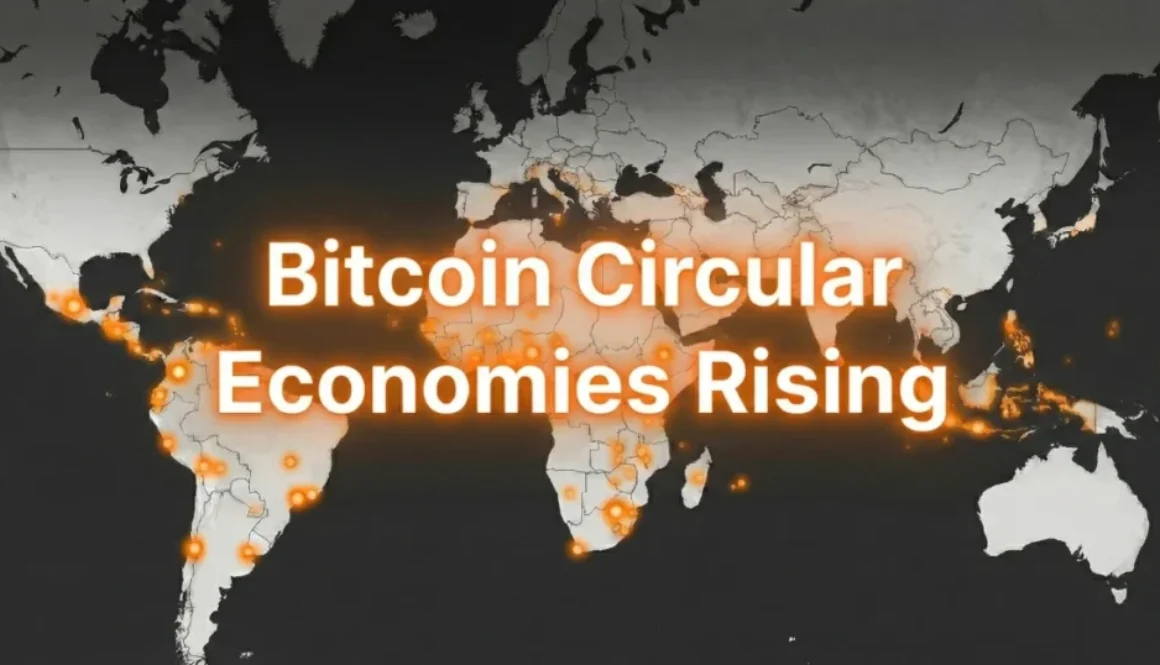
El Salvador’s Bitcoin Beach recently hosted an international summit focused on developing sustainable circular economies built around Bitcoin adoption in underserved communities worldwide. The closed-door gathering brought together representatives from 29 countries and featured presentations from practitioners working across Africa, Southeast Asia, Latin America, and beyond. The conference underscored emerging best practices for establishing viable Bitcoin circular economies in regions where traditional financial systems have proven inadequate.
The summit took place in El Zonte, a coastal community that has become synonymous with grassroots Bitcoin adoption since 2019. Organizers selected the newly constructed community center in El Zonte as the venue, reflecting the infrastructure growth that has accompanied the area’s Bitcoin integration efforts.
Key Lessons from Bitcoin Beach’s Track Record
El Zonte’s success as a Bitcoin circular economy hub has generated significant international attention. Over the past five years, the community has evolved from a modest experiment into what many consider the most established model for Bitcoin-driven economic development. The summit participants examined the specific strategies that enabled this transformation.
A central theme involved geographic concentration of adoption efforts. Rather than dispersing resources across multiple locations, successful practitioners emphasized selecting a single neighborhood or town and pursuing saturation-level merchant adoption within that bounded area.
Concentrate adoption in one location to leverage network effects, attract higher tourist volumes, and create sustainable merchant motivation through consistent transaction activity.
— Bitcoin Beach practitioners, Summit presentations
This approach generates multiple reinforcing effects. When merchants in a concentrated area consistently process Bitcoin transactions, they remain engaged with the technology. By contrast, shop owners in scattered locations may only encounter Bitcoin payments sporadically, undermining their confidence in the currency’s utility.
Geographic clustering also functions as a branding mechanism. A town known for Bitcoin acceptance attracts visitors specifically interested in transacting with the currency, creating higher payment volumes than would occur through random dispersion.
Building Trust-Based Leadership
Beyond technical adoption strategies, summit discussions emphasized the human dimensions of circular economy development. Speakers stressed the importance of careful team assembly and leadership integrity.
Experienced organizers cautioned against rapid expansion of core teams. Building economies around Bitcoin requires sustained commitment and alignment across multiple stakeholders—merchants, community leaders, local government officials, and international supporters. Teams assembled hastily often struggle to maintain cohesion under pressure.
Successful Bitcoin circular economies prioritize trust-building and team stability over rapid scaling. Leaders highlighted that sustainable adoption emerges from deep community relationships rather than external mandates.
The summit included sessions devoted to leadership development. Participants discussed effective communication strategies for explaining Bitcoin’s value to skeptical communities. Fundraising capacity also received attention, as developing Bitcoin circular economies requires sustained financial resources from donors and institutional supporters.
Global Implementation Challenges and Opportunities
Presentations revealed both the promise and difficulty of replicating Bitcoin Beach’s model across diverse economic and political contexts. Representatives from Indonesia, Peru, Bolivia, and African nations shared experiences adapting Bitcoin adoption to local currencies experiencing devaluation and inflation.
Communities reported transformative economic effects when Bitcoin adoption gained traction. Residents in remote areas previously disconnected from functional financial systems described gaining access to sound money and enhanced economic participation. The ability to transact in Bitcoin provided protection against local currency degradation—a critical advantage in countries experiencing chronic inflation.
Bitcoin adoption in underserved communities demonstrates that sound money can reach the furthest reaches of the world through dedication and community-focused implementation.
— Summit attendees, various presentations
However, speakers acknowledged substantial obstacles. Regulatory uncertainty in many countries complicates merchant adoption. Educational gaps persist, particularly among populations with limited prior cryptocurrency exposure. Infrastructure limitations in some regions affect payment processing reliability.
Despite these challenges, the summit conveyed a sense of momentum. Attendees shared success stories of merchants embracing Bitcoin, families gaining access to remittances without excessive fees, and young people finding employment in Bitcoin-related services.
The Bitcoin Beach White Paper documents El Zonte’s development in detail, providing a reference guide for communities attempting similar initiatives. The summit built upon these documented experiences while exploring how the model adapts across different geographies.
Educational and Economic Dimensions
The conference agenda extended beyond adoption mechanics to broader economic theory and educational frameworks. Sessions addressed how to communicate Bitcoin’s value to local populations unfamiliar with digital currencies or cryptocurrency principles.
Effective leadership, summit participants concluded, requires the ability to translate technical concepts into culturally relevant narratives. Fundraisers need to articulate compelling visions to potential donors. Local merchants need practical explanations of how Bitcoin adoption benefits their businesses.
The economic sustainability component focused on ensuring that circular economies achieve stability without perpetual external subsidy. Participants discussed pricing mechanisms, fee structures, and business model innovations that could enable long-term viability.
Education for community leaders emerged as particularly important. As Bitcoin circular economies mature, they require informed advocates capable of navigating government relationships, managing merchant networks, and addressing public skepticism.
Market Context and Industry Implications
The Bitcoin Beach summit arrives at a pivotal moment for cryptocurrency adoption in developing economies. Global remittance flows exceed $700 billion annually, with traditional intermediaries capturing 5-10% in fees from transactions originating in wealthy nations destined for lower-income countries. This fee structure systematically extracts wealth from exactly the communities that circular economy initiatives target. Bitcoin’s peer-to-peer architecture offers a technical alternative that could preserve significantly more value within recipient economies.
The summit’s focus on practical implementation reflects a broader industry shift away from speculative trading toward monetary functionality. While cryptocurrency markets have historically emphasized price volatility and investment returns, Bitcoin Beach and similar initiatives demonstrate sustainable use cases grounded in genuine economic need. This distinction carries implications for regulatory frameworks, institutional adoption patterns, and long-term cryptocurrency market development.
International financial institutions monitoring these developments recognize that successful Bitcoin circular economies could reshape remittance markets and accelerate financial inclusion in underserved regions. The World Bank and IMF have begun examining cryptocurrency’s role in monetary systems, partly motivated by demonstrations of practical effectiveness in communities like El Zonte.
Entity Background and Summit Organization
Bitcoin Beach emerged organically from philanthropic efforts to support El Zonte’s development following climate disasters that devastated the region’s fishing-dependent economy. A US-based donor initiated Bitcoin distribution within the community, intending to provide residents with tools for economic resilience. Rather than function as a temporary relief measure, Bitcoin adoption took root and evolved into an organized movement.
The organization’s structure prioritizes community autonomy while providing technical support and knowledge infrastructure. This approach—emphasizing local decision-making rather than top-down implementation—has become a defining characteristic of Bitcoin Beach’s philosophy and likely contributed to its relative success compared to earlier cryptocurrency adoption initiatives.
Summit organizers selected participants based on demonstrated commitment to similar economic development work. Representatives attended not as cryptocurrency investors or speculators, but as development practitioners with stakes in their communities’ economic outcomes. This composition shaped discussions toward practical challenges rather than investment speculation.
Looking Forward: Scalability and Adaptation
The summit represented a maturing moment for Bitcoin adoption beyond wealthy nations. Rather than theoretical discussions, the conference prioritized practical knowledge exchange among practitioners with direct experience implementing these systems. Attendees from Bitcoin-adopting communities shared documented results and lessons learned.
For observers tracking cryptocurrency adoption in developing economies, the summit signaled both the feasibility and challenges of Bitcoin’s role as an alternative monetary system. The gathering demonstrated that sustained, locally-rooted efforts can produce meaningful economic change in communities where traditional financial infrastructure has failed.
As Bitcoin circular economies continue developing globally, the frameworks and principles discussed at El Zonte’s summit will likely influence future implementation efforts. The concentration on geographic focus, trust-based leadership, and sustainable economics provides a tested foundation for communities considering similar initiatives. However, scaling these models across diverse regulatory environments, infrastructure contexts, and cultural landscapes will require continuous adaptation and learning.
For those interested in tracking Bitcoin’s real-world adoption and economic impact, the summit documents represent valuable data on how the technology functions within actual communities rather than hypothetical scenarios. The coming months will reveal whether practitioners can successfully scale these models across diverse regions or whether local contexts will require significant adaptation of El Zonte’s established approaches. The success or failure of these efforts may ultimately determine whether Bitcoin evolves primarily as a speculative asset or as a genuinely transformative monetary technology for underserved populations worldwide.
Get weekly blockchain insights via the CCS Insider newsletter.