
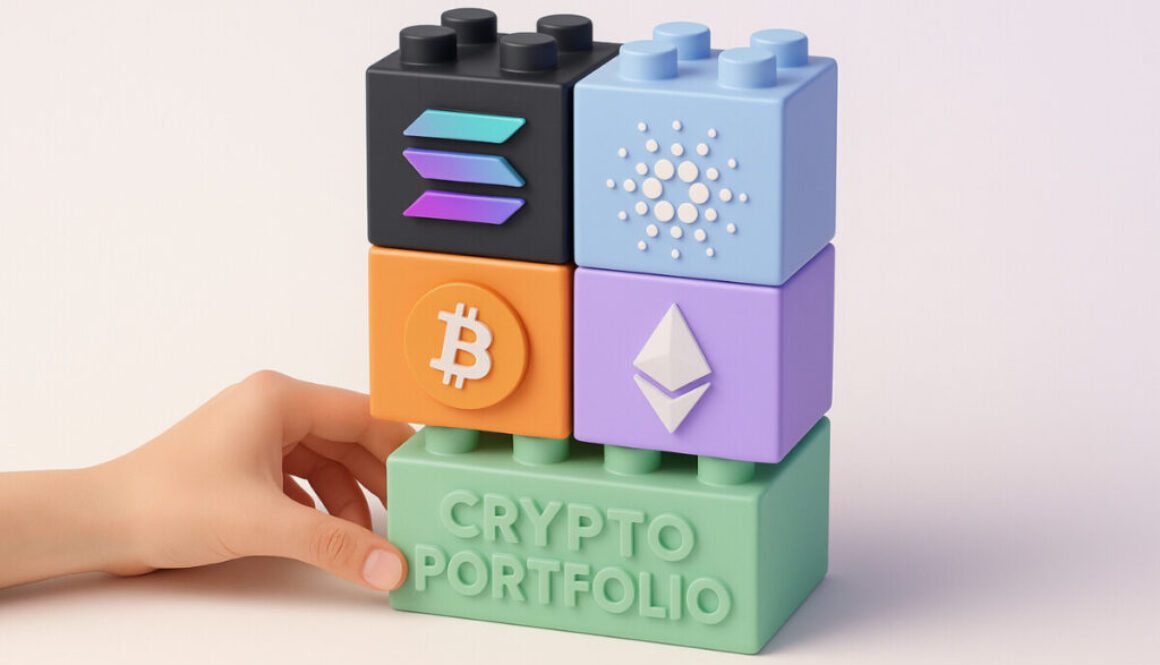
Beginners Guide: How to Build Your Crypto Portfolio From Scratch
Building a cryptocurrency portfolio as a newcomer requires strategy, patience, and realistic expectations rather than chasing every trending token. The crypto market’s complexity—thousands of assets, constant news cycles, volatile price swings—can paralyze new investors into inaction or worse, impulsive decisions. However, establishing a structured approach to portfolio construction removes much of that uncertainty and positions beginners to capture meaningful gains while managing downside risk.
Market Context and Industry Growth
The cryptocurrency market has matured significantly since its inception, with total market capitalization now exceeding $2 trillion at peak valuations. This expansion reflects fundamental shifts in how institutions and retail participants view digital assets. Major financial institutions now offer cryptocurrency trading services, custody solutions, and investment products to their clients—a development unimaginable a decade ago.
This institutional integration carries profound implications for newcomers entering the market today. The presence of sophisticated market participants, regulatory frameworks in developed economies, and established trading infrastructure means that cryptocurrency investing has transitioned from purely speculative activity to an alternative asset class with legitimate risk-return characteristics. Market volatility persists, but the underlying ecosystem demonstrates increasing resilience and maturity.
Current market dynamics reflect this evolution. Bitcoin and Ethereum command substantial percentages of total market capitalization, providing price discovery and liquidity that supports smaller asset markets. Layer-2 solutions, cross-chain bridges, and interoperability protocols have reduced friction and fragmentation that characterized earlier market cycles. For beginners, this maturing infrastructure landscape creates opportunity windows that earlier investors lacked—the ability to research projects thoroughly, access institutional-grade trading platforms, and participate in properly regulated market environments.
Why Diversification Is Your Foundation
The most critical mistake new investors make is concentrating their capital into a single token or project. Cryptocurrency markets remain inherently unpredictable. Even established projects experience severe corrections, while smaller-cap assets occasionally deliver outsized returns over short timeframes.
A properly constructed beginner portfolio balances different asset categories. This typically includes established infrastructure plays, enterprise-focused blockchain platforms, emerging protocol tokens, and carefully selected early-stage opportunities. This structural diversity serves a dual purpose: it cushions against catastrophic losses from any single position while maintaining exposure to breakout potential across multiple vectors.
Think of portfolio construction like team building—each asset plays a distinct role that collectively maximizes your probability of success.
— Portfolio Management Principle
The mathematics of diversification work in your favor. A portfolio containing five different token categories automatically limits any single position’s ability to crater your entire holdings. Simultaneously, if even one position performs exceptionally, it amplifies overall returns substantially.
Diversification isn’t about owning many tokens—it’s about owning the right mix of token categories that serve different functions within your overall strategy.
Solana: Demonstrating Scalability’s Value
Any serious discussion about beginner cryptocurrency portfolios must address Solana. The blockchain’s historical performance provides essential context for understanding what technological innovation can deliver in crypto markets.
Solana traded at approximately $1 during its early phase. Investors who recognized the network’s potential for high-speed, low-cost transactions witnessed returns exceeding 1000x at peak valuations. This trajectory wasn’t accidental—it reflected genuine technological advantages that attracted developer communities, spawned thriving DeFi ecosystems, and supported NFT marketplaces and gaming applications.
Solana’s architecture processes transactions through a proof-of-history mechanism, enabling throughput that historical competitors couldn’t match. This technical superiority translated into practical advantages: developers could build applications with certainty of transaction finality, users could execute trades without prohibitive fees, and entire economic ecosystems could operate with viable unit economics. The network effect—where each new application and user increases network value—accelerated adoption throughout 2021 and 2022.
For 2025, Solana maintains strong fundamentals. The network consistently ranks among the highest in transaction volume and developer activity. Its speed and cost structure continue attracting projects seeking efficient blockchain infrastructure. Recent developments in mobile integration and expanded validator support indicate continued ecosystem expansion despite competitive pressure from competing layer-1 blockchains.
For newcomers, Solana demonstrates a foundational crypto principle: identifying networks solving real problems generates outsized returns. While near-term growth may moderate compared to earlier cycles, analysts suggest meaningful upside remains available for those entering at current valuations. Solana represents the infrastructure category essential to any balanced beginner portfolio—a link to current pricing data provides real-time context for evaluation.
BNB: Utility Embedded in Ecosystem Value
BNB occupies a unique position within cryptocurrency markets. Unlike purely speculative tokens, BNB derives value from direct utility within the Binance ecosystem, one of the world’s largest cryptocurrency exchanges and trading platforms serving over 200 million users globally.
The token powers multiple functions. Users holding BNB reduce trading fees on Binance’s platforms. The token provides access to exclusive launchpad opportunities for new projects seeking capital and distribution. BNB also settles transactions across the BNB Chain network, where decentralized finance applications and blockchain services increasingly operate.
This functional foundation differentiates BNB from tokens lacking underlying utility. Recent data indicates on-chain stablecoin volumes on BNB Chain occasionally exceed Ethereum-based volumes, signaling institutional and retail engagement at scale. The BNB Chain ecosystem supports over 2,000 active decentralized applications spanning DeFi, gaming, NFTs, and enterprise solutions. Analysts increasingly discuss institutional adoption potential as traditional finance entities demand exposure to functional blockchain ecosystems with proven transaction throughput and security records.
BNB’s strength lies in its potent utility and the ecosystem’s continued expansion, making it an essential stability anchor for beginner portfolios.
— Market Analysis
For portfolio construction purposes, BNB serves as a bridge between pure infrastructure exposure and ecosystem-dependent growth. It combines relative stability with meaningful upside potential—characteristics beginner portfolios require. The token’s direct connection to exchange revenues and ecosystem transaction volumes provides investors with measurable metrics for evaluating performance trajectories and institutional demand trends.
Ecosystem tokens like BNB offer both stability and growth by tying their value directly to platform utility and adoption metrics that investors can monitor and evaluate.
Strategic Portfolio Assembly
Moving from individual token analysis to complete portfolio construction requires systematic thinking. Beginners should establish allocation targets across different asset categories rather than treating each purchase as an independent decision.
A reasonable framework for new investors might allocate approximately 40-50% toward established infrastructure plays like Solana. Another 30-40% could go toward ecosystem tokens like BNB that demonstrate concrete utility and institutional interest. The remaining 10-20% becomes available for higher-risk, higher-reward opportunities that offer breakout potential.
This structure prevents overexposure to speculative positions while maintaining meaningful upside exposure. It acknowledges that cryptocurrency markets reward both conviction and prudent risk management simultaneously. Historical analysis of successful portfolio construction during previous market cycles demonstrates that investors maintaining balanced allocation frameworks weathered corrections more effectively than those concentrated in single assets or categories.
Timing entry points matters less than most beginners believe. Rather than attempting to time market bottoms—an exercise in futility—accumulating positions methodically across different price points reduces timing risk. Dollar-cost averaging into positions over weeks or months provides psychological comfort alongside mathematical benefits by smoothing entry prices across multiple market conditions.
Monitor your portfolio construction progress against clear benchmarks. Track what percentage of your capital sits in infrastructure, ecosystem, and opportunity categories. Rebalance quarterly by adding to underweighted categories rather than selling winners. This systematic approach removes emotional decision-making and keeps your portfolio aligned with your stated risk tolerance and investment timeline.
For comprehensive market context and ongoing analysis, CCS News provides weekly insights into market movements, regulatory developments, and technological breakthroughs affecting portfolio performance. Staying informed about industry trends, regulatory changes, and emerging technologies provides newcomers with the knowledge required to adapt portfolio strategies as market conditions evolve.
Conclusion: Building Sustainable Wealth
Building cryptocurrency wealth from scratch requires patience, strategy, and emotional discipline. The market rewards investors who establish clear plans and execute them consistently over extended timeframes. By combining established infrastructure exposure, ecosystem utility plays, and carefully allocated opportunity positions, beginners position themselves to capture meaningful gains while managing volatility through diversification.
The cryptocurrency industry’s maturation creates unprecedented opportunities for newcomers to participate in transformative financial infrastructure with substantially reduced friction and risk compared to earlier market cycles. Success depends not on timing market peaks or identifying hidden gems, but on constructing thoughtfully balanced portfolios that survive inevitable downturns while capturing upside when market conditions reward innovation and adoption. This disciplined approach separates wealth-building investors from those chasing trends and experiencing preventable losses.
Get weekly blockchain insights via the CCS Insider newsletter.