
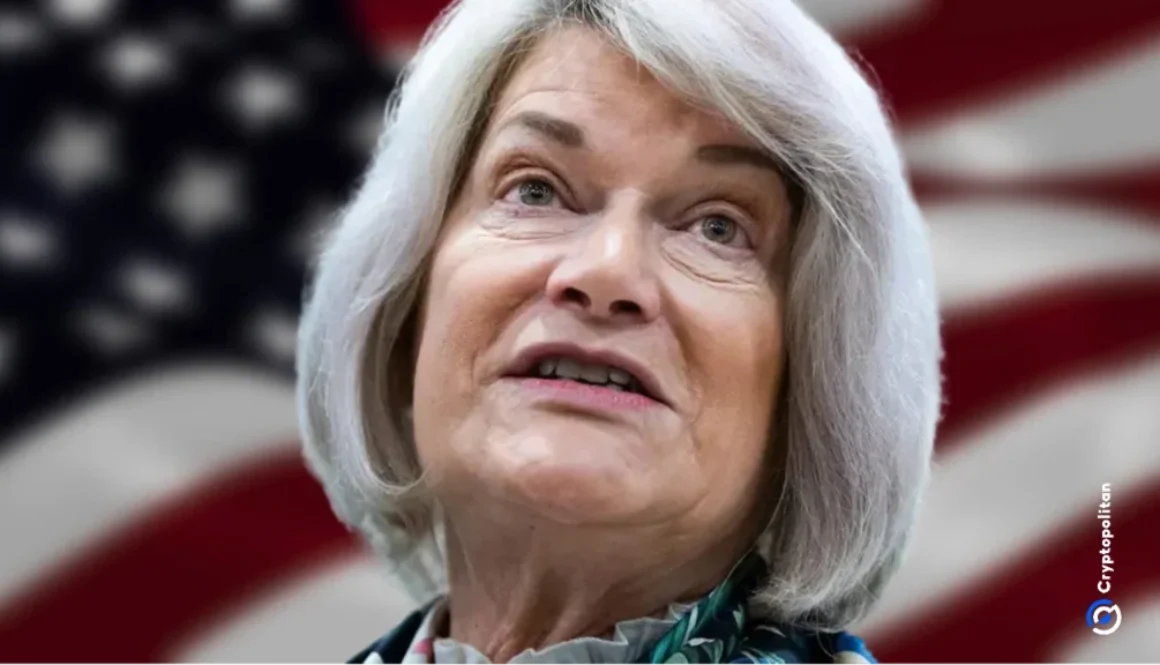
Sen Lummis says Fed skinny master accounts could end crypto debanking
Senator Cynthia Lummis of Wyoming has thrown her support behind a Federal Reserve proposal that could dismantle the banking access barriers facing cryptocurrency firms. Fed Governor Christopher Waller’s “skinny master accounts” framework, unveiled in October, would grant crypto and fintech companies direct access to Federal Reserve master accounts—a move Lummis believes could end the financial restrictions known as Operation Chokepoint 2.0.
A Regulatory Shift on Digital Assets
Waller’s proposal represents a notable pivot in how federal authorities approach cryptocurrency and emerging payment technologies. The framework would allow payment-focused banks and crypto startups to access the Federal Reserve’s master account system, though with operational constraints built into these accounts.
The initiative arrives at a critical moment for the industry. Over the past two years, major cryptocurrency firms have faced extraordinary difficulty obtaining banking services, with major institutions either closing accounts or refusing to work with digital asset companies outright.
The skinny master account concept would terminate Operation Chokepoint 2.0 and unlock genuine payment innovations, delivering faster transactions, reduced expenses, and enhanced security measures.
— Senator Cynthia Lummis, U.S. Senator (Wyoming)
Understanding Operation Chokepoint 2.0
Operation Chokepoint 2.0 has become shorthand within the crypto industry for what many view as a coordinated effort to restrict banking access to digital asset companies. The campaign has affected not just businesses but individual executives and founders seeking basic financial services.
Venture capitalist Marc Andreessen highlighted the scope of the problem, pointing out that more than thirty technology founders have been denied banking services as part of this broader initiative. These denials have hampered innovation and created genuine operational challenges for legitimate firms attempting to build regulated financial infrastructure.
The Federal Reserve master account system traditionally provides direct access to the central banking infrastructure, enabling institutions to clear payments and settle transactions efficiently. Extending this access to regulated crypto and fintech firms could fundamentally reshape how digital asset companies operate within the U.S. financial system.
Why This Proposal Matters
Lummis characterized Waller’s framework as a responsible path forward for building financial infrastructure suited to tomorrow’s economy. By granting crypto firms legitimate pathways to the Federal Reserve system, the proposal could unlock several practical benefits for the broader ecosystem.
Faster transaction processing, reduced operational costs, and improved security measures represent tangible advantages that could flow from this arrangement. More fundamentally, direct Fed access would signal federal acceptance of cryptocurrency and fintech innovation as legitimate components of America’s financial landscape.
The proposal also addresses a core frustration: why should well-capitalized, regulated companies be excluded from the same banking infrastructure available to traditional financial institutions? This question has animated discussions among policymakers increasingly skeptical of blanket restrictions on crypto companies.
“Skinny” master accounts would differ from full master accounts held by traditional banks. The framework contemplates specific limitations on how crypto and fintech firms could use these accounts, creating a structured approach that balances access with regulatory oversight.
The Broader Policy Landscape
Waller’s initiative reflects a perceptible shift in federal thinking about digital assets and payment innovation. Where previous regulatory approaches emphasized restriction and caution, this framework attempts to accommodate innovation within a structured environment.
The Fed Governor’s October announcement at the Payments Innovation Conference signaled that federal officials recognize the need for institutional change. Rather than continuing to push crypto to the margins of the financial system, regulators appear willing to explore integration models that preserve oversight while enabling development.
This represents a meaningful recalibration for the cryptocurrency industry, which has long argued that exclusion from traditional banking infrastructure stifles responsible innovation. Market participants and industry observers have generally welcomed Waller’s framework as evidence that federal policymakers are reconsidering their approach.
Waller’s suggestion represents a meaningful recalibration in how American regulatory authorities approach digital assets and emerging fintech innovation.
— Industry Analysis
Industry Context and Market Implications
The cryptocurrency and blockchain sector represents one of the fastest-growing segments within financial technology, with digital asset markets now exceeding two trillion dollars in capitalization. Yet despite this scale, most crypto firms operate at the periphery of traditional banking infrastructure, relying on specialized crypto-friendly banks or international institutions for basic financial services.
This disconnect has created genuine inefficiencies. Crypto firms conducting legitimate business—custody services, trading platforms, payment processors—face delays in wire transfers, difficulty obtaining lines of credit, and operational friction that traditional financial companies take for granted. The skinny master accounts proposal directly addresses these structural disadvantages.
Market analysts suggest that improved banking access could unlock significant value creation across the cryptocurrency sector. Faster settlement times alone would reduce counterparty risk and lower operational costs for crypto exchanges and payment processors. Enhanced security through direct Fed access would increase institutional confidence in crypto infrastructure, potentially attracting additional capital from traditional investors currently cautious about the sector.
The timing also matters significantly. As other nations—particularly Singapore, Switzerland, and the United Arab Emirates—develop regulatory frameworks that accommodate crypto companies, U.S. policymakers face mounting pressure to avoid driving innovation and talent overseas. The skinny master accounts proposal can be understood partly as a response to this competitive dynamic, positioning America to retain leadership in fintech innovation.
Senator Lummis and the Pro-Crypto Movement in Congress
Senator Lummis has emerged as one of the most consistently pro-crypto voices in Congress, and her endorsement of Waller’s framework carries particular weight among policymakers considering these issues. A former Wyoming treasurer and experienced financial services advocate, Lummis brings both institutional credibility and genuine expertise to discussions about digital asset regulation.
Her characterization of the proposal as both responsible and innovation-enabling may influence how other federal officials evaluate the concept. Lummis represents a growing caucus of legislators who view cryptocurrency not as a threat to the financial system but as an essential evolution of payment and settlement infrastructure.
This political shift reflects broader recognition that total exclusion of the crypto industry from mainstream financial infrastructure is neither sustainable nor beneficial. Even conservative policymakers increasingly acknowledge that regulated crypto firms should have access to the same banking systems available to traditional fintech companies.
Path Forward and Implementation Challenges
For crypto news watchers and industry participants, the proposal represents a potential turning point. If implemented, skinny master accounts could transform how regulated cryptocurrency and fintech firms operate within the U.S. financial system, replacing banking restrictions with structured access to federal infrastructure.
The path from proposal to implementation remains uncertain. Federal Reserve processes move deliberately, and any final framework would likely undergo significant refinement. Nevertheless, the very existence of this proposal signals that the conversation around crypto regulation has fundamentally shifted from exclusion to accommodation.
Regulators will need to establish clear criteria for which crypto and fintech firms qualify for master account access, along with robust oversight mechanisms to prevent misuse. These technical details will determine whether the framework succeeds in genuinely improving access or merely creates the appearance of reform.
The proposal also requires Congressional support, and while Lummis’s backing is significant, broader legislative consensus remains uncertain. Banking regulators and some traditional financial institutions may resist changes they perceive as diluting the stability of the Federal Reserve system.
Conclusion: A Pivotal Moment for Crypto Finance
Christopher Waller’s skinny master accounts framework, endorsed by Senator Lummis, represents a watershed moment in the relationship between federal regulators and the cryptocurrency industry. Rather than continuing to marginalize legitimate crypto firms, policymakers appear ready to explore measured integration into existing financial infrastructure.
This shift reflects recognition that digital assets and blockchain technology constitute genuine innovations worthy of regulatory accommodation rather than blanket exclusion. The proposal acknowledges a fundamental truth: well-capitalized, compliant crypto companies serve real economic functions and deserve access to the same federal banking infrastructure available to traditional financial institutions.
If implemented successfully, skinny master accounts could catalyze significant innovation across payments, settlement, and custody services. More broadly, the proposal signals that American policymakers remain committed to maintaining the nation’s position as a global leader in financial innovation, even as they carefully manage the risks associated with emerging technologies.
The months ahead will determine whether this proposal moves from concept to reality. Success requires consensus among federal regulators, Congressional support, and constructive engagement from both the crypto industry and traditional banking sector. The stakes are high: implementation could unlock substantial economic value and technological advancement, while continued gridlock would further disadvantage American firms competing in an increasingly internationalized cryptocurrency market.
Get weekly blockchain insights via the CCS Insider newsletter.